Thursday, October 27, 2022

Realigning Education & Career Expectations in Schools and Families

It's difficult to write a post like this one without appearing that I'm being (at least indirectly) critical of teachers, and parents. As a former teacher, I'm aware of the challenges in teaching, whether infants, primary or secondary. And as a parent, and more recently a grandparent, I understand how tough parenting can be. All levels of education have their own unique issues in 2022, but there are some issues that are common to all. 


As a teacher, you will be aware that parents tend to be more critical than they once were. Expectations are higher than ever! Every parent feels their child is unique (and of course in one sense they are), and many want them to end up working as brain surgeons, lawyers, engineers or some other high-paying role. Teaching is unfashionable right now partly because everyone talks it down, including teachers.


Many parents will also question what teachers do, even though the teacher is the education and teaching expert, not the parent. It is one of the few professions in the world where almost everyone feels they have the right to question the professionals. And of course, media critics of teaching abound.


As well, school education systems are constantly wanting to test and measure achievement with instruments (i.e. tests) that inform them on how students and schools are being judged. These measures never offer a comprehensive picture of what our students are learning, and always seem to end up producing negative stories in the press. Is there any wonder teachers feel unhappy?


It seems that many people are quick to criticize and slow to acknowledge that teaching and parenting are both challenging roles in the 21st century. What can we do about this situation? I want to suggest that both key parties need to review and reassess their hopes and desires for children. In particular, I think as parents, we need to think carefully about what our students' aptitudes and skills are, and how these might equip them for specific roles in life. At day's end our children can't all be brain surgeons, CEOs, lawyers, doctors or CEOs of their own start-up companies with their unique products and inventions that resulted from their university studies. So how do we set realistic goals and expectations for our children as they enter education? Let me ask a few pointed questions:


1. When your child first entered primary/elementary school, were you already aware of what you expected from education for your child? As well, had you already decided what profession you wished them to pursue?

2. When your child entered the secondary school, had you realigned your expectations much?

3. What factors shaped the above choices? Was one factor your desire to see them do something similar to you as their parents? Or, in some cases, perhaps something quite different and 'better'? And high paying!

4. How closely did you examine your child's natural gifts, abilities and interests in thinking through such decisions?


Why pose these questions?


I ask questions like these because I have observed for decades that many parents embrace goals for their children very early in life, that aren't necessarily based on an objective assessment of their children's aptitudes and abilities. Recent research in Australia suggests that a majority of parents expected their children to go to university, with 62.8% indicating either Yes, definitely or Yes, probably. As well, fathers who hold trade qualifications are less likely to expect their children to enter higher education. But both mothers and fathers tend to rate boys as being substantially less likely to attend university than girls, and overall parents over-estimate the likelihood of their child entering university. Some of my family members, and many friends always saw me as destined for engineering. I commenced mechanical engineering with Australia's major steel company (BHP) when I left school, but in a few months I tossed this in and pursued teaching as a career! My father was NOT impressed. My experience and that of many others, suggest that we need to think more carefully about the aspirations we have for our children.


                         Image: Aerial photo of the Newcastle Steelworks (c1960s) where I began training and work


In this post, I am composing the post against a backdrop of nail guns being used to build a luxury home near me. The workers are mostly men, who have completed 4 years of high school education followed by a trade course over 2-3 years at a technical college. I suspect that few were very successful at school. They all drive cars much better than mine and the builders I know live in homes (usually with minimal or no debt) that are better than many university educated people can afford. They seem to enjoy and get satisfaction from their time spent on site, with a predictable pattern of 3-4 hours’ work (7.00am till 11.00am), one hour for lunch (or 'smoko' as some call it), and then another 3 hours before they go home and forget about work till the next day.


All parents and teachers are different, but as an informed observer I want to offer a critique of some of the expectations parents and teachers seem to hold, and encourage all readers to answers the following questions.


What do schools seek to equip children for?



If you answered "get to university", "succeed in their final exams", "end up with a good job" etc, I think your response might just be VERY narrow. All schools, and particularly Christian and religious schools of all types, should be seeking to develop the whole child, not be setting expectations on the first day of primary/elementary school for them. Our will always reflect our relationship with the child and our personal aspirations. In my book 'Pedagogy and Education for Life' I point to Doug Blomberg's thoughts on the relationship between teacher and child. He makes a very telling point that has relevance to both teachers and parents when thinking about our hopes and career expectations for children. He states in 'Wisdom and Curriculum' that the task of the school, including faith-based schools is to use curriculum, which he defines as inclusing “the relationship between the teacher and the child” for a central purpose:


"... to create a (school-)world within the world, because it is a selection from and sequencing of an all-but-infinite range of possible experiences. It is a conscious (re-)ordering of the world for the purposes of teaching and learning. The ends to which these processes are directed provide the criteria for the selection and organization of school experience." (Cairney, 2018, p.44)


I underline the final sentence because it speaks to the issues I'm discussing in this post. The expectations of parents are (I suspect) pretty much set before school. While these might change across the years of school life, they do not shift easily, and in some cases never do!


Parents have the primary role in shaping future expectations early in life, but this tends to shift over time, with teachers and other students also playing a role in the development of every child's hopes and dreams for life after school. Teachers must be aware of this and reflect on how they might influence pathways for the good, or perhaps, NOT for the good of the child.


I might do a follow-up post on this topic, but for now I simply leave readers to ponder and perhaps discuss the issues I have raised with others.

Friday, September 23, 2022

What Might Writing & Reading Communities Look Like in Our Classrooms?

One of the signs of a great book is that once it is finished you have a deep desire to tell someone about it, and perhaps even pass the book on to them. I can recall times when I reached the end of a moving novel and I would simply sit quietly, ruminating on the 'journey' I had just completed through the book. And later, there would be a deep urge to tell others about it. After a special book, we might read it again at some later point, or loan it to a friend and revisit the story in conversation with them.

Our classrooms and homes should be places where children read books and want to share their stories with others. This is certainly critical in the primary years of schooling, but so too it is possible and important within high schools. If literature is only read to prepare for exams, it is a sad state of affairs. Our classrooms can and should be 'communities of readers and writers'. But sadly, our students today are more likely to participate in groups in and outside school sharing social media videos like TikTok, talking about or sharing music, fashion, funny photos and so on online. While they are forming or supporting friendships and communities of practice, nonetheless these conversations are often trivial and superficial.

I shared in my book 'Other Worlds: The Endless Possibilities of Literature' stories from three class 'communities'. Classroom communities where literature was part of what bound the students together. One was a kindergarten in the cane fields of Queensland. As their teacher finished 'The Three Little Pigs' (Jacobs, 1969) the children shared their responses. Some repeated words or the details of the story, "the wolf wanted to eat the pigs", "he was a bad wolf", characters were mentioned and so on. Others responded more seriously and thoughtfully. "I've got a big bad wolf and I put him in water", "My big bad wolf got shot with hot rocks". Another said more reflectively, "The wolf got hurt because he tried to hurt the pigs".

I was able to observe a second reading community in a one-teacher school at which I taught many years ago. I had 31 children in a single classroom from Kindergarten (5 year olds) to Grade 6 (12 yr olds). When I arrived at the school I found many reluctant readers, and varied abilities across the grades. I set about flooding the classroom (school!) with books at all levels and with varied content. I was to observe how complex sub groups (or sub communities), developed as children read books and told others about them across grade levels. I also read to them and shared many books that stimulated their interests. 


A third reading community was a Kindergarten class; which in Australia is the first year of formal schooling for 5 year olds. I was part of the classroom for most of a school year as a co-teacher and researcher. During designated reading times, the students could grab a book and scurry off to one of many reading spaces: a secret cave in one corner; a castle made from cardboard boxes; an area created using the existing walls in one corner, as well as a cupboard for the other 'wall', and streamers hanging from the ceiling through which they entered; and as well, a small library surrounded by shelves filled with children's books.

What was common to each of the above three reading communities was that story was an essential part of the classroom life. Books were shared as a class, in groups and in informal settings. The children read together 'independently', in pairs or groups, and many opportunities were given for response and sharing. Each classroom in different ways demonstrated a number of similar things:

First, all were dynamic reading, writing and learning communities. 

Second, each exemplified how reading, while it can be solitary, is often shared with others, and that in the sharing, the desire to read is enriched and strengthened.

Third, they illustrated David Bloome's argument that "reading involves social relationships among people... including social groups and ways of interacting with others...".


If we want our children to experience reading in all of its forms, and to read literature that enriches their lives, extends their knowledge of the world, and helps them to grow as people, then community building must be a priority. The next time you watch a group of students sitting together with phone in hand sharing the latest video, ponder how the enthusiasm and excitement they are showing looking at phones, can be replicated in relation to books that can teach, inspire and enrich their lives.

Wednesday, August 10, 2022

Eight Stunning New Picture Books

I typically offer an overview of the Children's Book Council of Australia awards at this time each year, but many of the shortlisted books have been hard to source. So, instead I've reviewed some of the books shortlisted as well as others that publishers have sent me that I think are worthy of review.

1. 'The Boy and the Elephant' by Freya Blackwood

This is a story about a boy with a great imagination. He lives in a busy city where noise, hurry and bustle surrounds everyone. But there is an overgrown lot next to his apartment building, and within the forest of trees he finds a friend. 

No ordinary friend, but an elephant! He sees his elephant among and within the trees, and his 'friendship' brings him comfort and a sense of companionship. But one day the block is sold and the trees are cut down. What can he do about this? The resolution of this great disruption to his life will surprise the reader.

As usual Freya Blackwood's illustrations are wonderful and are done with pencil and oil paints on water colour paper. This superb new book is very worthy of its nomination for the Children's Book Council Australia (CBCA) picture book of the year in 2022.

Freya Blackwood has won many awards including the Kate Greenaway Medal (2009) for her book 'Harry and Hopper'. In 2015 she was awarded three CBCA Book of the Year awards in a single year; an unparalleled achievement. Her book 'The Unwilling Twin' was also shortlisted for Picture Book of the Year in the 2021 CBCA Awards. Freya lives in the beautiful NSW town of Orange (that has lots of trees!).

2. 'Frank's Red Hat' by Sean E. Avery

This is a story about a very special penguin, with a very ordinary name - Frank! But Frank was far from ordinary, he was "full of ideas"! Not all were good of course, so the day he jumped on the ice wearing a knitted red hat, the other penguins were very nervous. A sharp-eyed reader might just spot in the illustration a killer whale, way off in the distance besides an iceberg. And if they do (as well as Frank's friends), they might just hold their breath. Why would he wear a red hat in an iceflow?!

As the other penguins discussed Frank's new hat, it was Neville who suggested that red was a dangerous colour. And all the while the Killer Whale drew closer. Sadly, Neville was right! But Frank survived, unconvinced that his hat had anything to do with the oh so unlucky, Neville!! Perhaps the colour was all wrong? Or was it the style? Were his ideas just ahead of their time? You'll need to read this book to find out. Preferably do this with some children who will just love it.

Stunning illustrations and a beautifully crafted text from Shaun E. Avery. Shaun is a teacher, writer-illustrator, sculptor and designer born in South Africa but living in Perth, Western Australia. He is known to many as the writer-illustrator of the well-loved children’s picture book All Monkeys Love Bananas and his previous picture book, Happy as a Hog Out of Mud.  He is also known internationally as a sculptor who uses CDs and DVDs to create incredible works of art held in many galleries and private collections around the world.

3. 'Ella and the Useless Day' by Meg McKinlay & illustrated by Karen Blair

Ella’s house is full of useless things! Bricks and boxes and plant pots and shoes and more. So, it’s time for Ella and her dad to head to the tip with all the things that are old and broken, too big, or too small, or too something-else-altogether. But who knew? Those holey blankets are just what Mrs Esposito needs and the rusty tricycle is perfect for Mr Montgomery. Will they have anything useless left by the time they reach the tip?

This is a wonderful book from a superb team! Meg McKinlay continues to come up with beautifully crafted and original stories, that always seem to resonate with the real-life experiences of the readers for whom they have been written. What child (or parent) cannot relate to the age-old problem of too much stuff?! And the solution? We need a chuck out day. 

But some funny things happen on the way to the rubbish tip after their cleanup. What is it? You'll have to read this delightful book to find out. Along the way enjoy its wonderful text, but also for the fantastic watercolour illustrations from Karen Blair.   

"A heartwarming picture book about community, sustainability and how one neighbour’s rubbish is another’s treasure."

4. 'This is my Dad' by Dimity Powell & Nicky Johnston

Leo has a problem. When his teacher announces they are going to have a "Tell Us About Your Dad Day" Leo's heart sank. He knows that he won't have anything to say, because he has never met his Dad. He sits and worries, "how can I celebrate someone I've never met?" Maybe his Mum will have an idea. But she needs to finish her book first, so he decides to search the house for clues. Perhaps in his birthday card collection? But no! He wonders, just who is my Dad, and what is he like?

Eventually, Leo solves the problem himself. His Dad is amazing!! Dad "discovers new galaxies", "scares off spiders" and he can "throw frisbees". He concludes, "my Dad is my everything." A wonderful and heart-warming story that children will love, and those who don't know their Dad's will find helpful.

Dimity Powell says she writes for children because "she would secretly love to be one again." She has had a number of stories shortlisted and awarded, including her digital narrative, 'The Chapel of Unlove' for the Story City App, which was shortlisted for the Western Australian Premier’s Book Awards in 2016. Other books by Dimity include 'At the End of Holyrood Lane' (EK Books, 2018), 'The Fix-It Man' (EK Books 2017) and 'Oswald Messweather'.

Nicky Johnston is an educator, speaker and author/illustrator of children’s books. Her style has been described as "whimsical, emotive, soft and expressive." Nicky loves teaching and school visits to share her journey in becoming an author and illustrator. She also loves to show children the process of creating a book using excerpts from her work. Her 16 books include , 'Grandma Forgets' (EK Books, 2017, with Paul Russell), 'Saying Goodbye to Barkley' (EK Books, 2019) and 'Upside-Down Friday' (EK Books, 2021).

5. 'One Book Was All It Took' by Wenda Shurety & illustrated by Amy Calautti

I love this quirky book! Violet is an avid reader, but the trouble is she has devoured (well read!) all the books in her house; except one! But it is propping up a leg on the dining table. She just has to grab it, but when she does lots of things are turned upside down. Just one book was "all it took", to ruin Dad's breakfast and set in play a chain reaction! Dad misses his bus, he can't find a cooking book, Violet needs more books, but where is the library?! There's no library in their town so a letter is sent to the Lord Mayor who is seeking ideas for a new council building... 

This is a delightful picture book that children aged 3-6 will love. Amy Calautti's cartoon-like line and water colour illustrations are a wonderful complement to Wenda Shurety's brilliantly simple story that is exciting and engaging. Together author and illustrator have created a wonderful book that children will want to hear and read many times.   

Wenda Shurety is a children’s author who loves to write stories from the heart about nature, diversity and the magical world of the imagination. Originally from London, she now lives in Brisbane with her husband and daughter.

6. 'Amira's Suitcase' by Vikki Conley & illustrated by Nicky Johnston

The judges who shortlisted this wonderful book for the Children's Book Council of Australia described it this way:

It begins with a tiny seed growing inside a suitcase. With Amira’s care, the tiny seed starts to sprout. Find out what happens when kindness flourishes...Amira’s Suitcase is a gentle, thought-provoking tale about friendship and hope.

This is a simple story about a little girl who plants a seed in one of many empty suitcases in her family’s new home. But as she nurtures this one seed, her friends give her more seeds and all flourish. They decide to plant them outside. The outcome is wonderful!! 

The water colour illustrations of Nicky Johnston are a wonderful contribution to this special book. They capture the children’s excitement as the plants grow. There is great pleasure in this garden. While it all started with a little girl and a single seed, it is to bring joy to a whole community.

7. 'Jetty Jumping' by Andrea Rowe & illustrated by Hannah Sommerville

While Milla’s friends take big, brave jumps off the jetty, Milla stays on the blistering wood, scared of what lurks below. But when Milla accidentally falls off the edge, she discovers the beauty of the deep, dark sea – and her summer changes forever.

'Jetty Jumping' deserves its shortlisting in the 2022 CBCA awards. This is a wonderful book.

It seems Andrea Rowe was fearful of jetties when young, and in particular the cracks between the planks that might lead to the murky depths below. But as she grows up she realizes that the water beneath and the deep sea below, is the best playground of all. Milla was eventually to jump bravely off jetties and swim near the barnacled pylons with her adventurous friends after school.

Andrea Rowe and Hannah Sommerville capture perfectly the challenges of childhood (and the joy of letting go) in this wonderful book that gives an insight into an Australian summer near the sea. Andrea is a writer who lives with her two kids and park ranger husband in a beach shack in the dunes on the Mornington Peninsula. She has a BA in Media Relations and Grad Dip in Crisis and Issues Communications and she's very good at playing scrabble.

Hannah Sommerville is a well-known illustrator who creates enchanting watercolour, gouache and digital illustrations in her studio on the South Coast of NSW. She began illustrating in 2010 after the arrival of her children. Her picture book Digby & Claude, written by Emma Allen, was selected for the CBCA 2019 Notables list.

8. 'Iceberg' by Claire Saxby & illustrated by Jess Racklyeft

An iceberg is born into spring and travels through the seasons before dying in a new spring. A stunning, lyrical story for our times, from renowned picture book creators Claire Saxby and Jess Racklyeft.

In this wonderful book, we follow the path of an iceberg (that is like a living thing) as it shadows the path of penguins trekking across the ice to winter homes. And 'surprisingly' it senses krill stirring underneath the ice. Summer is bringing new life. The iceberg comes across humpback whales and orcas as they gather. The iceberg is shrinking, but when autumn comes with cooling temperatures, the sea changes and it is trapped in the ice for the winter freeze. But of course, spring follows winter and the iceberg drifts into a bay where 'sadly' its life cycle ends. But wait... there's more. Way off in the ocean, another iceberg shears off and everything begins again.

The beautiful text and stunning images bring something new to our telling of this critical cycle of 'birth', 'life', 'death' and 'rebirth'. The book ends with an author's note explaining the effects of climate change on the Arctic and Antarctic regions, as well as a map and a glossary.

'Iceberg' has been short-listed for the 2022 CBCA Picture Book of the Year and also as a Notable Book for the Eve Pownall Award.


Sunday, July 24, 2022

Helping our Students to Make Connections between Life and School

I presented a plenary address this week at the Seventh International Literary Juvenilia Conference 2022. The conference explored Juvenilia, that is, youthful writing up to the age of twenty. As part of my plenary address I explored Intertextuality research which was a key focus for me in the 1980s to 1990s. Intertextuality refers to the "relationship between texts" (Kristeva). In my book 'Pathways to Literacy' (Cassell, 1995) I describe it as "the process of interpreting one text by means of another text".

Two people inspired me to explore Intertextuality. First, my dear friend and colleague Margaret Meek from the University of London (who died just two years ago), and Prof. Jerome Harste (Indiana University) who has been a close colleague and friend for almost 40 years. Jerry invited me to come to Indiana University (Bloomington) as a Postdoctoral Fellow in 1984. My purpose was to commence postdoctoral research and writing on Intertextuality.

While at IU, I collaborated with a Grade 5 teacher at an Indianapolis School. Barbara invited me to spend time at her school and assist her as a co-teacher, with a class that at times was challenging. I want to share a story from this classroom, that I also shared at the Juvenilia Conference this week. This student's writing, was to offer me a profound insight into why the task of inspiring our children as readers and writers can be at times challenging.


On an ordinary morning, as I prepared for the school day, I heard the yellow school buses arrive at the entrance, and the rush of students down the corridor shortly just minutes later. Students burst through the door and we did the usual crowd control, as they jostled their way to their seats. Some were shouting to one another, and a few were saying “Hi Sir”. A bolshie young African American named Nora (not her real name) threw her bag onto the desk. It missed, and its contents spilled onto the floor right in front of me. I started to help her pick things up. I grabbed a wad of writing paper with numerous texts that looked like stories.


I was shocked! Norah was a disruptive student and had the ability to spend a whole day without completing any task. She was from a difficult family and lived in a trailer court. It’s no exaggeration to say, she had not produced a single piece of writing in English while I was there. I said to her, “what’s this Norah?” She replied, “Nothin Sir”. I said, “looks like writing to me”. “It’s Nothin Sir, just stuff I do at home.”


I hesitated and said, “can I read some of it?” “No Sir, you won’t like none of it. It’s just stuff.” “Looks like poetry to me”.  “No Sir, just some songs.” I said, “please let me read some.” She replied, “well, maybe just a couple.”


The first untitled ‘song’ that caught my attention was this one ‘:


Lonesome all alone

She waits by the phone

Lonesome all alone

She wants to belong

Lonesome all alone

She listens and hopes

But there is no sound

Just a lonesome hound

Lonesome all alone


Was this great poetry? For this 11 year old child, yes! At home, it seemed Norah was a writer, whereas at school she was mostly a pest, and had not completed a single piece of writing at school. She saw little relevance in her school learning, but found inspiration in writing music stimulated by her own inner hopes and dreams.


I share Norah’s story, because I believe there are many children like her in our schools, for whom the literature of great authors has not been part of their lived experience. As such, the literary seedbeds of their storytelling and writing are different to the students many of us will teach in our schools. She was inspired by popular music at home and moved to write in response to her struggles as a disadvantaged African American.


I want to suggest 4 key ingredients for motivating and engaging our students as learners:


  • First, know your students well. Who are they at home? What are their passions outside school
  • Second, discover the things in life that our students might want to share with others?
  • Third, consider what might unlock the passions and interests of our students leading them to become risk takers, willing to share the things that touch and inspire them most? 
  • Fourth, as teachers we should try to help our children to build a "cauldron of stories" as a reservoir into which they can dip as writers.

The challenge in my talk at the conference was a simple plea. Get to know our students well, and seek to plough the seeds of the love of literature, into the lives of students like Norah, and I suspect many other children within our schools. In this way, we might just be able to help children like Norah (& me when at school) to grow as readers and writers as they connect their lives with the things of school.


Monday, June 6, 2022

Ten Wonderful New Picture Pooks to Enjoy with Children Aged 2-7 years

1. 'Seree's Story' by Irma Gold & Wayne Harris


Seree loves nothing more than eating sweet, mushy bananas, rolling in squelchy mud and playing with her family in the jungle.

But one day, she is captured and put to work in a circus. All she wants is to find her mother, and freedom.

This is a very special picture book. The tale of a young elephant taken by poachers torn away from her mother and the extended family. Destined for a circus as a perfomer on the other side of the world. 

The poignant story is enriched by the incredible illustrations of Wayne Harris. Children will love the story and be challenged by its environmental message. 

The book also had information after the story about the endangered elephants of the world. Suitable as a read-aloud for infants classes and a book that children aged 5-7 will enjoy reading.


2. 'The Echidna Near My Place', by Sue Whiting & illustrated by Cate James

This is the latest addition to the Nature Storybooks series from walker Books. It tells the story of a child and its Nanna, and as with other books in the series it includes factual information on each double page spread as well as the continuing fictional story of a child and her Nanna who both love animals.

As a young child and their Nana go for walks together, they follow a short-beaked echidna keenly observing and discussing what its life might be life. Learn with them about what Echidnas eat, where they live, and how they protect themselves.

Cate James' illustrations are delightful. When you see this little echidna curled up in a defensive position, you feel like you want to gently touch the page to see if its quills might just spike you.

A lovely book which will teach and engage children in this delightful story as well as the magical images.

3. 'Freddy the Not-Teddy' by Kristen Schroeder & illustrated by Jean Tapper

This is such a lovely and heart warming story about a little boy called Jonah and his favourite stuffed toy called Freddy. He's a little unusual. Just what is Freddy?

A funky duck, a peculiar platypus, a punk rock penguin? When Jonah’s teacher announces that they’re going to have a Teddy Bears’ Picnic, it seems that if Jonah wants to take Freddy, Freddy will have to go in disguise!

But it's not easy to make a toy that looks much like a duck to look like a teddy for the school Teddy Bears' picnic.

Children will love finding out just what happens when Jonah stands up for himself and for his beloved Freddy the 'not-teddy'. Children (and adults) will by Kristen Schroeder that is delightfully illustrated by Jean Tapper.  I just love it!

4. 'Get Ready, Mama!' Sharon Giltrow & illustrated by Arielle Li

This is a funny book that children aged 3-6 will love having read to them. Every parent will also love sharing this story in which the parent and the child seem to swap roles; or do they?!

Children will love the irony of a tale where the child has to get Mum ready to go to school. Will Mum ever get out of bed, get her clothes on, make it to the table, go to the bathroom and race for the car? Or, might she even sneak back into bed!!

Kylie Howarth's delightful text is complemented perfectly with Arielle Li's gorgeous illustrations to create a wonderful book that will be a favourite with many children.

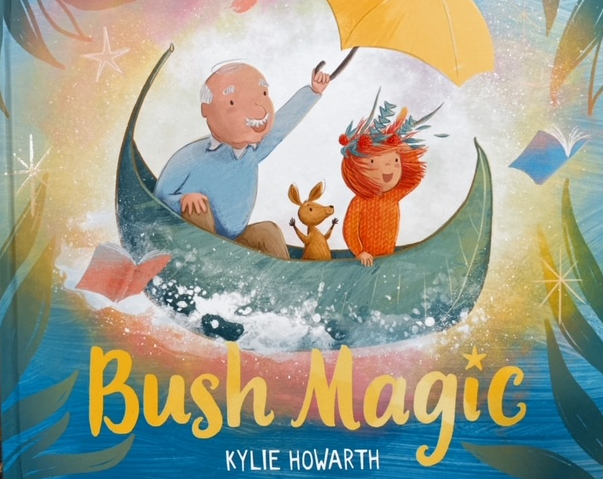
5. 'Bush Magic' by Kylie Howarth

This is a book that many grandparents and parents will enjoy sharing with their children.

6. 'Tasmanian Devil' by Claire Saxby & illustrated by Max Hamilton

Seeing the name Claire Saxby on any book will get me to pick it up and open it quickly. This new book is another in the 'Nature Storybook' series from Walker Books. As usual, Claire Walker's text is special as she introduces 'two little imps'. These feisty Tasmanian Devils might look cute, but they will wrestle, shriek and growl at each other. And they are scavengers feeding mostly on dead animals. Cute they might be, but don't get too close!

I love Max Hamilton's illustrations. While they might look cute asleep in their burrow, I can almost hear them growling and shrieking. Don't get too close!

Having the background facts and details at the back of each of the books in this series will also satisfy the curious reader who wants to know more about these special animals.

7. 'Old Fellow' by Christopher Cheng & illustrated by Liz Anelli

 This is such a beautiful book. Liz Anelli's wonderfully detailed and true to life drawings are just gorgeous. The 'Old Fellow' looks exactly like and old fellow should, and shows much of the central character's personality. As he does his early morning stretch, and takes the dog for a walk, there is much to see.

Liz Anelli's illustrations are also stunning. Her line and water colour images are just so true to life and rich in real-life situations. So too is the portrayal of the two key characters; an old man and his dog as they do their daily walk and come across other people who cross their paths each day. A wonderful book.

8. 'Jack's Jumper' by Sara Acton

Sara Acton is an award-winning author and illustrator of children’s books. "She lives on the Central Coast of NSW with one husband, two children, a mischievous dog and a cat called Poppy, who’s definitely in charge."

I've previously reviewed her book 'Dinosaur Day Out' and this latest book is equally as engaging delightfully illustrated.

This lovely story centres around Jack's jumper that was once his big brother Paul's jumper.

"Paul and Jack used to do everything together. But now he's always busy doing something else... somewhere else."

The lovely text is so well supported by the 'softness' of Sara Acton's water colour illustrations. This is wonderful story about a little boy who misses his big brother, and who's relationship with him changes as they grow older; but their bond remains. 

This book will warm the hearts of readers aged 4-7 years.

9. 'Jigsaw' by Bob Graham

Bob Graham is one of Australia's finest author/illustrators. His many books have been delighting children (and teachers) for more decades than it is polite to mention. I've been a big fan for a long time.

This book is not due to release until early July. But get a copy as soon as you can, because I'm sure they will sell quickly!

Serendipity and positive thinking come into play as a family searches for a missing puzzle piece in Bob Graham’s enchanting story with a sweet surprise ending.

A puzzle arrives in the mail from an unknown source. “Oh, let’s do it!” say Kitty and Katy and Mum when a thousand-piece jigsaw puzzle mysteriously arrives in the post. “I have time on my hands,” agrees Dad. Starting in winter with the edges, by autumn they’re almost done, only to discover that one piece is missing. 
As a puzzle lover who has lost not just one but up to three pieces of a single puzzle, I know the agony of getting to the end and not being able to complete it!! I also know the joy that occurs when after many days scouring for each piece, the last one is found hiding. Enjoy!
As in all of Bob Graham’s work, the beauty here is in the details, with visual perspectives that offer a bird’s-eye view or even take us underfoot, wordless sequences letting us in on a secret. Is it sheer luck – or perhaps the power of hope – that creates an ending to the story?
10. 'My Dad Thinks he's a Pirate' by Katrina Germain & illustrated by Tom Jellet
What a delightfully engaging title for a children's book. The title alone made me want to read it. What child wouldn't want their Dad to think he was a pirate?!

This 'special Dad' is full of 'Dad jokes' and surprises. With all of his "hearties" in tow, they head off on many adventures. With the constant repeated refrain "My Dad thinks he's a pirate" we know that these kids don't buy this Dad's belief in his persona.

Katrina Germein's text is wonderful as usual, and Tom Jellett's illustrations are again excellent and fun. This is a funny story that children aged 3-6 will find hilarious. If your children loved it, you will also enjoy some of their earlier books, including 'My Dad Loves to Toot', 'My Dad Thinks he's Funny' and 'My Dad Still Thinks he's Funny' (& a few other titles as well)!


Friday, April 29, 2022

The critical role teachers play in the formation of students

I've been working on my family history in the last six months. I set myself the task of compiling the story of the previous 3-4 generations of my family history in words (yes, a ‘small’ task!). As I began to write, I found myself revisiting images of people, places and events. I knew that any family history largely reflects memories and the perspectives of varied family members and significant others like friends, teachers, sporting coaches and so on. Even two or more siblings can have slightly different memories of the same events, person and relationships. I began to see that as well as the family stories handed down across the generations, photographic evidence and other historic documents also matter!


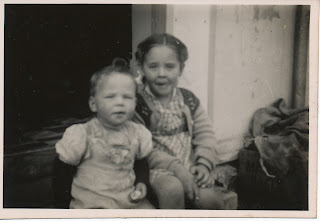
 Above: My sister Dianne & me (a 'few' years ago).

But while varied evidence is not always 'equal' in validity, it all helps to understand who we think we are, what we believe, and also give insights into how our character and values were formed. An image alone, can help us to situate and understand our memories within a specific place and time. They act as anchors for 'truth'. But an image requires interpretation, so in partnership with the memories of multiple people and sources, places and events, we will end up nearer to the 'truth'.

My Great Great Grandfather watched a son and daughter (and a nephew) leave Scotland in 1882 never to return to their homeland. As I began to dig out old family photos and records, and listen to the memories of those still living, a bigger and more complete story emerged of what had happened. The addition of unseen images from boxes, old newspaper clippings, ship records and so on, all contributed to a larger and more complete story; one richer than any single family member could recall. There is often much knowledge that is common to family members, but gaps can be filled by other people and official documents. Like many families, there have been some surprises, with some troubling events uncovered, and amazing stories unearthed.

As I have embraced this journey I've been reminded of the words of Alasdair Macintyre:

"The story of oneself is embedded in the history of the world, an overall narrative within which all other narratives find their place."

Of course, it is true, every story is unique, but also our personal stories reflect the stories of others before us, as well as those we live life with now. Alasdair's words seem to be very much 'big picture', but I believe that he is right. It should not surprise us when we discover that every personal stories is unique, they share elements with other people's stories, and all demonstrate how we are shaped in part by the lives of our family members, and previous generations from our maternal and paternal relatives.


 Above: My Dad near the Forth Bridge in Scotland having returned after 60 years

I grew up in a less than perfect home. For much of my childhood both parents were 'absent' from my life for varied reasons. My older sister and I were fairly independent from about the age of 10. But we both loved our parents and were shaped in varied ways by their lives.

With our less than perfect parents, some of our teachers also had a strong influence on us. My sister was better behaved so she had more! In my case, there were a few I loved and some I loathed. Only a few could see much potential beyond the unkempt and at times disobedient child. These few teachers demonstrated the way we engage and nurture the children in our care matters. Sadly, many saw me as just a cheeky and annoying kid (which in their defense I was). Whatever role we fill in life, we can and should seek to have an influence for good. Teachers are in a critical category of their own.

Above: Terry Malone, Dr Phil Lambert & Me

I had the joy last night of attending the launch of a book from the recently retired Assistant Director General of Education in NSW Dr Phil Lambert. The book is 'The Knowing and Caring Profession'. He invited me to attend his book launch, along with a former colleague I taught with 48 years ago! To our great surprise he mentioned us both in his book (and not for bad behaviour!). As a 1st year student teacher he was assigned to my class (in just my third year of teaching at Chester Hill Primary school in Sydney). 

Phil shared at the book launch and in his book, that he'd considered leaving teacher training until he came to my classroom for his first period of practice teacher. He said that he observed my love of teaching, my love of the students, and the friendship and fun I had with the teacher in the next room Terry Malone. The fun and joy we had teaching, and the impact on the children's lives inspired Phil to continue. He came to the school thinking of dumping teaching, but he left keen and excited about completing his course. To learn this many years later was a joy!

I share the above story, not to blow my own trumpet, but because it reminds us that our stories are always intertwined with other people's stories. As teachers, it is important to consider how we encourage our students to live in ways that acknowledge their true identities, while also seeking to help them grow and mature through lived experience. Just like their parents and wider families, teachers play a part in helping to shape the character of our students and can change their lives for the good!

The central goal of education should always be more ambitious than just academic standards, cut-off scores, future jobs, sporting achievements, and so on. As Alasdair MacIntyre argues, education in our schools should lead to “purity of heart,” not just appropriate behavior and school success. As I outline in my book "Pedagogy and Education for Life":

"The role of teachers and schools is to partner with parents to create school learning communities that work in concert with the many other communities in which all students are participants. These school communities of learners will teach, nurture and indeed form the children who God gives to us, in whatever educational context we meet them."

I know there are many challenges in teaching right now, but be encouraged, you can make a difference to children. As tough as teaching can be, seek to place the learning of your students and their growth as people at the centre of your concerns. You serve in a noble and important profession that has an impact on the lives of others.

Tuesday, March 22, 2022

'Discovering' Literature


I first wrote about ‘discovering’ literature in a book published in the 1990s called ‘Pathways to Literacy’. In it I explained it took me until I was 8 years old before I read my first book. This was in spite of the fact that I’d been able to read since about 4-5 years of age! The first book I truly 'read' was Jules Verne's ‘Twenty Thousand Leagues Under the Sea’. I had read school readers and some school magazine stories, a lot of comics and a couple of editions of Boys Own Annual. But I had never read a novel of my choice. At school, I’d only ever read for functional purposes.


But that changed when I was given Twenty Thousand Leagues Under the Sea at my Father’s Miners’ Trade Union Christmas party. It was this book that taught me things about reading I'd never known before.  As I wrote in ‘Pathways to Literacy’:


“I lived through this book" (to use Louise Rosenblatt's well known phrase). I could almost smell the leather in Captain Nemo's Cabin. I felt the panic of the sailors on the wooden hulled ships at the terrifying sight of a glowing 'eyed' monster hurtling towards them in the darkness. I also felt deep compassion for the people inside doomed to death.”


There was a sense of excitement and commitment to the text evoked by this story. This had not been generated by my school readers. The formal reading in my first 2-3 years at school had a range of banal plots, impoverished language and weak characterization. The stories were written to teach me, rather than being provided to engage, enrich and transform me through the power of story.
 

I believe that ‘first’ book changed me as a reader, turning me from a passive consumer of text into an active meaning maker. In response to the book I was 'creating' text in partnership with the author!  I was to read the book many times and eventually others as well.


Years later, as a young teacher I was to observe many children who like me as a young child, never read books except to complete a school task. I helped to run a community literacy centre for a number of years where parents would bring their children to me for help with reading. I discovered something interesting. Virtually all the children who had reading problems, behaved as if they were reading textbooks.


Like me as a child, “… they were mere consumers of other people's texts, not creators of meaning in the fullest sense of the word. The attention of the readers was often focused on the surface features of the words in the text, and not necessarily the construction of meaning.”


As teachers, our definition of what literature is, also has an effect on the way we value and use literature in classrooms.  For example, some teachers see it is as a vehicle for sustaining our cultural heritage.  For those who see literature in this way, it is the means for ensuring that all students have access to an assumed central and essential cultural knowledge, based on an exclusive cannon of special literature.  Other teachers see literature as the provider of significant experiences which are seen as central to the social fabric of family life.


While one cannot deny that literature also fulfills these functions, each misses the point that literature is a living tapestry of yesterday, today and tomorrow. It sustains, enriches and sometimes rebukes the cultural practices of our day.


Literature's potential


There are many who are locked within their narrow and limited conceptualizations of what literacy and literature are, and hence they fail to identify all that they can offer.  Literature is not just about story, it is about life, and one's world. In my book, I suggested that literature can fulfill many complex functions.  It can act as:


• a mirror to enable readers to reflect on life problems and circumstances;

• a source of knowledge;

• a source of ideological challenge;

• a lens to peer into the past, and the future;

• a vehicle to other places;

• a means to reflect on inner struggles;

• an introduction to the realities of life and death; and

• a vehicle for raising and discussing social issues. (‘Pathways to Literacy’ T.H. Cairney)


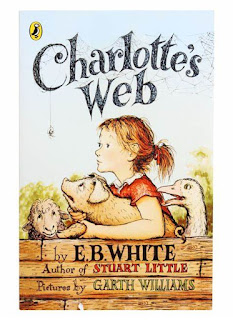
Most books offer the potential to address many of these functions at once.  For example, Charlotte's Web (E.B.White) simultaneously offers new knowledge about spiders and the animal world, addresses the complex issue of dying, and deals with many elements of the human condition, including love and companionship.

In short, literature offers "endless possibilities" for readers to explore their world and learn from it, to enter "other worlds" and to engage in meaning making (Cairney, 1990).