Showing posts with label reading support. Show all posts

Wednesday, June 28, 2017

Being Creative With Oral Reading for Young Readers

1. Because oral reading offer some important functions
  • It helps teachers and parents to observe and make 'visible' children's reading processes (what's going on in their heads)
  • It helps children to develop reading fluency and it supports vocabulary development
  • It can help us to assess reading progress and diagnose difficulties
  • It's a skill for life that we don't want to lose
I've written about oral reading before covering a variety of topics, including:

How to listen to children reading (HERE & HERE),
The importance of reading to and with children (HERE), and
Readers' Theatre (HERE).

Teachers have known for a long time that oral reading can be a valuable instructional method, but sadly, for many children, reading around the group (or worse still the class) kills interest and motivation. But we know from research that 'repeated readings' can improve fluency and ability (e.g. Stoddart & others 1993, Rasinski 1990, Rasinski & Hoffman 2003). So how can we move beyond 'round robin' reading and embrace more creative and enjoyable approaches to oral reading?

In this post I want to offer some suggestions for how teachers and parents can make oral reading more effective, as well as enjoyable and even fun!


2. Making it fun and enjoyable

Above: Bec reads to her day-old sister
How can we make repeated or oral reading fun? Here are some key elements to help achieve this.

1. Choose appropriate material for your children - use graded material at varied levels; favourite passages from books the class has heard or read (e.g. Roald Dahl or Dr Seuss books work); jokes & riddles; poetry or songs that they know; speeches and famous quotes.
2. Ensure that students are reading at their appropriate level.
3. Use varied strategies and avoid simply reading around the group.

3. Some alternative strategies

Most of the ideas that follow can be found in a great article by Mary Ann Cahill and Anne E. Gregory published in 'The Reading Teacher'. Here is their description of oral reading in a US 2nd grade classroom they had worked in:
'One pair is rolling dice and using different voices to read; a small group is reading to small, plastic animals on their desks; three students are wearing masks while reading; and another pair is using little, red-beamed flashlights to shine on each word as they read.'
What are some simple novel ways to help children remain motivated and enjoy oral reading?

Above: Evie reads to her pet cat
1. Read to prepare for performance - By this I mean, putting exciting material in children's hands, letting them practice and then asking them to share it with a group or the class (e.g. read a favourite section from a book, read a song, silly poem etc).
2. Try Readers' Theatre - I've written about this before (HERE). Obtain some free scripts and let your children have fun reading together in small groups to present the scripts to others.
3. Read to someone or something - This might seem strange, but some teachers get their children to read not to other people but to other 'things'. A number of classes in the UK and the US have had children read regularly to a school dog (read more HERE) with great success and benefits. Some creative teachers have had their children read to plastic dinosaurs (!), a favourite doll etc.
4. Some turn it into a game such as 'Reading Dice' - This involves getting children to discuss the different voices a character could have for a reading extract; they then write 6 of them on the board and giving them the numbers 1-6. They then have children work in pairs or groups to take turns, roll the dice and use the voice that matches the number.
5. Newsreader or media presenter - Teachers have a microphone (it can be a fake one) and ask children in pairs to conduct an interview for an appropriate extract.
6. Reading Masks - the children practice reading passages using the voice and persona of the mask they are wearing (these can be animals, super heroes etc).
7. Use songs for reading - The use of songs has the added advantage that the rhythm, sound repetition, melody etc can be used to support reading (see my recent post on this topic HERE)

Summing up

Oral reading is a valuable instructional tool and has been neglected of late. It has also been misused for many years with the effect that some children have found it less than rewarding. But it can and should be enjoyable and fun. I'd love to hear of your own experiences with oral reading. Do you have any great ideas? Post a comment. 

A useful reference

Mary Ann Cahill & Anne E. Gregory (2011). Putting the fun back into fluency instruction, The Reading Teacher, Vol. 65, No. 2, pp 127-131.

Thursday, November 26, 2015

20 Great Non-Fiction Books for Reluctant 6-12 Year Olds

This is a repeat post as I haven't posted on non-fiction for a while. Some of these are ideal books for boys who are reluctant. Some young readers find non-fiction more engaging than fiction, so finding good non-fiction is worth the effort. In an earlier post I talk about this at length (HERE). This post is simply a quick review of some good books published in the last few years, it isn't meant to be comprehensive. I have arranged the examples I offer roughly in order of difficulty and age interest. It goes without saying that there are girls too for whom non-fiction is also more engaging.

'Bilby Secrets' Edel Wignel, illustrated by Mark Jackson

This is a delightful non-fiction picture book that teaches us in narrative form about the life of the wonderful bilby, an Australian marsupial. It traces the events of a typical day for mother and baby, and the perils of native and feral animals as the baby Bilby tries to survive life in the Australian landscape. Edel Wignel's story keeps the reader interested, while Mark Jackson's brightly coloured illustrations add drama and detail to this piece of discovery learning in narrative form. Children aged 2-6 will love this book. It is also a great book for classroom-based units and learning. 


'Tom the Outback Mailman' by Kristin Weidenbach and illustrated by Timothy Ide (Lothian)

'Tom the Outback Mailman' by Kristin Weidenbach and illustrated by Timothy Ide won the Eve Pownall prize for information books. This delightful true story of a great Australian character is based on Weidenbach's story of Tom Kruse who was the driver of the Marree-to-Birdsville mail. Once a fortnight for twenty years Tom loaded his Leyland Badger truck and drove 1,000 km across perilous territory on little more than a dusty dangerous rutted track. His job was to deliver mail and provisions to arguably the most isolated residents in the world. Tom was a great Australian character who lived in the middle decades of last century

The book is a version for younger children (aged 5-8 years) that Weidenbach has adapted into a delightful picture book for young readers. It offers just a small slice of the events of Tom's life. When floods cut the Birdsville Track, the station residents run out of supplies and worse still, the Birdsville Hotel runs out of beer! It takes Tom’s ingenuity to beat the floodwaters and get the mail and the beer through. Timothy Ide provides wonderfully detailed watercolour illustrations that add to what is already a compelling narrative account.

'Children's Quick and Easy Cookbook' by Angela Wilkes and published by DK Publishing.  

The Children's Quick and Easy Cookbook has 60 simple recipes that children will enjoy. The recipes are easy enough for most children to use, and are mostly suitable for the whole family. It contains a mix of healthy snacks, full meals, and delicious treats and sweets. The meal recipes include pita pockets, falafel, pizzas, Turkish meatballs, tacos, Thai satay kebabs, lemon fish sticks, filled crepes, chicken curry and rice. There are also many wonderful sweets including simple baked bomb Alaska, Tiramisu, parfaits, carrot cake, cookies and many more.  

The book also outlines cooking techniques, good food hygiene, kitchen safety, and step-by-step instructions. Full colour photographs are used throughout the book.

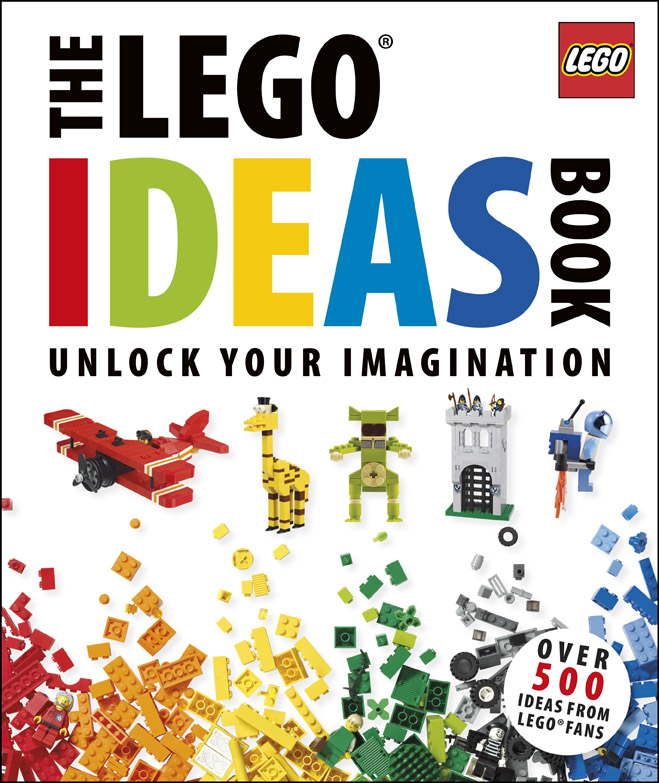
'The Lego Ideas Book' by Daniel Lipkowitz and published by DK Publishing 

If you have a box of Lego pieces resulting from your purchase of dozens of Lego sets, then you need this book. The book has 500 ideas for how you can make new things out of your box of Lego pieces. The book has six themed chapters—transportation, buildings, space, medieval history, adventure, and useful things to make. Each section has templates for models and ideas for how you might create your own. The book has 200 pages of tips and advice, illustrations and ideas.  It is well illustrated and beautifully designed. This book will keep children aged 7 to 70 years busy for hours.

'How Machines Work: The Interactive Guide to Simple Machines and Mechanisms' by Nick Arnold & Allan Sanders, published by Quarto Children's Books and distributed in Australia by Walker Books.

This book is a unique interactive guide to understanding simple machines and mechanisms. It introduces basic physics both in words and through models that the reader manipulates. It has 9 double-page spreads that introduce the reader to a key mechanical principle that you then put into practice by building one or more working models. The text and illustrations offer an easy to understand description of the mechanical principle and how to make a model that demonstrates it. This hands-on approach makes it easy to understand how these principles work and how they can be applied to everyday objects, such as cars, bicycles cranes and seesaws. Everything that you need is within, or attached to the book. The concept is brilliant

'Locomotive', written and illustrated by Brian Floca (Atheneum Books for Young Readers, an imprint of Simon & Schuster Children’s Publishing, 2013).

Floca is the author and illustrator of many books for children, including three Robert F. Sibert Honour Books: 'Moonshot: The Flight of Apollo 11', 'Lightship', and 'Ballet for Martha: Making Appalachian Spring', written by Jan Greenberg and Sandra Jordan.

'Locomotive' is the story a family’s journey across America in 1869 on the newly completed transcontinental railroad. The star of the story is the steam engine, but a mother and her two children and all those who keep the train moving are essential extras as it races down the Californian coast.

For the true enthusiast of trains the author gives us plenty of technical information about 19th-century railroading. This is not surprising, as Floca seems to have aimed at a very broad audience. Some will be pulled along by rhythm of the story, others will love the train details, and some will revel in the sense of history (even in the very typefaces used). Floca uses free verse and as you'd expect plays with words and sound to great effect. 

The technical craft and book design are both brilliant, as Floca uses every device to good effect to engage readers in this exciting journey by an incredible piece of 19th century technology.

Even the way he uses his pictures provides a cinematic style that is hard to create, but which adds to the richness of the text. The detail in the illustrations is superb; it is as much draftsmanship as it is fine illustration.

'Locomotive' won the 2014 Caldecott Medal.

'Kubla Khan: Emperor of Everything' by Kathleen Krull and illustrated by Robert Byrd

Kubla Khan is not well known and has often been mentioned historically only indirectly or in passing. Who was the man who Coleridge described in his famous poem 'Kubla Kahn'? This is the presumed grandson of Genghis Khan who reputedly built the imperial city of Beijing, and fathered a hundred or more children. History and legend suggest that he ruled over the greatest empire of the time, and that it was more advanced than previous civilisations in science, art and technology. The narrative text is engaging and should hold the interest of young readers, and Robert Byrd beautifully illustrates the book. Readers aged 7-9 years will enjoy this 42 page illustrated book.

'Simpson and his Donkey' by Mark Greenwood & illustrated by Frané Lessac

Every Australian and English child who grew up in the 1950s to 70s in Australia would know of the story of Simpson and the donkey he used to retrieve wounded men on the WWI battlefields of the Gallipoli Peninsula in Turkey. This was one of the greatest of all defeats for the forces of Britain, France and of course the Australian and New Zealand armed forces (the ANZACs). In the midst of the massacre of thousands of allied troops and the eight-month siege of this isolated beachhead, a man and his donkey were responsible for saving many lives, before Simpson was eventually killed on yet another mission.

Mark Greenwood offers a moving story of John Simpson Kirkpatrick and how he and his donkey, Duffy, rescued over 300 men during the campaign at Gallipoli. It traces his life from his home in South Shields in Newcastle (England) and his journey from the Tyne Dock to Turkey. Informed by detailed research, the text includes a brief biography of the man, details of his work at Gallipoli and also the little known story of how one of the many he rescued was actually a childhood friend.

Frané Lessac's illustrations are a wonderful complement to the story and have strength of colour that is not controlled by conventions. There are skies of yellow, orange, aqua, purple and all shades of blue. Her unique style draws your eye deep into each plate; no details can easily be missed.
 
'Usborne Complete Book of Art Ideas' by Fiona Watt and published by Usborne

The Usborne Art book has almost 300 pages of original ideas for painting, drawing and making collage. This fantastic book is ideal for children of varied (and minimal) artistic ability. It is also suitable for just about any age (but it's ideal for 7-12 year olds). The book will help children to explore varied artistic forms and materials, including chalk, pencil, paint and watercolour. It offers ideas that require the use of a wide variety of artistic techniques, including painting, drawing, sticking, ink, ripping, rubbing, smudging and colouring. Each of the many ideas is illustrated with very easy to follow step-by-step instructions. The book also offers tips on brushwork, mixing colours, thinning and thickening paint, how to shade and add patterns, using oil pastels, acrylics and more. 

'I Was Only Nineteen' by John Schumann and illustrated by Craig Smith (Allen & Unwin)

John Schumann wrote an unforgettable song 'I Was Only 19' in 1983 with the band Redgum. It had the memorable refrain 'God help me, I was only 19'. The lyrics of this well-known Australian song have been brought to life in a children's picture book illustrated by the widely acclaimed Australian illustrator Craig Smith. The words are used exactly as in the song. With Craig Smith's wonderful watercolour and line drawings they are a moving reminder of the Vietnam War. This was a war that was fought in different ways to the previous great wars and had less universal support than previous conflicts in which Australia and other nations had fought. This was a war that for many didn't seem 'quite real', and our servicemen still carry the physical and mental scars. The book is a moving insight into a war fought by young men who knew little about the country in which they fought and why they were there. It would be an ideal book to share with children aged 6-12 years as we approach ANZAC Day in Australia on April 25th.

'Tales of the Greek Heroes' by Green Roger Lancelyn (Penguin, 2009)

The beautiful land of Greece is haunted by more than three thousand years of legend and history. In this gripping retelling of the Heroic Age, you'll meet the mighty Poseiden, God of the Sea; Zeus, the King of Heaven and Earth; Hades, Lord of the Dead; Artemis the Huntress; Aphrodite, Immortal Lady of Beauty and Love; and many more mortals and gods. Their adventures are some of the oldest and most famous stories in the world.

This collection of well-known Greek myths will be enjoyed by readers aged 11+

'A Tale of Troy' by Lancelyn Roger Green (Penguin, 2012)

This book is a companion to 'Tales of the Greek Heroes'.

Step back into the Heroic Age with the story of Helen and the judgement of Paris; of the gathering of the heroes and the siege of Troy; of Achilles and his vulnerable heel. And join Odysseus, the last of the heroes – famous for his wisdom and cunning – on his thrilling adventures as he makes the long journey home to Greece.

Once again, perfect reading for children aged 11+

'Tales of Ancient Egypt' by Lancelyn Green Roger (Penguin, 2011)

In this thrilling collection of the great myths, you'll encounter Amen-Ra, who created all the creatures in the world; Iris, searching the waters for her dead husband, Osiris; the Bennu bird and the Book of Thoth. But there are also tales told purely for pleasure, about treasure and adventure – and even the first ever story of Cinderella.

Ages 10+ will love this collection


'Courage Has No Color: The True Story of the Triple Nickles. America’s First Black Paratroopers' (Candlewick Press, 2013)


This is a true story that has been a long time coming. It tells in a fair but powerful way of the racism that has often existed in armed forces around the world. Americans may well have heard of the Tuskegee Airmen, but few would know of the 555th Parachute Infantry Battalion - the Triple Nickle. These were the first US black paratroopers. They showed that black soldiers could do anything their white counterparts could do. The text and over 100 carefully labelled photographs in this 150 page book offer us an insight into how some brave and persistent African American men paved the way for others to be a full part of the US armed forces.

Tanya Lee Stone (author of 'Almost Astronauts') has done extensive research to tell her true story for readers of all ages. Boys in particular will love reading and looking at the historic photos. The work took Stone almost 10 years and the meticulous care and passion shows in this wonderful book. This amazing story will challenge all readers irrespective of age, race or ethnicity. The book recently won the YALSA Award for Excellence in Nonfiction. It is a very worthy winner.

'The Dangerous Book for Boys' by Conn Iggulden & Hal Iggulden (Harper Collins)

As they say, this book is an 'oldie' but a 'goodie'. It offers a range of ideas for making and doing things. For example, how to make the greatest paper plane in the world, building a tree house, all about dinosaurs, making a G0-cart, how to go fishing, juggling, all about Australian snakes, skimming stones and so on. This isn't a simple book (about grade 4-5 standard) but the content will help boys to 'stretch' themselves. It is also a great book for boys to read and 'do' with an adult. I've reviewed it in more detail here.

'You Can Draw Anything' by Kim Gamble

Kim Gamble is a well-known illustrator of Australian picture books. In this very accessible book he shows you how to draw just about anything you want to. Most how-to-draw books are either simple and recipe like or far too complex. The book offers principles and guidance for drawing many objects, including varied animals, people (bodies and faces), and landscapes including perspectives. He also offers techniques for shading and colouring. He intersperses the many diagrams and drawings with stories, jokes and examples that make the approach lots of fun, engaging and effective. It is ideal for children aged 7-10 years.

'Amazing Grace: An Adventure at Sea' by Stephanie Owen Reeder
This is a story about the courage of 16-year-old Grace Bussell. The year is 1876, when a steam ship, the 'Georgette', runs aground near Margaret River in Western Australia. On shore an ordinary 16 year-old girl sees the unfolding drama and heads off on horseback with the family servant Sam Isaacs to try to help the stranded passengers. Grace and Sam head into the water with their horses and rescue many people. Using eyewitness accounts and other historical documents as well as some slight embellishment to fill in details to sustain the narrative, Stephanie Reeder brings this true story to life.  This wonderful story is an excellent follow on from Stephanie Reeder's previous book, 'Lost! A True Tale From the Bush'. This previous story was also a true story. It told the story of 3 children who became lost on their way home in 1864 and spent eight days alone. It was shortlisted in the 2010 CBCA children's literature awards.  
'The Boy from Bowral' by Robert Ingpen

Robert Ingpen is known primarily as an illustrator but he is also a fine writer with 13 works of fiction and over 20 non-fiction. His most recent book as writer and illustrator is 'The Boy from Bowral' which tells the biographical story of Australian cricketer Sir Donald Bradman who is the greatest cricketer of all time. Bradman is seen as a legend in any cricket playing nation and Ingpen provides a lucidly written and historically accurate picture of Bradman's early life in Bowral, his rise to prominence as a cricketer, and his sporting career. The images are drawings based primarily on existing photographs, so the keen cricket fan (like me) will feel that they recognise some of them. The cover (which wraps around to the back) is a wonderful sequence of images that appear like a series of video frames that capture the classic Bradman cover drive. I loved this book and any cricket following child or adult will also enjoy it.

'Neurology: The Amazing Central Nervous System' by April Chloe Terrazas (Crazy Brainz, 2013)

Neurology explores the complexities of the Central Nervous System, beginning with the different sections (lobes) of the brain, continuing to the spinal cord and concluding with the structure and function of the neuron. Readers will learn how to pronounce key terms like Cerebellum, Occipital Lobe and Sensorimotor Cortex. They will also discover the functions of the Cerebral Cortex, Basal Ganglia and the Hippocampus! The book will also help them to understand the way the brain is organised - Forebrain, Midbrain, Hindbrain... and much more. 

The book has wonderful images that will engage them and color-coded text will reinforce lots of new learning. A great book for boys who love science and fancy themselves as brain surgeons! This is a book that will appeal to boys (and girls) of all ages.

'Into the Unknown' by Stewart Ross and illustrated by Stephen Biesty

This wonderful hard cover book from tells the story of 14 famous journeys throughout history, including 'Pytheas the Greek Sails to the Arctic Circle in 340BC', 'Admiral Zheng He Crosses the Indian Ocean in 1405-07', 'Neil Armstrong & Buzz Aldrin Land on the Moon in 1969', 'Marco Polo Rides the Silk Road to China in 1271-74' and many more.

Each story has multiple drawings, maps and a giant fold out cross-section. Boys will read and look through this book for hours. You will also enjoy reading this exciting book to boys. There are many other 'cross-section' books by Stephen Biesty and others (here), including 'Egypt in Cross Section', 'Castles' and 'Rome'.

'Movie Maker' by Tim Grabham, Suridh Hassan, Dave Reeve and Clare Richards

'Movie Maker' is another wonderful resource from Walker Books designed for primary school aged children (7-12 years). It is a kit that contains ideas for making movies, and a handbook that shows you how armed simply with a video camera, you can make movies. The handbook talks about techniques like storyboarding, production, equipment, sound and lighting, design, special effects, how to vary camera shots and so on. It also includes some very cute aids such as a binocular mask, an adjustable frame, sample story boards, character props (e.g. glasses, moustache) and even authentic theatre tickets. All it doesn't include is the popcorn.


'The Book of Potentially Catastrophic Science: 50 Experiments for Daring Young Scientists' by Sean Connolly

I wanted this book as soon as I saw it.  Well, as soon as I saw the title!  The book is all about igniting interest in science. Sean Connolly achieves this with lively, hands-on activities that suggest excitement and "danger". Simple experiments that pop, ooze, surprise and teach will delight boys and girls in upper primary. He also leads the reader through the history of science, and uses simple experiments to demonstrate key scientific principles.

The reader can rediscover the wheel and axle with the ancient Sumerians, or perform an astounding experiment demonstrating the theory of angular momentum. Children can build a simple telescope like Galileo's and find the four moons he discovered orbiting Jupiter.  They can experiment safely with electricity and avoid the more risky approach of Ben Franklin with his Lightning experiment. They will also learn how to re-create the Hadron Collider in a microwave with marshmallows, calculator, and a ruler to demonstrate the speed of light. Or they might simply crush a can using Stephenson's steam can experiment. This is a wonderful book for children aged 9-12 years.

Related Posts

'Meet the Author: Mark Greenwood & Frané Lessac' HERE
'Author & Illustrator Focus: Robert Ingpen HERE
'Getting Boys into Books Through Non-Fiction' HERE
'Making Reading Exciting for Boys' HERE
'New Title for Young Independent & Reluctant Readers Aged 6-12' HERE
 

Saturday, June 6, 2015

Why we need to read to our boys: Ideas & suggestions

Why boys need to be read to

Here are my top 6 reasons why we must read to our boys:

1. We know that books widen knowledge, increase vocabulary and help to teach them about language and the world.
2. We know that being read to at home is linked to later success in reading at school.
3. We know that it helps to build common ground and strengthen relationships.
4. We know that it helps them to develop attention span.
5. We know that it helps us to build stronger relationships with the boys in our lives.
6. We know that it helps to divert them from too much screen time.

For a long time we've known that girls make a faster start in reading in the early years. In the last 2-3 decades the gap between the literacy achievements of boys and girls has widened in favour of girls. Professor William G. Brozo who is co-author of the book 'Bright beginnings for boys' shared this summary of boys' literacy achievements (primarily American data) at an American Literacy conference in October 2008:
  • By grade 4 an average boy is two years behind an average girl in reading and writing
  • Boys make up 70% of special education classes
  • Boys are four times more likely to have ADHD
  • Boys are 50% more likely to repeat a grade than girls
  • Boys are three times more likely to be placed in a reading disability or learning class
So we know we have a problem, but what do we do about it?

Helping boys to become readers

Four fundamental building blocks to get boys reading:

1. Boys are more likely to be attracted to books and reading when the books and the reading events (whether at school, or reading with mum and dad) offer opportunities to discover, experiment, explore, learn new things, make them laugh, consider the curious or unusual, help them to play, see how things work, share trivia tricks and facts with other boys, explore the unknown, and generally do interesting things (see my previous post on this topic here).

2. Boys need to understand the value of story and storytelling from an early age. This can be acquired through early books, the stories you share with them (anecdotes, memories, tall tales etc), traditional stories and fantasy. Until boys value story, they will struggle to cope with reading.

3. Fathers and mothers need to learn how to listen to and read with their sons. Reading to and with boys is often different. You sometimes have to work harder to make it enjoyable. It mustn't be boring or a chore. See my previous post on this topic (here).

4. Fathers have a key role to play in boys literacy and learning development (see my post on research in this area here).


At a more basic level:
  • Boys need a lot of help choosing books that they will not only like, but which they will be able to read. Take the time to help your sons choose books, if they pick up a book with an exciting cover and find that they can't read it this will be a disincentive.
  • Fathers have a special role to play in encouraging boys to see reading as a worthwhile pursuit. Fathers who read will have sons who read. Fathers need to read to and with their sons. A good way to do this with older boys who struggle is to read the first few pages aloud and then ask your son to read on. In this way you'll find that your son can read for longer and cope with harder books.
  • Don't forget the importance of non-fiction. Boys want to learn and non-fiction is often a good way in. Try books about sea creatures, space, sport, transport, technology of any kind (see previous post here). There are varied paths into reading (see previous post here).
  • There is also a place for riddles, joke books, cartoons, poetry and silly rhymes (see my post on this here).
  • Comics, graphic novels and magazines are also a good place to start - get them reading. But don’t forget that it is the quality of the story that will ultimately motivate boys to want to read and so quality literature is important to develop long-term readers (see previous post here).
  • Online reading and research is also a good source of reading challenge for boys.
I hope I haven't given the impression above that only fathers can motivate boys to read. Let's face it, more often than not it is mothers who read more stories to their younger children. But there is an important place for men reading books to and with boys, and research evidence shows that fathers have a key role to play with boys' literacy and learning (see my previous post on this here).

Some sure fire starters for young boys


If you can't get your 3-5 year old boy to listen to a story try one of these ideas to turn this around:

1. Read a book dramatically that lends itself to lots of action, loud noises and maybe a rumble half way through (when the wolf eats Grandma, or the boy gets falls out of the tree). Be dramatic, get their attention!

2. Read a story that they've heard before but mess up the story line as you go along. This is probably how writers invented fractured fairy tales. For example:

The first little pig built his house from straw, but he wasn't stupid, so he used super glue to hold the straw together. The wolf knocked at the door and said, "Little pig, little pig, let me come in." The pig replied, "No, no, no, I've used super glue, get lost." "Then I'll huff and I'll puff and I'll blow you're house down," roared the wolf. "Two chances wolfey, get lost" and so on. It doesn't matter if the story logic breaks down, they will still love it anyway.

3. A simpler version of the above is just to change the odd word. Boys (and girls) love listening for the words you change. They will roar 'Hey, you changed it from dog to frog'! To which you reply, 'Did I?' Even a story with some limitations will suddenly become more interesting.

4. Get out some dress-up clothes and get them involved in acting out the story. Try to involve all members of the family and have lots of fun. You can sacrifice the accuracy of the story in favour of having a great time. Creative and dramatic play based on stories can be a great motivator for story.

Some Great Books for Boys 

I've written a number of posts on good books for boys (including here, here & here), so I won't repeat them here, except to list just 18 wonderful books to read to and enjoy with boys. These books will rarely fail if you read them with boys aged 7-12 years and do it with excitement and passion.

'The One and Only Ivan' by Katherine Applegate (2012)
'Dragonkeeper' by Carole Wilkinson (2003) [And other books in the Dragonkeeper series]
'Boy: Tales of Childhood' by Roald Dahl (1984)
'Prince Caspian' by C.S. Lewis (1951)
'A Monster Calls' illustrated by Jim Kay and written by Patrick Ness (2012) 
'The Hobbit' by J.R. Tolkien (1937)
'Crow Country' by Kate Constable, Allen & Unwin
'The Silver Donkey' by Sonya Hartnett (2004)
'Rowan of Rin' by Emily Rodda (1993)
'The Machine Gunners' by Robert Westall (1975)
'Strange Objects' by Gary Crewe (1990)
'The Iron Man' by Ted Hughes (1968, new edition 2010)
'The Pinballs' by Betsy Byars (1977)
'Watership Down' by Richard Adam (1972)
'The Adventures of Tom Sawyer' by Mark Twain (1876) 'A Wrinkle in Time' by Madeleine L'Engle (1962)
'The Wheel on the School' by Meindert DeJong (1972)
'Incident at Hawk's Hill' by Allan W. Eckert (1971)
'Vinnie's War' by David McRobbie (2011)
Graphic novels like 'Messenger: The Legend of Joan of Arc', the 'Vermonia' series, or the more simple 'The Bloodhound Boys'.


A final comment on literature

As I've stressed above, while it isn't essential for children to begin reading via books or fiction, there is a critical place for traditional forms like children's literature because of the importance of narrative to people. What I'm saying is that while boys might start reading in many different ways, they shouldn't be allowed to avoid the narrative form. As I commented in the third part of a series of posts on the 'Power of Literature' (here) I believe that while it is possible to learn to read without a rich tradition of books and literature, I would argue that it isn’t possible without a foundation of narrative and story. Why? Expert in narrative Harold Rosen offers the perfect answer to my question:
Narratives in all their diversity and multiplicity make up the fabric of our lives; they are constitutive moments in the formation of our identities and our sense of community affiliation.
We build our relationships with one another, share our humanity through the stories we tell about our own lives and those that we have heard from others. So our aim in using factual forms of reading, and alternative forms like graphic novels and factual texts is of worth in it's own right, but it shouldn't completely replace rich narrative forms like literature.

Some books about Boys and reading

Some of the following books offer good general advice about boys and reading

'Bright beginnings for boys: Engaging young boys in active literacy', Debby Zambo and William G. Brozo, International Literacy Association
'Pam Allyn's Best Books for Boys', Pam Allyn which I reviewed here
'The trouble with boys', Peg Tyre
'Best books for boys: A resource for educators', Matthew D. Zbaracki
'Raising bookworms: Getting kids reading for pleasure and empowerment', Emma Hamilton
'The Reading Bug', Paul Jennings

Other Resources


All my posts on boys and education (here)
'Making Reading Exciting for Boys' (here)
'Guys Read Website' - I don't like the design of this site but it has a great set of links to authors who write books that boys might like.
The UK Literacy Trust has a great list of resource links dealing with boys and literacy (here).
The Hamilton Public Library in Canada has a useful site with some good booklists and advice (here)
Max Elliot Anderson's blog 'Books for Boys' has some very useful material and links (here)
You can read all of my posts on boys (here) and boys education (here) using these links.
Family Action Centre at Newcastle University has an Excellent Fatherhood Network and many programs (here)

Wednesday, October 29, 2014

Reading to children: Why & How to do it well?

Listening to your child reading is more complex, and important than people think. While I've written previously on reading to your child (here) and listening to them (here) back in 2008, I wanted to revisit these two topics in the one post. It's easy to do it badly, but not so easy to do well. In this post I'll comment on three things:

  • The value of reading out loud
  • Some DOs and DON'Ts for listeners
  • A couple of specific read aloud strategies

1. Some general comments on the value of oral reading

As an instructional strategy oral reading has some clear advantages:
  • Anyone can do it
  • It ensures that the child reads a specific number of words each day
  • For the skilled listener (usually a trained teacher) it acts as a 'window on the reading process' allowing us to understand what strategies children are using, misusing, not using, what help they need, etc (more on this later)
  • It's an opportunity to build confidence and self esteem
But there are potential disadvantages:
  • It is slower than silent reading
  • The proficient reader does most reading silently, so this is the key reading skill we're working towards, with the exception that skilled audience reading does have a place. I comment on this in other posts. So reading out loud shouldn't be a total replacement for silent reading
  • It is teacher or parent intensive compared to silent reading (oral reading is mostly one-to-one or in small groups rather than individual)
  • It can be a source of frustration for the child and can lead to a loss of confidence and self esteem if the listener is unskilled

2. Some DOs and DON'Ts

Here is my outline of what to do and NOT to do.

Some DON'Ts
  • Don't make unfavourable comparisons between the child you're listening to and another child. Avoid statements like "How come Jason can read that word but you can't?"
  • Don't feel that you need to correct every error, or teach every sound that your child seems to struggle with. Listening to your child is not just an accuracy test. Besides, if your child struggles on more than 5 words on a page then the book is too hard for them (see below).
  • Don't ridicule your child as they read.
  • Don't make the sessions too long (10-15 minutes is ideal). It's better to have two short sessions than one that is too long.
Some DOs

DO Relax - try to make it fun and enjoyable for you and the child. The experience should strengthen your relationship, not weaken it.
DO choose a good time & place - choose a good time when your child is fresh and you are feeling patient and perhaps less stressed. If it has to be after school give your child something to eat and drink and let them relax or play for a while first. And make sure you choose a quiet place without distractions.
DO select books carefully - choose the books well. Hopefully the book will be at the right level, and the child will enjoy it. If the books are boring speak to the child's teacher and try to substitute another book. For help on getting the level right see the "5 finger test" below.
DO encourage your child and praise them - the purpose of the session is to help, encourage and build confidence, not test, frustrate and shatter confidence.


5 more specific DOs

DO talk about the book first - read the title, look at the book, ask if he or she has read it before, ask what they think it's about etc. Maybe even read the first page for your child.
DO let the child hold the book (it's more natural and gives them a sense of being in charge).
DO talk about the book after reading (not as a test, just as a chat).
DO show patience, progress can be slow.
DO help them as they read but don't labour any teaching moment. If they can't get the sound "oar" give them the word after a few attempts and read on. You can come back to this sound on another occasion. Remember that fluency is important for your child to gain meaning from what they are reading and for building confidence. Teachers can give more support as part of oral reading because they're trained to know what to look for and how to offer many different forms of support. For parents, if you're in doubt give them the word and read on.

3. Some associated strategies

(i) The 5 Finger Technique

This is a basic way to make sure the reading material is at the right level. This is how it is done:
  • Choose the book your child will read (or have them choose one from a range of books).
  • Choose a typical page towards the middle of the book (with lots of words and not too many pictures).
  • Begin to read and each time your child comes to a word that they don't know, hold up one finger.
  • If you end up with five fingers before the end of the page stop reading the book and choose another one.
  • If you have no fingers up by the end of the page then it’s probably too easy, if you have one or two then it’s probably the right level.

 (ii) Pause-Prompt-Praise

This is a strategy I suggest for parents and untrained listeners (like older reading buddies). As a general rule, oral reading should privilege fluency, with errors only being corrected when they break down the meaning. If your child makes errors based on problems with lack of phonic skills or due to poor word recognition skills, it is best to note the problem and come back to them at the end of the story. You might also like to keep a record of such problems in an exercise book; not as a record of failure, but to note areas that need help, to plot your child's progress and as a means to offer encouragement when they overcome problems after practice.

With Pause-Prompt-Praise the only mistakes corrected during the reading are those that get in the way of meaning.

If your child makes a mistake use this simple technique:

PAUSE - after your child makes a mistake for about 3 seconds and say nothing, they may self-correct.

PROMPT - If you child doesn't self-correct either give them the word or offer a prompt (e.g. give them the sound that they are struggling with; help them to sound it out; get them to re-read the sentence)

PRAISE - Encourage your child by praising the fact that they have finished the page, had a go at a difficult word, had no or few errors, read fluently, and seemed to understand what it was about.


(iii) Miscue Analysis

Professor Ken Goodman at the University of Arizona developed Miscue Analysis. It was later refined with his wife Professor Yetta Goodman. Ken Goodman discovered that if you analyse reading errors (he prefers the term "miscue") that they provide a 'window' into the reading process. I share it here as a reminder for teachers and as an insight into the complexity of the reading process for parents. Goodman found that when you analyse miscues carefully you could come to understand what strategies children are using (in their heads) to read. These he found fall into three main categories:
  • word-based strategies (identifying the word by sight, using phonic strategies to sound out words);
  • syntax or grammar (predicting the next word based on the logical grammar or flow of the sentence);
  • semantics (meaning-based strategies; does the word make sense in this sentence or passage?).
He also noticed that at times readers over or under use specific strategies or fail to 'orchestrate' these key language strategies. For example, they might over-use prior words and not read ahead (so it makes sense or is grammatically correct with what precedes the word, but not what follows it), or they might over or under use one of the three key strategies. Here's a simple example of a bit of text and three miscues to illustrate.

Original Text - Bill ran across the road to get the ball
  • Reading 1 - Bill runned over the road to get the ball (a problem primarily of syntax showing itself in the addition of a suffix)
  • Reading 2 - Bill can over the road to get the ball (a problem with word recognition and a failure to use syntax)
  • Reading 3 - Bill ran across the toad to get the ball (a problem with under-use of semantics as well as a miscue on the initial consonant of road)
What the above examples would show if repeated by your child is the misuse of different reading strategies. Such miscues are only problems if there are recurrent patterns of this type. Some of these miscues will only become apparent when the child is put under pressure as a reader. If it's too much pressure you should first go back to some more suitable material before jumping to too many conclusions. I need to stress that Miscue Analysis is too complex for untrained listeners to use as a tool, even busy teachers find it hard to apply in the classroom. In fact it is a much more complex than I have described above (this is Prep 101 Miscue Analysis). However, there is a simpler technique - "Running Records" - that teachers find easier to use.

(iv) Running Records

Running records is a simpler technique developed by Dame Marie Clay who was a New Zealand educator who developed the Reading Recovery program. It is still primarily a tool for teachers to use to make sense of mistakes that readers make during reading. Because of its use as part of Reading Recovery the technique tends to have been used in three main ways: to assess an appropriate starting level for instruction; as a way to assess a child's strengths and weaknesses as a reader; as a tool integral to the teaching process. I may do a post on the technique later but I've provided a couple of useful links below that should help.


Final Comments

Oral reading can be a wonderful tool for encouraging reading development and a positive way for parents to help their children. It can also be a way to reinforce failure and frustration. Use it carefully. One final comment. Remember that oral reading should rarely be used as a test by teachers and virtually never should be used in this way by parents. It's a way to provide practice, feedback and encouragement. Make sure that you choose books wisely (the Five Finger Technique should help). Don't provide material that is too hard (this will breed failure and frustration) and don't use material that is too easy (this won't help them to learn new things).

Other resources

For a more detailed outline of ways to support the beginning reader beyond just listening to them you can consult my website here.

Teachers can find a good introduction to Running Records here and a more detailed teachers description of the technique here.

For a more detailed description of Miscue Analysis click here and Ken Goodman's work here.

Monday, February 24, 2014

Making oral & repeated reading fun, while increasing fluency

1. Oral reading is important. Why? 
  • It's an important skill for life
  • It helps teachers and parents to observe and make 'visible' children's reading processes
  • It helps to develop reading fluency and support vocabulary development
  • It can help us to assess reading progress and diagnose difficulties
I've written about oral reading before covering a variety of topics, including:

How to listen to children reading (HERE & HERE),
The importance of reading to and with children (HERE), and
Readers' Theatre (HERE).

Teachers have known for a long time that oral reading can be a valuable instructional method, but sadly, for many children reading around the group (or worse still the class) kills interest and motivation. But we know from research that 'repeated readings' can improve fluency and ability (e.g. Stoddart & others 1993, Rasinski 1990, Rasinski & Hoffman 2003). So how can we move beyond 'round robin' reading and embrace more creative and enjoyable approaches to oral reading?

In this post I want to offer some suggestions for how teachers and parents can make oral reading more effective, as well as enjoyable and even fun!


2. Making it fun and enjoyable

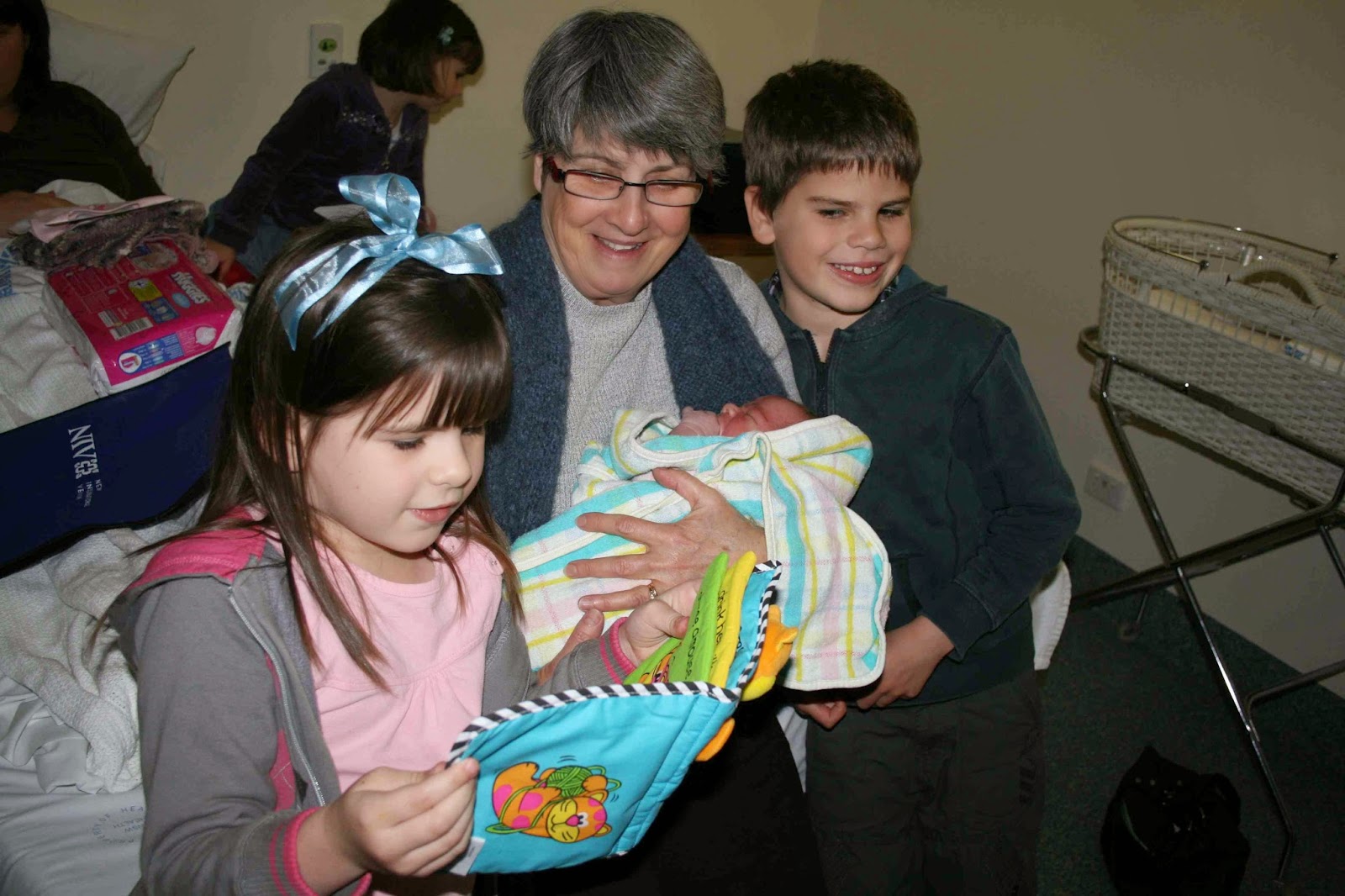
Above: Bec reads to her day-old sister
How can we make repeated or oral reading fun? Here are some key elements to help achieve this.

1. Choose appropriate material for your children - use graded material at varied levels; favourite passages from books the class has heard or read (e.g. Roald Dahl or Dr Seuss books work); jokes & riddles; poetry or songs that they know; speeches and famous quotes.
2. Ensure that students are reading at their appropriate level.
3. Use varied strategies and avoid simply reading around the group.

3. Some alternative strategies

Most of the ideas that follow can be found in a great article by Mary Ann Cahill and Anne E. Gregory published in 'The Reading Teacher' a couple of years ago. Here is their description of oral reading in a US 2nd grade classroom they had worked in:

'One pair is rolling dice and using different voices to read; a small group is reading to small, plastic animals on their desks; three students are wearing masks while reading; and another pair is using little, red-beamed flashlights to shine on each word as they read.'
What are some simple novel ways to help children remain motivated and enjoy oral reading?
 
Above: Evie reads to her pet cat
1. Read to prepare for performance - By this I mean, putting exciting material in children's hands, letting them practice and then asking them to share it with a group or the class (e.g. read a favourite section from a book, read a song, silly poem etc).
2. Try Readers' Theatre - I've written about this before (HERE). Obtain some free scripts and let your children have fun reading together in small groups to present the scripts to others.
3. Read to someone or something - This might seem strange, but some teachers get their children to read not to other people but to other 'things'. A number of classes in the UK and the US have had children read regularly to a school dog (read more HERE) with great success and benefits. Some creative teachers have had their children read to plastic dinosaurs (!), a favourite doll etc.
4. Some turn it into a game such as 'Reading Dice' - This involves getting children to discuss the different voices a character could have for a reading extract; they then write 6 of them on the board and giving them the numbers 1-6. They then have children work in pairs or groups to take turns, roll the dice and use the voice that matches the number.
5. Newsreader or media presenter - Teachers have a microphone (it can be a fake one) and ask children in pairs to conduct an interview for an appropriate extract.
6. Reading Masks - the children practice reading passages using the voice and persona of the mask they are wearing (these can be animals, super heroes etc).
7. Use songs for reading - The use of songs has the added advantage that the rhythm, sound repetition, melody etc can be used to support reading (see my recent post on this topic HERE)

Summing up

Oral reading is a valuable instructional tool and has been neglected of late. It has also been misused for many years with the effect that some children have found it less than rewarding. But it can and should be enjoyable and fun. I'd love to hear of your own experiences with oral reading. Do you have any great ideas? Post a comment. 

A useful reference

Mary Ann Cahill & Anne E. Gregory (2011). Putting the fun back into fluency instruction, The Reading Teacher, Vol. 65, No. 2, pp 127-131.