Showing posts with label early childhood. Show all posts

Wednesday, May 3, 2023

The Importance of Play Revisited

One of the most popular posts I've ever written on this blog (in fact the 2nd most popular at 35,000 reads) was one that considered how soon children can and should start writing (in the sense of writing 'real' words)? This might seem a silly question today, but for those of us over the age of 50, we all recall that researchers, educators, teachers and parents assumed that children should only learn to express themselves in handwriting once they had the foundations in listening, speaking, reading, writing letters and pretty much in this order. Of course, now we know this was incorrect.
 

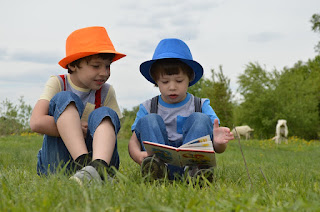
Above: Two children reading together

While there were some reasonable grounds for supporting the traditional order, including the young child's difficulty physically handling pencils to create letters and words, more limited hand eye coordination etc, we accept now that it was simplistic to assume that there needed to be a lock step developmental sequence for spoken and written language. 


We also know, there are good reasons (and evidence) to support the early introduction of writing early (and some of us spent many years making this point). For example, while educators, psychologists and paediatricians once assumed there is little communicative intent with a newborn baby, it's clear that almost from the first day of life, babies begin to respond to their world. And many of their very early vocalisations, eye movements, gazes, facial movements and body movements are attempts to communicate. I'm a bit of a baby whisperer myself, and can get smiles from babies very early (and NO older readers, it isn't 'wind'!!).

Well known paediatrician Dr Kim Oates gave a wonderful lecture on this topic at New College in 2006 as part of the New College Lecture series (that at the time I hosted here). While speaking follows well after the ability to hear and respond to sound, attempts to communicate commence almost immediately. Babies will begin to focus their eyes on objects, and particularly faces talking to them VERY early.

Lydia writing at Palace of Versailles

Any as for writing, parents will attest to the marks small children will make on floors, walls and paper if they get hold of a crayon of pencil! Children begin attempting to place their mark on the world as soon as they can grab anything that will make a mark. It's as if they want to be able to say:

"Look, I did this. This is MY mark." 

And of course, if you ask older toddlers what it says, they will often say things like, "me and mummy", "It's just a word", "it's a drawing", "dog" etc.

What do we know about early scribble and drawing?

We now know that even children's earliest scribbles very quickly have meaning associated with them. While at first children are as much interested in the gross motor movement (the rhythmic drawing of circular patterns, fast scribble to fill a page etc), they soon begin to attempt much more, as they seek to communicate or create meaning through their scribbles, patterns and drawing.


Above: Sample from the "Young in Art" site showing intent in the drawing of a young child

There have been numerous studies of children's early art, and many examined early literacy prior to the 1970s, but few looked closely at the relationship between the two. A colleague and dear friend of mine (still!) from Indiana University, Professor Jerome C. Harste conducted significant research in the late 1970s and early 1980s that taught us much about children's early writing. With his colleagues Professors Virginia Woodward and Carolyn Burke and many graduate students, they studied the early writing of children aged 3, 4, 5 & 6 years. They concluded that the process of scribbling "bears sociolinguistic and psycholinguistic similarity" to the processes we observe in reading and writing [See Harste, Woodward & Burke (1983), Language Stories and Literacy Lessons.

Harste, Woodward and Burke concluded that most children know the difference between reading and writing by age 3, and by this time they are developing an understanding of written language, demonstrated in their scribbles and attempts to write and draw. They argued against traditional developmental notions and suggested from at least the age of 3, children begin to demonstrate elements of authoring. They named this the "authoring cycle". As they examined the early 'scribble' and 'writing' of very young children they identified:

  • Organization (evidence of conventions and the genesis of cognitive processes similar to adults)
  • Intentionality (evidence children knew their marks signify something)
  • Generativeness (an attempt to generate or make meaning)
  • Risk-taking (trying things they hadn't before)
  • Awareness that writing & language have social functions
  • Understanding that context matters in language (i.e. the situation is related to what you write and how you use it)
  • Meaning making in children's 'scribbles', and later words using invented spelling, that formed a text or unit of meaning. They also realized that the sum of the elements collectively meant something.

For example, picking up on just one of the above elements of authoring, Harste, Woodward and Burke observed in the scribbles of children from families who had a first language other than English, some interesting differences. 

The writing below shows just how different scribble can be for four-year-old children living in homes that speak different languages; in this case, English, Arabic and Hebrew. 

They concluded that evidence like this demonstrates that at age four, and even before, these children were trying to write words, and their 'scribble' demonstrated organization similar to the processes used by proficient writers.

So, what does this mean for early writing?

Even though we've moved a great deal in family and school practices in the last 30 years, the following brief comments are still relevant and important for parents and Preschool teachers to understand. 

I believe we need to:

  • Take children's early drawing and scribble seriously - look at it, enjoy it, discuss it with your children (e.g. "What's this?" "What does this mean?" etc).
  • Encourage children to write - give them blank paper and simply suggest they "write"!
  • Let children see you writing and talk about your writing.
  • Look for patterns in children's early drawing and scribble and expect to learn things about your child from it.
  • In short, encourage writing just as much as you encourage reading and celebrate their drawing and 'writing'. How? Put it on the wall, fridge, notice board. Date it and keep it, or make up a writers' folder etc.

I have also written about this topic at length in other publications such as my book "Pathways to Literacy", Cassell: London, 1995.

What's different since I first wrote about this topic over 25 years ago? And why does it matter?

a) The Differences

There are a number of key differences in 2023. 

First, children are more likely to use devices for writing and drawing today. Early scribbles might be made on an iPad or similar device as well as on paper, walls, footpaths etc. And of course, most of these are rarely retained.

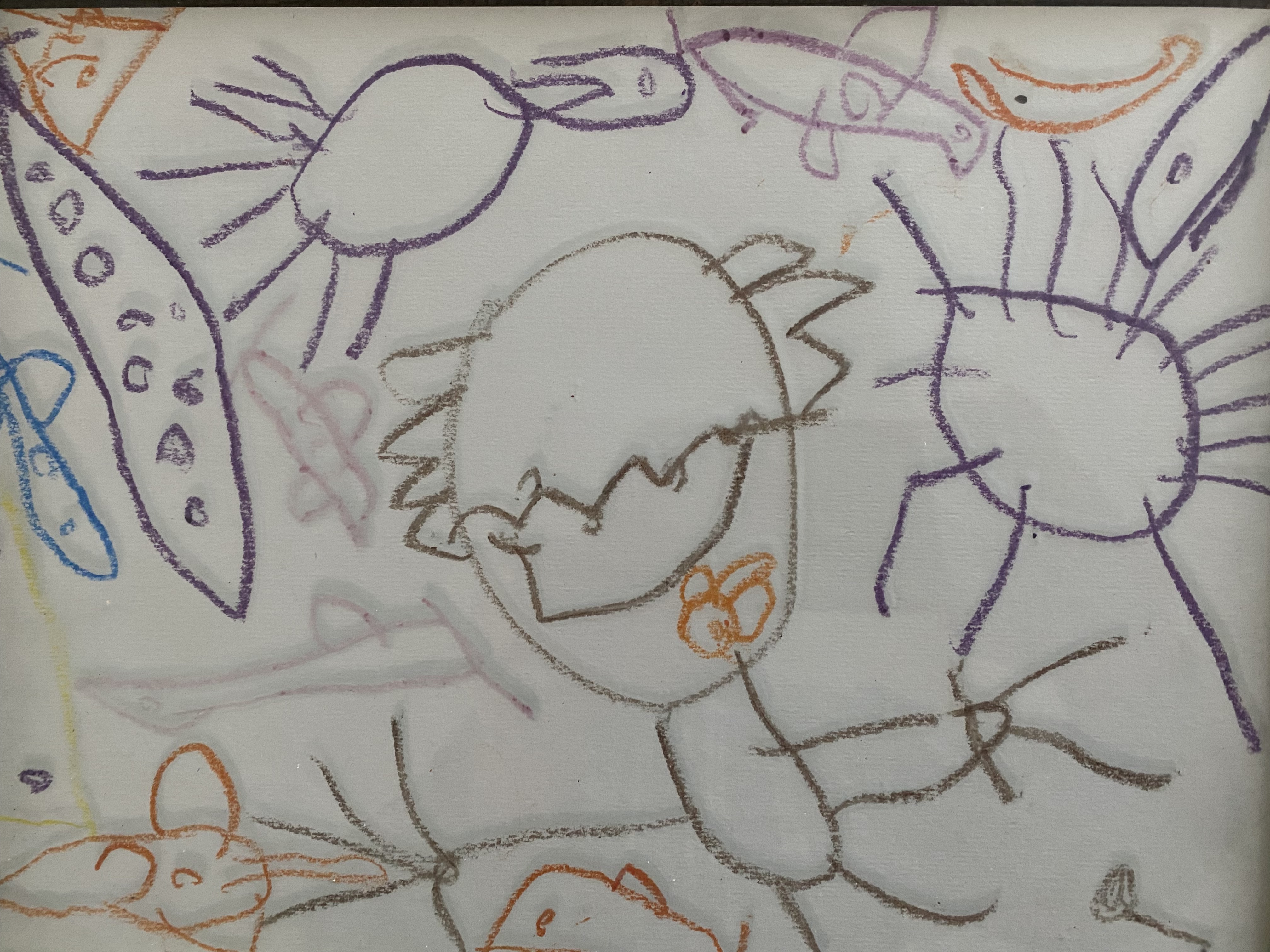
Second, adults should take early writing and drawing in any form more seriously. Look intently, ask your children to explain what they've written, drawn and so on. For example, the image below was drawn in 2007 and is one of my favourites from a grandchild who at the time was 4 years old. We'd been to the aquarium and he drew this back home and explained that he'd drawn it from the perspective of the fish. After he drew the image below he said, "that's how the fish looked at us while we were looking at them." 
Third, children probably spend less time with parents in the earliest development phases (0-4 years) than they did 30-50 years ago; attending playgroups and childcare centres. 

b) The adjustments we need to make

Today, parents and teachers are far less likely to observe their children or students as they compose, whether in text or drawings. 

As parents, we need to see iPads and other devices not just as a way to keep our children quiet, while we do other things. To be sure, there are times when we do NEED to do this. In days gone by the TV and toys played their part in achieving this, as did sand pits, parks etc (but let's not lose these either).

Above: A teacher using an iPad to demonstrate

My recommendation to parents (& teachers) is that when children are using devices, we need to ask them regularly what they're doing, and comment on drawings etc. You might even capture screen shots of special things to share with others (like parents, family etc). Create an electronic portfolio for toddlers.

Teachers of course can make much greater use of iPads and other devices in the classroom to encourage writing, drawing and far more. They are now tools that can be used individually or in groups. I have a graduate student Norah Aldossary who has just completed an interesting PhD on this titled 'The Potential of iPad Apps to support Vocabulary Development in Children Learning English as an Additional Language'.

Other literacy educators have been doing great work in considering how to use devices for learning in classrooms. For example, Michelle Neumann has written about this in 'Teacher Scaffolding of Preschoolers' Shared Story App and a Printed Book' (2019). The many studies by Michelle and others have shown varied benefits from using iPads in this more educational way. Some have found varied benefits, for example:

  • Vocabulary benefits (e.g. Shang & Gray, 2014)
  • Comprehension benefits (e.g. O'Toole & Kannsass, 2018)
  • Word learning in 5 year olds (e.g. Korat et al., 2010)

However conversely, others have found that if used badly, devices might lead to poorer vocabulary and story comprehension (e.g. de Jong and Bus (2003). This seems linked to the children ignoring the text and 'reading' the pictures alone. I'd also suspect, this is linked as well to less child and adult interaction, which we know 'stretches' children's language and learning.

Another interesting study by Roskos, Carroll and Burnstein (2012) looked closely at how teachers used the iPads. They found benefits when teachers used the iPad to extend shared reading by asking questions, explaining word meanings and engaging the students in conversation as they read the iPad stories. This of course leads to development.

In short, as we live in times where the parent and child, or the teacher and her/his students no longer sit reading book stories like they once did with their children, the iPad has potential to facilitate play and experimentation with language and with it growth in language, reading and writing.

Summing up

Children's play always has been, and still is, very important for learning. While the world has changed as technology has developed, the importance of stories and the interaction of children with adults as well as other children, is a key factor in early learning. There is a freedom in play that encourages:

  • Risk taking
  • Experimentation
  • Boldness

We must never allow our busyness, or the convenience of devices to reduce the place of play in children's early years, both prior to school, but also at school. This is a challenge that teachers and parents alike need to take on.


Tuesday, March 22, 2022

'Discovering' Literature


I first wrote about ‘discovering’ literature in a book published in the 1990s called ‘Pathways to Literacy’. In it I explained it took me until I was 8 years old before I read my first book. This was in spite of the fact that I’d been able to read since about 4-5 years of age! The first book I truly 'read' was Jules Verne's ‘Twenty Thousand Leagues Under the Sea’. I had read school readers and some school magazine stories, a lot of comics and a couple of editions of Boys Own Annual. But I had never read a novel of my choice. At school, I’d only ever read for functional purposes.


But that changed when I was given Twenty Thousand Leagues Under the Sea at my Father’s Miners’ Trade Union Christmas party. It was this book that taught me things about reading I'd never known before.  As I wrote in ‘Pathways to Literacy’:


“I lived through this book" (to use Louise Rosenblatt's well known phrase). I could almost smell the leather in Captain Nemo's Cabin. I felt the panic of the sailors on the wooden hulled ships at the terrifying sight of a glowing 'eyed' monster hurtling towards them in the darkness. I also felt deep compassion for the people inside doomed to death.”


There was a sense of excitement and commitment to the text evoked by this story. This had not been generated by my school readers. The formal reading in my first 2-3 years at school had a range of banal plots, impoverished language and weak characterization. The stories were written to teach me, rather than being provided to engage, enrich and transform me through the power of story.


I believe that ‘first’ book changed me as a reader, turning me from a passive consumer of text into an active meaning maker. In response to the book I was 'creating' text in partnership with the author!  I was to read the book many times and eventually others as well.


Years later, as a young teacher I was to observe many children who like me as a young child, never read books except to complete a school task. I helped to run a community literacy centre for a number of years where parents would bring their children to me for help with reading. I discovered something interesting. Virtually all the children who had reading problems, behaved as if they were reading textbooks.


Like me as a child, “… they were mere consumers of other people's texts, not creators of meaning in the fullest sense of the word. The attention of the readers was often focused on the surface features of the words in the text, and not necessarily the construction of meaning.”


As teachers, our definition of what literature is, also has an effect on the way we value and use literature in classrooms.  For example, some teachers see it is as a vehicle for sustaining our cultural heritage.  For those who see literature in this way, it is the means for ensuring that all students have access to an assumed central and essential cultural knowledge, based on an exclusive cannon of special literature.  Other teachers see literature as the provider of significant experiences which are seen as central to the social fabric of family life.


While one cannot deny that literature also fulfills these functions, each misses the point that literature is a living tapestry of yesterday, today and tomorrow. It sustains, enriches and sometimes rebukes the cultural practices of our day.


Literature's potential


There are many who are locked within their narrow and limited conceptualizations of what literacy and literature are, and hence they fail to identify all that they can offer.  Literature is not just about story, it is about life, and one's world. In my book, I suggested that literature can fulfill many complex functions.  It can act as:


• a mirror to enable readers to reflect on life problems and circumstances;

• a source of knowledge;

• a source of ideological challenge;

• a lens to peer into the past, and the future;

• a vehicle to other places;

• a means to reflect on inner struggles;

• an introduction to the realities of life and death; and

• a vehicle for raising and discussing social issues. (‘Pathways to Literacy’ T.H. Cairney)


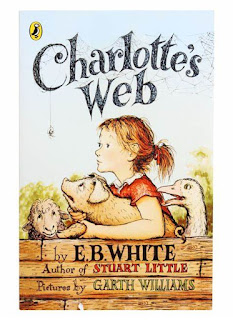
Most books offer the potential to address many of these functions at once.  For example, Charlotte's Web (E.B.White) simultaneously offers new knowledge about spiders and the animal world, addresses the complex issue of dying, and deals with many elements of the human condition, including love and companionship.

In short, literature offers "endless possibilities" for readers to explore their world and learn from it, to enter "other worlds" and to engage in meaning making (Cairney, 1990). 

Saturday, October 31, 2020

Australia's 2020 Children's Book of the Year Awards

The Children's Book Council of Australia (CBCA) has been making annual awards for 75 years. As usual, there have been many wonderful books. In this post I offer a quick review of the Winners and Honour books for younger readers.

1. Picture Book of the Year


Entries in this category should be outstanding books of the Picture Book genre in which the author and illustrator achieve artistic and literary unity or, in wordless picture books, where the story, theme or concept is unified through illustrations (Ages 0-18 years as some of these books may be for mature readers).

Winner 

'I Need a Parrot' written and illustrated by Chris McKimmie

"Have you ever not just wanted something, but wanted it so much that you NEED it? The main character in I NEED a Parrot wants this pet so much that he attempts to persuade the unseen figure that he should get one."

Chris McKimmie has a style of his own. Always quirky he is the master of surprise in his work. His work is always surprising, and some might think a little bizarre at times. But it is always funny and kids get it! As usual this book has a great text well matched to his illustrations. His simple story gets at the problem of keeping and caging pets. As usual, there are few words and he never wastes a single one. The simple style of his illustrations might lead some to thinking, "I think I could do that!" Trust me, you can't! It's good to see Ford Street Publishing sharing the success as well. A small company that supports authors and illustrators by taking risks that sometimes the big publishers won't.


His blank double-page spread with the ‘aha’ moment, is brilliant! 

Chris McKimmie is a writer, artist, designer, musician, lecturer, grandad to seven grandkids and one dog, Teddy, a black Labrador who shares his morning tea biscuits. He has had many solo and group exhibitions of his art, and his previous books have been included in Children’s Book Council of Australia shortlists, long lists, honours lists and notable books lists.

I've been a fan of Chris McKimmie's for many years. You might like to read a post I did on his work in 2014 that includes an interview I conducted with him. HERE

Honour Books

'Nop' written and illustrated by Caroline Magerl

"A heartwarming picture book from award-winning author-illustrator Caroline Magerl about two unlikely loners who forge a forever friendship. Nop is a scruffy kind of bear. He sits on a dusty armchair in Oddmint's Dumporeum surrounded by the beaders, knitters, patchers and stitchers who are much too busy to talk to him. So he watches the litter tumble until, armed with a new bow tie, he has an idea that will change his life forever."

This story began with a memory of Caroline's school holidays in Sydney. Her father was welding a steel yacht in a boat yard and she wandered off . . . only to discover the local dump, a home for the things people throw out! Many years later, her daughter Jen made a teddy bear out of scraps for her father. It's a very sorry-looking, but endearing creature. Named Roadkill, ten years later it still sits on top of his desk. This story began with a memory of Caroline's school holidays in Sydney. Her father was welding a steel yacht in a boat yard and she wandered off . . . only to discover the local dump. A home for the things people throw out! Many years later, her daughter Jen made a teddy bear out of scraps for her father. It's a very sorry looking, but endearing creature. Named Roadkill, ten years later it still sits on top of his desk.

'Three' by Stephen Michael King


This is a very special book! watch a video of Stephen Michael King discussing his work by clicking on the link in the title below. Three is a three-legged dog with determination and a 'free' spirit. He survives due to many others who extend kindness. But his wandering takes him to new surroundings - the country! So many unusual creatures to deal with. And unlike him, they don't have 3 legs. This is a lovely story illustrated in King's typical style with lots of colour and expressive characters. It deserves being listed as an Honor book.

You can view a video of the author discussing his work 'Here'.

2. Book of the Year: Younger Readers

Entries in this category may be fiction, drama or poetry and should be appropriate in style and content for readers from the middle to upper primary years.
Ages 8-12 years.

Winner

'The Little Wave' by Harry Pip


When a Manly school sets out to bring a country class to the city for a beach visit, three very different kids find each other and themselves. Noah is fearless in the surf. Being at the beach makes him feel free. So where does his courage go when his best mate pushes him around? Lottie loves collecting facts about bugs, but she wishes her dad would stop filling their lonely house with junk. She doesn’t know what to do about it. Jack wants to be a cricket star, but first he has to get to school and look after his little sister. Especially if he wants to go on the class trip and see the ocean for the first time.

This beautifully written story in verse form revolves around three quite different Primary school aged characters. The story pivots around a school assignment to write to a pen pal. The plots become interwoven. Lottie struggles to deal with her father’s grief that leads to hoarding. Noah is being bullied by his ‘best friend’. While Jack is living in poverty with a Mum who has an addiction. Diverse themes flow through the book, including of grief, poverty and bullying and poverty which are all explored. As with all situations of this kind, usually support comes from somewhere outside the household. A deserving book of the year for 'Younger Readers' (7-12 years).

Pip Harry is the author of young adult novels I’ll Tell You Mine, Head of the River and Because of You, which was shortlisted for the Victorian Premier’s Literary Awards; the Children’s Book Council of Australia – Book of the Year, Older Readers; and the Queensland Literary Awards. She currently lives and writes in Singapore.

Honour Books

'The Glimme' by Emily Rodda & illustrated by Marc McBride


Fantasy at its finest is found in this gripping read, where the spooky village of Wichaunt and The Glimme, a land of dragons ‘beyond the veil’ are vividly brought to life. Finn and Lori are brave and resourceful and learn to appreciate their family relationships. Teller is the complex, brave hero who nevertheless abandoned his son. The Housekeeper is a magical woman with an amazing secret. The villainous Bravo tricks them all with his subterfuge. Each phase of the quest is written to maximise suspense and excitement. Traditional themes of good versus evil, family relationships and letting your talent shine emerge effortlessly from the story... The extent of the detail and the breathtaking beauty of the illustrations are definite stand outs. 

Emily Rodda has been one of my favourite children's authors for decades (won't mention how many). She continues to write such special stories. Fantasy fans will just love this book. A very worthy Honour book.

'The Secrets of Magnolia Moon' by Edwina Wyatt & illustrated by Katherine Quinn

CBCA award-winning picture book author Edwina Wyatt makes her fiction debut with a whimsical tale of a curious little girl who shares more than just her surname with the moon: They're both excellent secret keepers. Magnolia Moon is nine years old, likes Greek mythology, her best friend Imogen May (who understands the importance of questions like, "If you could be one fruit, any fruit, what would you be?"), wishing trees, and speaking crows. She knows instinctively that buffadillos are armadillos crossed with buffalos and believes there are walramingos living in her garden. She's also the kind of person who can be entrusted with a great many secrets. Each chapter in this novel, which captures Magnolia's year of being nine and ends on Chapter Almost 10, reveals a secret that Magnolia is keeping. But the novel also chronicles a year of change for Magnolia. From her best friend moving to the birth of her little brother Finnegan, Magnolia navigates every challenge and secret that comes her way with the kind of authenticity and innocence that comes from being nine years wise.

 3. Book of the Year: Early Childhood

Entries in this category may be fiction, drama or poetry and should be appropriate in style and content for children who are at pre-reading or early stages of reading.
Ages 0-7 years.

 Winner

'My Friend Fred' by Frances Watt & illustrated by A. Yi

"My friend Fred eats dog food for breakfast. I think dog food is disgusting. My friend Fred howls at the moon. I don't know why. He does a lot of funny things. But even though we are different, Fred is my best friend."

The judges of the CBA said of the book: "This book is full of energy and movement while exploring themes of friendship, tolerance, and difference. The strong message of positive reinforcement that we can be very different in how we act, what we eat, how we behave, how we look and yet still be best friends, provides a highly satisfying ending. The short, engaging sentences, with some repetition, keep the pages turning. Together, the text and illustrations combine beautifully to present fully rounded characters."

Frances Watt gives credit to Anne Yi as the illustrator. He said of her "...she immediately saw the potential for the illustrations to support the idea of an unknown but present narrator. Whether the reader guesses the identity of the narrator through the pictorial clues or hunts for the clues on subsequent readings, the illustrations reward close observation."


Honour Books

'When Billy Was a Dog' by Kirsty Murray & illustrated by Karen Blair

'Can I please, please, please have a dog?' asked Billy.
'Would you walk it every day and wash it if it got dirty?'
'I would, I promise!' said Billy.
Billy wants a dog. He really really really wants one.
Billy's parents aren't so sure. So one morning, Billy takes matters into his own paws.


This is a very worthy Honour Book. The judges said of the work: "...The author and illustrator have worked closely to produce familiar scenes (the dilemma of owning a pet) and make the characters appealing and believable. The illustrator has mixed charcoal, watercolour and gouache to depict Billy, his family and where they live. Facial expressions and body language portray the characters’ range of emotions and feelings. The bright, appealing front cover image immediately attracts and engages young readers... The heart-warming ending provides a solid, satisfying resolution to a highly age appropriate story."

'Goodbye House, Hello House' by Margaret Wild & illustrated by Anne James

This is the last time I'll fish in this river. This is the last time I'll run through these trees. This is the last time I'll dream by this fire Goodbye, old house. Goodbye. A heartwarming story of letting go and starting anew, of moving from the country to the city, with a unique illustration style that allows room and space for the reader's imagination. Hello, new house. Hello!


Margaret Wild has given us so many wonderful books over many years, this one will not disappoint. Anne James is also a wonderful illustrator and contributes much to the success of the book. A very worthy Honour book.

4. Eve Pownall Award 

Entries in this category should be books which have the prime intention of documenting factual material with consideration given to imaginative presentation, interpretation and variation of style.
Ages 0-18 years.

Winner

'Young Dark Emu: A Truer History' by Bruce Pascoe

Bruce Pascoe has collected a swathe of literary awards for 'Dark Emu' and now he has brought together the research and compelling first person accounts in a book for younger readers. Using the accounts of early European explorers, colonists and farmers, Bruce Pascoe compellingly argues for a reconsideration of the hunter-gatherer label for pre-colonial Aboriginal Australians. He allows the reader to see Australia as it was before Europeans arrived – a land of cultivated farming areas, productive fisheries, permanent homes, and an understanding of the environment and its natural resources that supported thriving villages across the continent. Young Dark Emu - A Truer History asks young readers to consider a different version of Australia's history pre-European colonisation.


When making the award to Bruce Pascoe the judges rightly pointed to the wonderful "Visual and textual information is produced on a traditional palette of ochre yellow, red and oranges and charcoal black. Full-page illustrations magnify and enhance detail in the historical photographs, documents, engravings, diary entries and sketches."

In doing so the author seeks to debunk... "terra nullius that positions Aboriginal people as nomadic hunter gatherers through an engaging discussion accessible to primary school and young adult readers." Instead we continue to learn how sophisticated Indigenous culture was (and is) across a period of at least 60,000 years.

Honour Books

'The Illustrated Encyclopaedia of Ugly Animals' by Sami Bayly


Marvel as you enter the fascinating hidden world of ugly animals in this encyclopaedia of the animal kingdom's most unusual and beauty-challenged species. It's time for ugly animals to shine! With more than sixty ugly animals to explore, this compendium of the unusual celebrates the beauty in 'ugliness'. Children and adults alike will pore over the breathtaking scientific illustrations of unusual animals, debating their relative ugliness and merits, learning about science and nature along the way. Featuring illustrations and facts about the thorniest species the animal kingdom has to offer, from the naked mole rat to the goblin shark, aye-aye, sphinx cat, blobfish and many more 'ugly' beauties. This gorgeous hardcover book is illustrated in exquisite detail by exciting new Australian talent, Sami Bayly.

'Wilam: A Birrarung Story' by Aunty Joy Murphy & Andrew Kelly, illustrated by Lisa Kennedy

This is another stunning Indigenous picture book, from Black Dog books. Talented Indigenous artist Lisa Kennedy, respected Elder Aunty Joy Murphy and Yarra River keeper Andrew Kelly combine to create a special book. It tells the Indigenous and geographical story of Melbourne’s beautiful Yarra river, from its source to its mouth, and from its pre-history to the present day.


Lisa Kennedy is a descendant of the Trawlwoolway People on the north-east coast of Tasmania. She was born in Melbourne and as a child lived close to the Maribyrnong River. Here she experienced the gradual restoration of the natural river environment alongside cultural regeneration and reclamation. The experience of loss and reclamation is embedded in her work. The illustrations are richly coloured with a bright palette of green, red, blue, yellow and brown. Many of the plates would be stunning works of art on their own. But in combination with the text from Aunty Joy and Andrew Kelly, we have a special book to share with children aged 3-8 years of age. It is a very worthy Honour book.


Tuesday, August 18, 2020

Eight Great New Books for Children Aged 3-10 years

In this post, I’ve gathered together four new picture books for children aged 3 to 7 years, plus four chapter books for slightly older independent readers aged 7-10 years.

1. 'Ellie's Dragon' by Bob Graham


Anyone who reads this blog will know that I'm a huge Bob Graham fan. As usual, this book doesn't disappoint. With his usual economy of well-chosen words Graham traverses the experiences of childhood and lands in an interesting place - no friendship is imaginary. 

As a toddler, no doubt following a parent around the supermarket, she finds a newborn dragon emerging from an egg carton on a supermarket shelf. Scratch becomes her constant companion. Her mum and her teacher don't seem to see her cute and fiery friend, even though her friends can. Scratch grows over the years and so does Ellie. Scratch was with her at all of her birthdays, and as she grows, so does he. The worlds of Scratch and Ellie also grow larger too. But what happens as worlds change and so do we? You'll need to read the book to find out!

This is a beautiful tale that explores the imaginative world of the child and how this can intersect and diverge from the other 'real' world experiences of others. The usual Bob Graham literary and artistic genius is on display.


2.  'Bear in Space' by Deborah Abela & illustrated by Marjorie Crosby-Fairall


Bear is different from other bears and so when he plans to fly into space, his other bear friends just laugh. But Bear knows he can change his world. He also knows lots about space, but I'm not sure that his friends listen much! He prepares for his great adventure not quite sure what to expect, and what surprises he has in store when he finds himself in the very different quietness of space.

This is a lovely and extremely imaginative story that seems (as much as an adult can tell) to have captured something of the imaginative explorations of the young child. I'm sure that many listeners and readers will see themselves in this delightful picture book.

The brightly coloured illustrations of Marjorie Crosby-Fairall also help to bring this story to life. Her representation of the lovable and clever 'Bear' adds greatly to the experience of reading or hearing the book.


3. 'Dry to Dry - The Seasons of Kakadu' by Pamela Freeman and illustrated by Liz Anelli

 
This wonderfully illustrated factual picture book introduces young readers to one of Australia's most beautiful and ancient places, where Australia's Indigenous people have lived for at least 60,000 years. It is a follow-up to the award winning 'Desert Lake'. It tells of the yearly weather cycle across this ancient and beautiful land. 
 
 
In the tropical wetlands and escarpments of Kakadu National Park, seasons move predictably from dry to wet and back to dry again. Most of Australia has four seasons like other nations, but Kakadu has two! And these two seasons are marked by extraordinary change and diversity in plants, animals, birds, insects and the incredible migratory birds that come during the 'Wet' season. But there's more! There is a movement of insects, lizards, and water dwelling creatures (like fish, turtles and crocodiles), not to mention fruit bats and the changes in flowers and grasses. What I like this book and the 'Desert Lake' is that they offer two texts on each two-page spread. One to be read by or to the children, and a second short smaller font text at the bottom of each page, with more technical language for the teacher and older readers. There is also an excellent more detailed description of Kakadu at the end of the book with some Indigenous words translated. Finally, there's a wonderful map of Kakadu that children will love, as well as a detailed index.

4. 'Kookaburra' by Claire Saxby and illustrated by Tannya Harricks


This an exciting new addition to the narrative nonfiction "Nature Storybooks" series, about kookaburras. Another wonderful book from the exciting team of Claire Saxby an author well-known to children's literature fanatics like me! Her pairing with illustrator Tannya Harricks has been very successful. This their second collaboration and follows 'Dingo' that won the Patricia Wrightson Prize for Children's Literature in 2019. It was also shortlisted for the 2019 CBCA New Illustrator Award and Best Picture Book awards in 2019. It won the Royal Zoological Society of NSW Whitley Award in 2018. I just love Tannya's wonderfully 'simple' oil paintings. A perfect complement to the wonderful text.

In the crinkled shadows night-dwellers yawn, day-creatures stretch and Kookaburra laughs. Kook-kook-kook. Kak-kak-kak.  

This is a wonderful read aloud book, or a great personal read for children aged 5-8 years.


5. 'Weird Little Robots' by Carolyn Crimi & illustrated by Corinna Luyken


When two science-savvy girls create an entire robot world, they don’t expect the robots to come alive. But life may be a bit more magical than they thought.


This is a perfect book for 7-11 year-old readers. Penny Rose is a self-professed 'Science Geek' and is new in town. The robots she builds are her only company. But this is about to change when she becomes best friends with Lark and joins a secret science club. And with this, comes an amazing discovery, they are live robots! The once lonely girl has a new and very much changed life.

But then a fateful misstep forces her to choose between the best friend she’s always hoped for and the club she’s always dreamed of, and in the end it may be her beloved little robots that pay the price. 

This wonderfully quirky book will appeal to many readers, but I suspect that it will have a special appeal for the intelligent child who likes to imagine the unlikely and unexpected.


6. 'Agents of the Wild - Operation Honeyhunt' by Jennifer Bell & Alice Lickens


This creatively titled book for  7-10 year old readers will appeal to the creative child with a great imagination who loves to explore, discover and solve mysteries.

When 8-year-old Agnes is signed up for SPEARS (the Society for the Protection of Endangered and Awesomely Rare Species), she has no idea of the adventures that lie ahead with her elephant-shrew mentor Attie (short for “Attenborough”). 'Operation Honeyhunt' sends them to the Atlantic forest, on a mission to save an endangered, dance-loving bee named Elton. Will Agnes pass the test and become a full SPEARS agent? Species in danger? Girl and shrew to the rescue!

Jennifer Bell is the author of the bestselling 'The Uncommoners' series, which has sold over 50,000 copies in the UK. Alice Lickens contributes the wonderful illustrations that combine a simple two-colour pallette with striking images with a stunningly effective use of colour.

The book also comes with a fascinating array of end-matter, including fun-facts, and additional details about the real species in the book. I love this book and already have an eight year-old in mind to give it to.


7. 'Fish Kid and the Mega Manta Ray' by Kylie Howarth


This is a follow up book to 'Fish Kid and the Lizard Ninja' which was the first book in the series. The series of books features a 'superhero' who has some very special skills. This time his Nan is lost. Will he be able to find her? It seems that problems are never very far away from the special kid. 

Trouble finds its way to Fish Kid’s shores once more in his second adventure! Will Fish Kid be able to find his missing Nan, hide his powers from Pops and save the day? Only with the help of Freckles the Mega Manta Ray.

Having swam with the Whale Sharks and Manta Rays on Ningaloo Reef off the incredible Western Australian coast, I was always going to love this book! The book's engaging and funny story is also filled with lots facts about sea creatures and wonderful illustrations. A great combination of fiction, humour and knowledge from this talented author/illustrator.


8. 'Hattie' by Frida Nilsson & illustrated by Stina Wirsén


This is a wonderful new novel for readers aged 7-10 years by internationally known Swedish author Frida Nilsson.

Hattie is a street-smart country girl in her first year of school. She lives just outside of nowhere, right next to no one at all. Luckily she's starting school and that brings new adventures.

Having driven large tracts of Sweden, living 'just outside nowhere' was always bound to be a special place. Her house is read like many, there are ducks and hens that wander where they will. Hattie has dog, like to swim and 'falls madly in love with a hermit crab', and meets a best friend.This is a funny little book from a talented internationally acclaimed writer. It will be quickly read by precoscious and interesting children who love fun and exploring their world. Ideal as a read aloud or a book for readers aged 7-10 to enjoy alone, or with a friend!


Tuesday, January 29, 2019

Getting Children Ready for School: Free Preschool Resource for Parents and Carers


My colleague Anita Ayre and I have written a resource program that is available free via the Australian Literacy Educators' Association website. The resource is called 'Little People's Literacy Learning: A guide for engaging parents and carers'. It offers practical help for parents and carers of children aged 0-5. And it's FREE!


This FREE online guide for parents and carers comes with hundreds of activities that you can enjoy with your child. Some activities are incidental and some are planned. But all activities are designed with an emphasis on learning through collaborative play and shared discovery.

Anita and I are experienced teachers, and also active grandparents who love spending quality time with their grandchildren. In this resource, we offer a wealth of suggestions and hints for parents and carers who want to engage with their children in literacy learning and mathematics activities. All activities are designed with an emphasis on learning through collaborative play and shared discovery. They can all be incorporated into daily life with very little (or often no) preparation! We offer hundreds of integrated examples throughout, including how new technology and multimedia can also enrich the learning experiences of your child with the same richness as other non-technology applications. You'll also find some advice on how to monitor and control screen time.

The resource contains practical and VERY doable common sense activities. You will find it HERE.


Monday, October 29, 2018

Is my Child Gifted? You'll need more than test results to tell.

Imagination & creativity starts early
Spotting whether your child is gifted requires more than success on school tasks. I've written previously about the need to see giftedness as much more than simply intellectual skills and knowledge that can be established with a narrow range of intelligence tests. One person who has stretched our understanding in the area of giftedness is Howard Gardner in his work on Multiple Intelligences. While some gifted children demonstrate exceptional abilities across a wide range of capabilities (e.g. memory, language, mathematics, problem solving etc), others are gifted in narrower and more specific ways (e.g. visual arts, music, leadership, sport etc). In this post I want to focus on how drawing can help us to assess giftedness. If you're interested in more information on supporting gifted children you can read a previous post HERE which covers some common territory, but has additional ideas for older children.
  
How Drawing Can Demonstrate Giftedness?

Evelyne's 'Horse in a T-Shirt'
A few years ago, I observed some children using scribbles as part of an improvised drawing game. One made a squiggle and the others tried to turn it into an animal. The first child turned the scribble into a monster. The squiggler responded, "you can't do a monster, the idea of the game is to draw a real animal, anyone can draw a monster".

He then drew another squiggle. The next child turned it into a horse which in her words was "a horse with a T-Shirt on" (see opposite). He replied, "but you can't have a horse with a T-shirt on, because they don't wear T-shirts". She replied "well this one does and that's the type of horse I drew with your squiggle".

Let me stress that all three children mentioned in the above example, are gifted in different ways, but two were demonstrating their giftedness in this activity. While drawing can be a way to assess giftedness, it isn't the only way that different children, or even the same child on different occasions, can show their giftedness. But we can learn much from children's drawings (especially the child under five) that can be a pointer to giftedness?

Ten Things Drawing Can Teach us About Giftedness

Evelyne's drawing and some of the other drawings shared in this post can help us to identify giftedness. What might drawings help us to see?

1. They can show the ability to take a simple task and use it in a novel way, or for different purposes. Evie's drawing shows a preparedness to think outside the box.

2. They also help us to see if a child is able to see the unusual, think in novel ways, and observe possibilities that others don't. The camel drawing below from a three year-old shows this (note its shadow on the ground).

Sketch of 'A Camel & Its Reflection' (Lydia aged 3yrs)

3. It can also demonstrate the willingness of the child to experiment and take risks. These characteristics are evident in many gifted people, e.g. entrepreneurs need these qualities.

4. At the most fundamental level, they can demonstrate the ability to create something original. Not simply a drawing like all other drawings by children of the same age, but something different. For example, ask a 6 years-old to draw a house and you will usually see a hipped roof with chimney, two windows and a central single door.


Above: Child drawing of house (courtesy of 'Childhood Architecture')

5. Drawings can also demonstrate the ability to think abstractly, metaphorically and insightfully, as the child uses drawing to explore thoughts and ideas. Evie's drawing of the T-Shirt wearing horse shows this.

6. As well, drawings can show that a child can generate many solutions and possibilities for the simplest and banal tasks.

7. They can also demonstrate a preparedness to question assumed knowledge or ways of doing things.

Here a 6 yr old positions the pterodactyl above its prey (see the creature in the bottom left-hand corner).

8. Drawings also offer a window into a more mature (and unusual sense of humour), and a different perspective and view of the world. Their orientation will be unlike that of the average person. The drawing above illustrates just such a different perspective.

9. Drawing can also show a depth of knowledge about a topic that is often required to create a special image. For example, awareness of the anatomical make-up of an animal, or the details of mechanical device can be seen in images that the child generates. As well use of shading to show multiple dimensions, clever use of light and shade and so on, show knowledge of image and design.

10. Finally, drawing can also show how the child's mind leads them to see different things and pay attention to the novel and unusual that is then reflected in their drawings. The drawing below by a four year-old shows an image he drew after an outing to an aquarium. He created it as if it was viewed from the perspective of the fish. How did it see his granddad looking at it through the glass? That's his Grandad in the middle.

Jacob (4 years) draws Grandad from the unusual vantage point of the fish inside the aquarium looking out

Summing Up

All children are capable of demonstrating rich imagination and creativity, but some children demonstrate levels of creativity, insight, imagination and knowledge in drawing that suggest giftedness, beyond the typical and normal. Drawing can help us to look for this and encourage it. I have many other posts that will help you to see some of the ways that you can encourage bright and gifted children. You can read another one of them HERE.

Above: Creating a 'fairy' garden