Showing posts with label juvenilia. Show all posts

Wednesday, January 23, 2019

The Early Work of Great Writers: Insights from childhood writing

Ever wondered what the childhood writing of Dickens, Austen, the Brontës and many other great writers was like? The study of early writing (and art) has been termed Juvenilia, drawing from the Latin meaning "things from youth". I have had the privilege of spending a number of years on the Editorial Advisory Board of the Juvenilia Press at the University of New South Wales, in this post I offer a sample of the wonderful work that has been produced, that high school teachers and their students will find fascinating. As students study this largely unknown material, they will gain insights into the work of great writers and perhaps gain inspiration for their own writing.

An interest in Juvenilia

I have written already on this blog before here and here that children begin to write from a very young age. While the earliest attempts at writing of our children - even before the age of 12 months - is often seen as 'cute' and largely unimportant by some parents, many children from a young age develop a desire to do more than simply making their marks on paper; they begin to play with language and words, often in combination with their early drawings. Many great writers did, and some of this work survives.

The Juvenilia Press was founded in 1994 by Juliet McMaster at the University of Alberta in Edmonton. Its aim was to study Juvenilia and to publish some of the early work of great writers. It moved to UNSW in 2001 when Professor Christine Alexander became the General Editor. Professor Alexander is a prominent Australian researcher, editor and writer on the Brontës and other 19th Century writers, including their juvenilia. 

Every publication from this not-for-profit press combines the early writing of great authors and a postgraduate or research essay on the work. These publications represent the scholarship and research of some of the world's leading professors of literature and their research students. In doing so, they preserve and shine a light on the early writing of great authors as an inspiration to young writers today.

The works published to date

Juvenilia Press has published 66 works since 1994, some of which I reviewed in previous posts (here & here). The writers whose early work has been published include Jane Austen, Charlotte & Branwell Brontë, Louisa May Alcott, Charles Lutwidge Dodgson (Lewis Carroll), George Eliot, Margaret Atwood, Greg Hollingshead, Margaret Laurence, Marjory Fleming, Rudy Wiebe, Opal Whiteley, John Ruskin, Charles Dickens and many others.

Some Selected Recent Publications

a) Marjory Fleming, 'The Journals and Poems of Marjory Fleming'


A self-confessed "little young Devil" who could throw spectacular temper tantrums, Marjory Fleming was nevertheless sanctified as "Pet" by the Victorians for her brief life and winning writings. In her engaging verse and journals she shares her wide reading, her delight in "rurel filisity" and her devotion to Mary Queen of Scots and Scottish history.

Edited by Leslie Robertson and Juliet McMaster, with others.


b) Patrick Branwell Brontë


Written at the age of fifteen, The Pirate transports us into the dramatic imaginary world of the young Brontës, tracing the early career of Branwell's favourite hero (and later alter-ego) 'Rouge' to aristocratic demagogue. The young author and his hero both played pivotal roles in the creation of the Glass Town and Angrian saga.

Edited by Christine Alexander, with Joetta Harty and Benjamin Drexler.


c) Annie and Ida Rentoul, 'Mollie's Bunyip and other Tales'


The early twentieth-century Australian teenagers, Annie and Ida Rentoul, collaborated as writer and illustrator on a series of tales. They chose to work in the fairy-tale genre at a time when there was a demand for such stories to have an Australian character. Ida’s career as writer, and particularly as illustrator, grew from these childhood publications, eventually leading to international acclaim.

Edited by Pamela Nutt, with others


Other selected publications

a) Louisa May Alcott's 'Norna, or the Witch's Curse'

Anyone who has read or seen 'Little Women' will remember the play that the sisters performed within the work. 'Norna, or the Witch's Curse' is the real play, written when Alcott was just 15yrs old. In it she provides a farcical description in 'Little Women'. It is filled with fierce posturing and melodramatic action, Norna shows young Louisa and her collaborating sister Anna stretching their creative wings in poetic drama.

Few readers of 'Little Women' would realise that the play in the book (and the film) was based on Alcott's play written, directed and acted out with her sisters when she was just 15.

b) Charles Dickens's 'The Bill of Fare', 'O'Thello' & Other Early Works

Dickens wrote of his childhood,"All these things have worked together to make me what I am". Among "these things" in his juvenilia are his genius for story telling, his creation of comic characters and his love of the theatre. Just like his later great work 'David Copperfield', they throw light on a young man in love, bursting with inventiveness and struggling to shape his ideas into the kind of public performance that would lead to fame.
Christine Alexander has edited this publication with Donna Couto and Kate Sumner. It was timed last year to coincide with the 200th anniversary of his birth. The critical essay that precedes Dickens juvenilia reminds us that Dickens's amazing talent for storytelling was evident from a very young age. He was a child who loved being centre stage to tell stories, sing and entertain others. It is clear that Dickens wrote a great deal as a child, but much of it doesn't seem to have survived. However, over time some works have emerged from his late teens, including some of his early poetry and fragments of his first comic drama that he titled 'O'Thello'. This is a fascinating look at some of the early work of this great writer.

c) Leigh Hunt's 'The Palace of Pleasure & Other Early Poems'
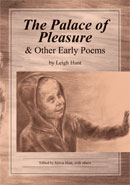

Young Leigh Hunt's poems, early recognized as “proofs of poetic genius”, offer landscapes populated by happy schoolboys and errant knights freed from magical enthrallment. Already vivid here is Hunt's lifelong commitment to the betterment of his fellow man through friendship and communion with nature.
The juvenilia of Hunt has been edited by Sylvia Hunt, with illustrations by Karl Denny

d) Hope Hook's 'Crossing Canada, 1907: The Diary of Hope Hook'


In her diary of 1907, young Hope Hook records an exciting journey across Canada to Vancouver Island and back, by ship, rail and boat. Born to a family of artists, she is eager to observe the new country that will soon be her home, and all its people, flora and fauna.

This work has been edited by Juliet McMaster.

e) Mary Grant Bruce, 'The Early Tales'

Pamela Nutt edited the work of Mary Grant Bruce with Year 11 students from Presbyterian Ladies' College in Sydney. This publication exemplifies the importance of pedagogy to the Juvenilia project. The illustrations are by Matilda Fay & Isabelle Ng.  Mary Grant Bruce’s nineteenth-century childhood was spent in rural Victoria and throughout her writing career this landscape provided the setting for many of her stories. These early tales, written for the newspaper 'The Leader', demonstrate an understanding of the challenges of the Australian outback and introduce many of the concerns she would later develop in her highly successful fiction for children.


How to Obtain the Books

For further information on all 66 books, as well as pricing and procedures to order single copies or class sets, contact the Juvenilia Press website for full details HERE.


Tuesday, March 6, 2018

The Children's Writing of Alcott, Austen, Carroll, Bronte, Dickens & More

An interest in Juvenilia

I have written already on this blog before (here), that children begin to write from a very young age. While their earliest attempts at writing - even before the age of 12 months - is often seen 'just' as scribble by some parents, many young children soon develop a desire to do more than simply making their marks on paper; they begin to play with language and words, often in combination with their early drawings.

Many great writers become aware very early in life that they have a desire to write, sometimes for self, but often for others. The study of early writing (and art) has been termed Juvenilia, drawing from the Latin meaning "things from youth". I have had the privilege of spending a number of years on the Editorial Advisory Board of the Juvenilia Press at the University of New South Wales. The Juvenilia Press is currently one of the passions of Christine Alexander, Distinguished Professor in English Literature at the University of New South Wales. Professor Alexander is a prominent Australian researcher, editor and writer on the Brontës and other 19th Century writers, including their juvenilia

The Juvenilia Press was founded in 1994 by Juliet McMaster at the University of Alberta in Edmonton. It moved to UNSW in 2001 when Christine Alexander became the General Editor. It promotes the study of literary juvenilia (writing up to 20 years of age) of recognised adult writers. It offers insights into the later work of successful writers. It has an international team of contributing editors from Britain, Canada, Japan, New Zealand, the USA and Australia.

Every publication combines the early writing of great authors and an essay on the work. They represent the scholarship and research of some of the world's leading professors of literature and their research students.

The Juvenilia Press, as its website suggests, is more than just a publishing project:

The Juvenilia Press was originally conceived as a university/classroom project. While it has grown well beyond those limits, pedagogy remains at the core of its mandate. Students are involved in every volume in some capacity, whether that be writing introductions, researching annotations, learning the importance of textual editing, drawing illustrations, or developing a book's layout and design. Working under the guidance of established international scholars, they gain invaluable experience, practical skills, and publication.
The format of the publications is similar each time. A theoretical essay is included to introduce the work and is written by the editor of the work. This is then followed by the juvenilia that is published with original illustrations when available.

The works published to date


Juvenilia Press has published over 50 works since 1994, some of which I reviewed in previous posts (here & here). The writers whose early work has been published include Jane Austen, Charlotte & Branwell Brontë, Louisa May Alcott, Charles Lutwidge Dodgson (Lewis Carroll), George Eliot, Margaret Atwood, Greg Hollingshead, Margaret Laurence, Rudy Wiebe, Opal Whiteley, John Ruskin, Charles Dickens and many others.

Some Selected Recent Publications


a) Louisa May Alcott's 'Norna, or the Witch's Curse'


Anyone who has read or seen 'Little Women' will remember the play that the sisters performed within the work. 'Norna, or the Witch's Curse' is the real play, written when Alcott was just 15yrs old. In it she provides a farcical description in 'Little Women'. It is filled with fierce posturing and melodramatic action, Norna shows young Louisa and her collaborating sister Anna stretching their creative wings in poetic drama.

Few readers of 'Little Women' would realise that the play in the book (and the film) was based on Alcott's play written, directed and acted out with her sisters when she was just 15.

b) Virginia Cary Hudson's 'O Ye Jigs And Juleps'


Both knowing and naïve, pious and feisty, 10-year-old Virginia Cary Hudson brings her sharp observation to bear on the adults and children, churches and institutions of her home town, early-1900s Versailles, Kentucky. Essays for a teacher have never been so revealing, or so entertaining.


Edited by Jeffrey Bibbee, Lesley Peterson, and Leigh Thompson Stanfield, with Emily Cater, Danielle Holcombe, Catherine James, and Melissa Thornton.

c) Charles Dickens's 'The Bill of Fare', 'O'Thello' & Other Early      Works (2012)

Dickens wrote of his childhood,"All these things have worked together to make me what I am". Among "these things" in his juvenilia are his genius for story telling, his creation of comic characters and his love of the theatre. Just like his later great work 'David Copperfield', they throw light on a young man in love, bursting with inventiveness and struggling to shape his ideas into the kind of public performance that would lead to fame.
Christine Alexander has edited this publication with Donna Couto and Kate Sumner. It was timed last year to coincide with the 200th anniversary of his birth. The critical essay that precedes Dickens juvenilia reminds us that Dickens's amazing talent for storytelling was evident from a very young age. He was a child who loved being centre stage to tell stories, sing and entertain others. It is clear that Dickens wrote a great deal as a child, but much of it doesn't seem to have survived. However, over time some works have emerged from his late teens, including some of his early poetry and fragments of his first comic drama that he titled 'O'Thello'. This is a fascinating look at some of the early work of this great writer. 

d) John Ruskin, 'Poems From Seven to Seventeen' (2012)

The greatness of great creators, John Ruskin wrote, stems from "what they had seen and felt from early childhood". These are early poems of the man known as the leading art critic of the Victorian period. He was also an artist himself and a significant social commentator. They demonstrate the truth of his own words in fascinating ways. Ruskin's life spanned much of the 19th century (1819-1900) and his creative endeavours were extraordinary. He wrote some of the most significant essays of his time on topics as diverse as art, architecture, social justice, political economy, education and culture. But his writing extended to fields such as geology, literature, social class and more. 

This publication features the poetry of this home-schooled youth. Rob Breton  who edited the work with Alayna Becker and Katrina Schurter, suggests that his poetry amongst many other things offer '...a fascinating look at the experience of growing up in an increasingly affluent home in the 1820s'. It offers us an opportunity to consider and enjoy the work of this amazing man.

e) Leigh Hunt's 'The Palace of Pleasure & Other Early Poems'
Young Leigh Hunt's poems, early recognized as “proofs of poetic genius”, offer landscapes populated by happy schoolboys and errant knights freed from magical enthrallment. Already vivid here is Hunt's lifelong commitment to the betterment of his fellow man through friendship and communion with nature.
The juvenilia of Hunt has been edited by Sylvia Hunt, with illustrations by Karl Denny

d) Hope Hook's 'Crossing Canada, 1907: The Diary of Hope Hook'
In her diary of 1907, young Hope Hook records an exciting journey across Canada to Vancouver Island and back, by ship, rail and boat. Born to a family of artists, she is eager to observe the new country that will soon be her home, and all its people, flora and fauna.
This work has been edited by Juliet McMaster.

f) Mary Grant Bruce, 'The Early Tales' (2011)
Pamela Nutt edited the work of Mary Grant Bruce with Year 11 students from Presbyterian Ladies' College in Sydney. This publication exemplifies the importance of pedagogy to the Juvenilia project. The illustrations are by Matilda Fay & Isabelle Ng.  Mary Grant Bruce’s nineteenth-century childhood was spent in rural Victoria and throughout her writing career this landscape provided the setting for many of her stories. These early tales, written for the newspaper 'The Leader', demonstrate an understanding of the challenges of the Australian outback and introduce many of the concerns she would later develop in her highly successful fiction for children.


g) Patrick Branwell Brontë, The History of the Young Men (2010)

William Baker and others have edited this early work of Patrick Branwell Brontë. This is a tale of exploration, bloody battles, colonization and supernatural ‘guardian demons’. Branwell at age 13 years chronicles the founding of imaginary African kingdoms and the exploits of the toy soldiers who inspired the Glass Town and Angrian saga. Here we observe the role of history and the power of childhood play in the early writing of the neglected but talented brother of the famous Brontë sisters.

A Useful Resource 

Christine Alexander (2010). The Brontës: Tales of Glass Town, Angria, and Gondal, Selected Writings, London: Oxford University Press. 

Thursday, March 28, 2013

The Childhood Writing of Dickens, Austen, Ruskin, Bruce & Others: What can we learn from it?

An interest in Juvenilia

As I have written already on this blog (here), children can begin to write from a very young age. While their earliest attempts at writing - even before the age of 12 months - can be seen 'just' as scribble, many young children soon develop a desire to do more than simply making their marks on paper; they begin to play with language and words, often in combination with their early drawings.

Many great writers become aware very early in life that they have a desire to write, sometimes for self, but often for others. The study of early writing (and art) has been termed Juvenilia, drawing from the Latin meaning "things from youth". I have had the privilege of spending a number of years on the Editorial Advisory Board of the Juvenilia Press at the University of New South Wales. The Juvenilia Press is currently one of the passions of Christine Alexander, Scientia Professor in English Literature at the University of New South Wales. Professor Alexander is a prominent Australian researcher, editor and writer on the Brontës, including their juvenilia

The Juvenilia Press was founded in 1994 by Juliet McMaster at the University of Alberta in Edmonton. It moved to UNSW in 2001 when Christine Alexander became the General Editor. It promotes the study of literary juvenilia (writing up to 20 years of age) of recognised adult writers. It offers insights into the later work of successful writers. It has an international team of contributing editors from Britain, Canada, Japan, New Zealand, the USA and Australia.

The Juvenilia Press, as its website suggests, is more than just a publishing project:

The Juvenilia Press was originally conceived as a university/classroom project. While it has grown well beyond those limits, pedagogy remains at the core of its mandate. Students are involved in every volume in some capacity, whether that be writing introductions, researching annotations, learning the importance of textual editing, drawing illustrations, or developing a book's layout and design. Working under the guidance of established international scholars, they gain invaluable experience, practical skills, and publication.
The format of the publications is similar each time. A theoretical essay is included to introduce the work and is written by the editor of the work. This is then followed by the juvenilia that is published with original illustrations when available.

The works published to date

Juvenilia Press
has published 49 works since 1994, some of which I reviewed in previous posts (here & here). The writers whose early work has been published include Jane Austen, Charlotte & Branwell Brontë, Louisa May Alcott, Charles Lutwidge Dodgson (Lewis Carroll), George Eliot, Margaret Atwood, Greg Hollingshead, Margaret Laurence, Rudy Wiebe, Opal Whiteley, John Ruskin, Charles Dickens and many others.

The Most Recent Publications

a) Charles Dickens's 'The Bill of Fare', 'O'Thello' & Other Early Works (2012)
 
Dickens wrote of his childhood,"All these things have worked together to make me what I am". Among "these things" in his juvenilia are his genius for story telling, his creation of comic characters and his love of the theatre. Just like his later great work 'David Copperfield', they throw light on a young man in love, bursting with inventiveness and struggling to shape his ideas into the kind of public performance that would lead to fame.
 
 
Christine Alexander has edited this publication with Donna Couto and Kate Sumner. It was timed last year to coincide with the 200th anniversary of his birth. The critical essay that precedes Dickens juvenilia reminds us that Dickens's amazing talent for storytelling was evident from a very young age. He was a child who loved being centre stage to tell stories, sing and entertain others. It is clear that Dickens wrote a great deal as a child, but much of it doesn't seem to have survived. However, over time some works have emerged from his late teens, including some of his early poetry and fragments of his first comic drama that he titled 'O'Thello'. This is a fascinating look at some of the early work of this great writer.

b) John Ruskin, 'Poems From Seven to Seventeen' (2012)

The greatness of great creators, John Ruskin wrote, stems from "what they had seen and felt from early childhood". These are early poems of the man known as the leading art critic of the Victorian period. He was also an artist himself and a significant social commentator. They demonstrate the truth of his own words in fascinating ways. Ruskin's life spanned much of the 19th century (1819-1900) and his creative endeavours were extraordinary. He wrote some of the most significant essays of his time on topics as diverse as art, architecture, social justice, political economy, education and culture. But his writing extended to fields such as geology, literature, social class and more. 

This publication features the poetry of this home-schooled youth. Rob Breton who edited the work with Alayna Becker and Katrina Schurter, suggests that his poetry amongst many other things offer '...a fascinating look at the experience of growing up in an increasingly affluent home in the 1820s'. It offers us an opportunity to consider and enjoy the work of this amazing man.

c) Leigh Hunt's 'The Palace of Pleasure & Other Early Poems'
 
Young Leigh Hunt's poems, early recognized as “proofs of poetic genius”, offer landscapes populated by happy schoolboys and errant knights freed from magical enthrallment. Already vivid here is Hunt's lifelong commitment to the betterment of his fellow man through friendship and communion with nature.
 
The juvenilia of Hunt has been edited by Sylvia Hunt, with illustrations by Karl Denny

d) Hope Hook's 'Crossing Canada, 1907: The Diary of Hope Hook'
 
In her diary of 1907, young Hope Hook records an exciting journey across Canada to Vancouver Island and back, by ship, rail and boat. Born to a family of artists, she is eager to observe the new country that will soon be her home, and all its people, flora and fauna.
 
This work has been edited by Juliet McMaster.

e) Mary Grant Bruce, 'The Early Tales' (2011)

Pamela Nutt edited the work of Mary Grant Bruce with Year 11 students from Presbyterian Ladies' College in Sydney. This publication exemplifies the importance of pedagogy to the Juvenilia project. The illustrations are by Matilda Fay & Isabelle Ng.  Mary Grant Bruce’s nineteenth-century childhood was spent in rural Victoria and throughout her writing career this landscape provided the setting for many of her stories. These early tales, written for the newspaper 'The Leader', demonstrate an understanding of the challenges of the Australian outback and introduce many of the concerns she would later develop in her highly successful fiction for children.


f) Patrick Branwell Brontë, The History of the Young Men (2010)

William Baker and others have edited this early work of Patrick Branwell Brontë. This is a tale of exploration, bloody battles, colonization and supernatural ‘guardian demons’. Branwell at age 13 years chronicles the founding of imaginary African kingdoms and the exploits of the toy soldiers who inspired the Glass Town and Angrian saga. Here we observe the role of history and the power of childhood play in the early writing of the neglected but talented brother of the famous Brontë sisters.
A Useful Resource

Christine Alexander (2010). The Brontës: Tales of Glass Town, Angria, and Gondal, Selected Writings, London: Oxford University Press.

Monday, April 25, 2011

The Childhood Writing of Famous Authors: Recent Titles from Juvenilia Press

An interest in Juvenilia

As I have written already on this blog (here), children can begin to write from a very young age. While their earliest attempts at writing, even before the age of 12 months can be seen 'just' as scribble, many young children soon develop a desire to do more than simply making their marks on paper; they begin to play with language and words, often in combination with their early drawings.

Many great writers become aware very early in life that they have a great desire to write, sometimes for self, but often for others. The study of early writing (and art) has been termed Juvenilia, drawing from the Latin meaning "things from youth". I had the pleasure of spending a number of years on the Editorial Advisory Board of the Juvenilia Press at the University of New South Wales. The Juvenilia Press is currently one of the passions of Christine Alexander, Scientia Professor in English Literature at the University of New South Wales. Professor Alexander is a prominent Australian editor and writer on the Brontës, including their juvenilia

The Juvenilia Press was founded in 1994 by Juliet McMaster at the University of Alberta in Edmonton. It moved to UNSW in 2001 when Christine Alexander became the General Editor. It promotes the study of literary juvenilia (writing up to 20 years of age) of recognised adult writers. It offers insights into the later work of successful writers. It has an international team of contributing editors from Britain, Canada, Japan, New Zealand, the USA and Australia.

The Juvenilia Press, as its website suggests, is more than just a publishing project:

The Juvenilia Press was originally conceived as a university/classroom project. While it has grown well beyond those limits, pedagogy remains at the core of its mandate. Students are involved in every volume in some capacity, whether that be writing introductions, researching annotations, learning the importance of textual editing, drawing illustrations, or developing a book's layout and design. Working under the guidance of established international scholars, they gain invaluable experience, practical skills, and publication.
The format of the publications is similar each time. A theoretical essay is included to introduce the work and is written by the editor of the work. This is then followed by the juvenilia that is published with original illustrations when available.

The works published to date

Juvenilia Press
has published 44 works since 1994, some of which I reviewed in my previous post (here). The writers whose early work has been published include Jane Austen, Charlotte & Branwell Brontë, Louisa May Alcott, Charles Lutwidge Dodgson (Lewis Carroll), George Eliot, Margaret Atwood, Greg Hollingshead, Margaret Laurence, Rudy Wiebe, Opal Whiteley and many others.

The Most Recent Publications

a) Mary Grant Bruce, 'The Early Tales' (2011)

Pamela Nutt has recently edited the work of Mary Grant Bruce with Year 11 students from Presbyterian Ladies' College in Sydney. This latest publication exemplifies the importance of pedagogy to the Juvenilia project. The illustrations are by Matilda Fay & Isabelle Ng.  Mary Grant Bruce’s nineteenth-century childhood was spent in rural Victoria and throughout her writing career this landscape provided the setting for many of her stories. These early tales, written for the newspaper The Leader, demonstrate an understanding of the challenges of the Australian outback and introduce many of the concerns she would later develop in her highly successful fiction for children.

b) Iris Vaughan, 'The Diary of Iris Vaughan' (Revised edition, 2010)
Peter F. Alexander and Peter Midgley have edited Iris Vaughan’s Diary, with the assistance of Sigi Howes and illustrations by J. H. Jackson. The diary was begun when Vaughan was only seven years old and is as much autobiography as Diary. It also gives a charming, keenly observed and brilliantly amusing picture of colonial Africa as Victorianism made way for the twentieth century.

c) Patrick Branwell Brontë, The History of the Young Men (2010)


William Baker and others have edited this early work of Patrick Branwell Brontë. This is a tale of exploration, bloody battles, colonization and supernatural ‘guardian demons’. Branwell at age 13 years chronicles the founding of imaginary African kingdoms and the exploits of the toy soldiers who inspired the Glass Town and Angrian saga. Here we observe the role of history and the power of childhood play in the early writing of the neglected but talented brother of the famous Brontë sisters.

d) Sarah Fyge Egerton's The Female Advocate (2010)

Peter Merchant has edited this work with the support of Steven Othman. While Egerton claimed that this work was written when she was 14 years this cannot be verified. This is a work by a young woman that takes a stand for woman in general. The measured militancy of The Female Advocate (1686) breathes fresh air into the age-old battle of the sexes. Though the author entered the fray while still in her teens, in making her statement she creates a compelling poem. This is the first time the work has been presented in a single edition with critical commentary.

e) Jane Austen's 'The History of England & Cassandra's Portraits' (2009)

Written "By a partial, prejudiced, & ignorant Historian", this History of England is an outrageous parody of the schoolroom history book. Together with her elder sister Cassandra, the fifteen-year-old Jane Austen reduces the heroic to the everyday, vigorously endorses Mary, Queen of Scots, and denounces Elizabeth I. The young 15 year old Jane Austen offers a revisionist version of British history (e.g. citing 17 great woman compared to 26 men at a time when only men could be ‘great’). Jane uses her sister Cassandra’s drawings to support her work. Even here there seems to be a clever interplay going on, and perhaps another layer of criticism as she seems to express concerns at how history is presented to expose the deficiencies of the texts of her day.

This edition explores the collaboration between the sisters and the way Cassandra’s illustrations extend the textual allusions to family and friends, revealing some surprises. The work was edited by Annette Upfal and Christine Alexander.

Other Posts & Resources

My previous post on Juvenilia HERE

Christine Alexander (2010). The Brontës: Tales of Glass Town, Angria, and Gondal, Selected Writings, London: Oxford University Press.

Saturday, December 13, 2008

Juvenilia: The study of writing from youth

An interest in Juvenilia

As I have written already on this blog (here), children can begin to write from a very young age. While their earliest attempts at writing, even before the age of 12 months can be seen 'just' as scribble, many young children soon develop a desire to do more than simply make their marks on paper; they begin to play with language and words, often in combination with their early drawings.

Many great writers become aware very early in life that they have a great desire to write, sometimes for self, but often for others. The study of early writing (and art) has been termed Juvenilia, drawing from the Latin meaning "things from youth". I have the privilege of being on the Editorial Advisory Board of the Juvenilia Press at the University of New South Wales. The Juvenilia Press is currently one of the passions of Christine Alexander, Scientia Professor in English Literature at the University of New South Wales. Professor Alexander is a prominent Australian editor and writer on the Brontës, including their juvenilia

The Juvenilia Press was founded in 1994 by Juliet McMaster at the University of Alberta in Edmonton, but it moved to UNSW in 2001 when Christine Alexander became the General Editor. It promotes the study of literary juvenilia (writing up to 20 years of age) of recognised adult writers. It offers insights into the later work of successful writers. It has an international team of contributing editors from Britain, Canada, Japan, New Zealand, the USA and Australia.

The Juvenilia Press, as its website suggests, is more than just a publishing project:

The Juvenilia Press was originally conceived as a university/classroom project. While it has grown well beyond those limits, pedagogy remains at the core of its mandate. Students are involved in every volume in some capacity, whether that be writing introductions, researching annotations, learning the importance of textual editing, drawing illustrations, or developing a book's layout and design. Working under the guidance of established international scholars, they gain invaluable experience, practical skills, and publication.
The works published to date

Juvenilia Press publishes the early writing
(up to the age of 20) of recognised authors who have had success later as adult writers. It has published 42 works since 1994. The authors who's early writing have already featured as Juvenilia Press publications include the following:

a) 18th Century


Jane Austen

Lady Mary Wortley Montagu
Anna Maria Porter


b) 19th Century


Louisa May Alcott

Branwell Brontë
Charlotte Brontë
Charles Lutwidge Dodgson (Lewis Carroll)
Richard Doyle
George Eliot
Iris Vaughan

c) 20th Century

Margaret Atwood
Marian Engel
Greg Hollingshead
Philip Larkin
Margaret Laurence
Malcolm Lowry
Carol Shields
Aritha van Herk
Rudy Wiebe
Alison White
Opal Whiteley

The most recent work - Lewis Carroll


The most recent publication from the Juvenilia Press is the text The Rectory Magazine written (largely) by Charles Lutwidge Dodgson (Lewis Carroll). Dodgson wrote in the 19th century (1832-1898) and is perhaps best known for his works Alice in Wonderland, Through the Looking-Glass and the poems The Hunting of the Snark and Jabberwocky. The publication was edited by Valerie Sanders and Elizabeth O'Reilly. Like other publications from JP the work contains an introductory essay by the editors of the volume. These essays, which are significant publications in their own right, provide an insight into the considerable research required to produce each publication as well as a theoretical overview of the work, the author and their early life.

'The Rectory Magazine' was written by Charles Dodgson (Lewis Carroll) and other members of his family somewhere in the years 1847-1850 when he was aged 15-18 years. The original can be found in the Harry Ransom Humanities Research Center at the University of Texas, Austin. As Valerie Sanders and Elizabeth O'Reilly point out in their introductory essay, 'The Rectory Magazine' was a collaborative family venture, though Charles wrote a lot of the magazine and was certainly the editor and driving force behind its production.

Like all Juvenilia, 'The Rectory Magazine' provides a fascinating insight into the early life and work of an author as well as the characteristics of their later adult work. The fascination for me in Juvenilia is that in the early work of the child author we see (at the very least) evidence of the later content and style of the adult writer. In fact, the child writing of the author often offers us a window into the development of the voice of the writer that we recognise in their later work. 'The Rectory Magazine' certainly offers such insight into the later work of Carroll. Sanders and O'Reilly comment in their essay that:

"Much of what he wrote prefigures his later characteristics as the author of Alice's Adventures in Wonderland, published less than twenty years later. From the start he was proud of being an author: his style is both self-confident and self-mocking, and he sends up the classic Victorian periodical while also trying to sound like one of its most venerable editors. 'The Rectory Magazine' proves that Carroll's instinct for parody and comic verse was always strong, as was his love of word puzzles and nonsense games."

What JP publications also offer is an insight into the role that other authors and various literary forms play in the lives of any writer. They show evidence of the rich intertextual worlds that help to shape the work of any author. This publication on Carroll offers an interesting illustration of how the young writer often takes their lead in relation to form and genre from other contemporary works, as well as life of the times in general (including its morality), while at the same time drawing on the inspiration of great authors before - as children are want to do - giving it a 'twist'. Christine Alexander and Juliet McMaster in their book, 'The Child Writer from Austen to Woolf', the Dodgson family were not unique, many a Victorian family produced its own version of a collaborative magazine, that mirrored (and sometimes mocked as Carroll does) the periodicals of the day.

An added bonus with many Juvenilia Press publications is how we witness the young author's keen interest in illustration and integration of their own graphics with their written work, 'The Rectory Magazine' is no exception and includes some delightful illustrations including the cover and other colour and black and white plates inside this 132 page book.

'The Rectory Magazine' is a delightful publication containing a mixture of poetry and prose, which should be of interest to teachers, teenage readers and writers and in fact anyone interested in literature. The publications are available from a variety of sources including UNSW (via the JP website) at a very reasonable price of $12 or $15.

For some of the latest Juvenilia Press publications visit the website (here).