Showing posts with label parent support. Show all posts

Thursday, July 27, 2023

What is Mindfulness? Avoiding the Temptation to Overthink and Overreach

The term 'Mindfulness' is used frequently, but what does it mean? And how can teachers and parents benefit from understanding what it is? Dr Stephen McKenzie and Angela North have co-written an interesting book titled 'Mindfulness at Play' (Exisle Publishing, 2023).

This is timely because unpacking what 'Mindfulness' is can be confusing. It seems while many teachers talk about mindfulness, each does it for different reasons, and with different understandings of what it is, and how it helps. The concept can become distorted as teachers seek to manage their students.

Ask a group of teachers what mindfulness is and I suspect you will be given a number of different answers. Ask the same people why they believe in it, and again you will hear different responses. Even within this book, the two authors who contribute separate named author chapters, adopt slightly different approaches and emphases to one another. And I should say up front, I adopt a slightly different view in places to one or both authors.

The need to remove distractions

In chapter 1 Stephen McKenzie defines Mindfulness as a "state of simply being fully focussed on whatever we are doing". In other words, screening out distractions and "paying attention". But something which in essence is very simple, can become somewhat messier when people begin to try and overlay different philosophies and even faiths. I agree with the general position he adopts.


Removing distractions in life will always help people to focus, concentrate on tasks at hand, and pay attention. The great challenge we have though as teachers and parents, is the world is filled with constant distractions, which can quickly divert our attention. A book could be written on this alone!

For example, how many of us can allow messages to lay untouched on our phones, as they constantly invite us to check them? Or how often can WE sit still in contemplation and notice the world around us? I walk everyday along a beautiful river near my home, usually with my wife, but sometimes alone, or I ride my bike instead. You'd be amazed how often I see people walking through the beauty of the world in conversation on their phones. I see one young man every day, who doesn't speak or even look up! He is reading and searching with his eyes never leaving the phone screen; he is 'glued' to it. I have never seen him look up to see the sky, look at the water, hear and look at the birds everywhere, or the stunning sunsets. It amazes me that he hasn't run into something. 


How might parents and teachers respond to such distraction?

There is much good advice in McKenzie and North's book, but I'd urge you NOT to over complicate the concept. Avoid linking it to philosophies and faiths to prescribe what it is. Buddhism and Hinduism are often linked to mindfulness, but I'd encourage teachers to avoid weaving aspects of separate faiths into your desire to increase mindfulness in your students. 

Of course, if you are a teacher in a faith-based school, then this will influence how you and your students integrate faith with life. But mindfulness has great relevance for all, and need not be connected to religious worldviews to help our students. All teachers need to cultivate the ability to get to know their students on more than just a superficial level. This requires us to give them our attention by observing and listening to them.


Young children and teenagers need help in being able to screen out distractions in their world. As a parent, if they come back at you with "but Mum I concentrate on my phone every day", then they're missing the point. Our phones can be used for more than texts and a few favourite sites. We can read novels on devices, learn new things, pursue interests and grow in knowledge. But sitting and reading every aspect of our friends lives, including what they're wearing, seeing, listening to, who is 'hot' and so on, is not 'mindfulness'.

Parents also need to demonstrate to their children what it means to shut out distractions and 'noise' in the world. We need to be examples of how we manage such distractions caused in part by devices like phones. It's more important to help our students to manage time and try to listen better to one another.  

The need for key models and mentors in life

Parents should be the first of many models in children's lives who demonstrate mindfulness. For example, I'd encourage all families to share as many meals as possible together without always having devices next to us, or the television in the background. All of us need models who help to shape what we value and how we negotiate the challenges of life. Angela North makes a great comment about this: 

"We all need just one person in our childhood who truly sees us - so that we feel deeply heard, understood and loved".

Of course, hopefully children will have more than one model, from different parts of their lives. I completed primary school in a family with two alcoholic parents. Not surprisingly, I was in trouble a LOT at school. But in 4th grade I was fortunate to have a teacher who saw beyond the grubby neglected kid, and set out to teach me, care for me, and seek things for me to do that challenged and inspired me. He was one of the people who helped to turn my life around.

 Above: 5th Grade with Mr Campbell (4th from Left back)

As teachers, how well do we know the children we teach? And parents, how well do we know our teenage children? Do we try to spend time with them? Can we have significant undistracted conversations with them? Let's be honest, the problem isn't just simply with our children. We need to work on mindfulness ourselves, while modelling and helping our children early in life (birth to 15+). If we wait till they're 15, I'm afraid it's often too late. Summing up, parents don't forget to examine your own life to consider when you are distracted as well.

A final challenge. What is your role?

I like many of the ideas in 'Mindfulness at Play', but please don't read it simply looking for new strategies to enable you to make teaching easier. Nor skim read it looking for six tips for making tough children more attentive and better behaved. Sure, there are some games that calm children down, or activities to help them focus. But nothing will help us as teachers more than simply knowing every one of our students better. What makes them tick? What do they like or not like? Are there things that excite them, and what are their lives like outside school...? There are many great ideas in the Resources section of 'Mindfulness at Play'. By all means use some of them, but don't use them keep them busy, or make your life easier. Rather, use them as the authors suggest to help your students: 

• Pay attention 

• Increase connection to their world 

• Enjoy time with one another 

Finally, and most important of all, as teachers get to know your students better. What are their dreams, hopes and aspirations? How well do you know them? How can you have an impact on their well being and futures?


Wednesday, June 30, 2021

A FREE Program to Help Parents Support Preschool Learning

I co-wrote an online preschool support program for parents of children 0-4 years a few years ago with a colleague. I've posted on this before, but I thought I'd remind readers just in case they've messed it. It was released in 2018 by the 'Australian Literacy Educators Association'. The program is free and available on the Australian Literacy Association's site HERE. There isn't a catch, just free support and practical ideas for new parents who aren't sure how to help their children to learn in the preschool years. The program started out with my co-author Anita Ayre preparing activities for her daughter to support their first child. I was asked to partner with her to extend and develop an extensive online program for parents and grandparents. 


The online resource program is available FREE via the 'Australian Literacy Educators Association' website. The resource is called 'Little People's Literacy Learning: A guide for engaging parents and carers'. It offers practical help for parents and carers of children aged 0-5. And again, it's FREE! You don't need to be a member of ALEA to access to the resource is open to all.

This FREE online guide comes with hundreds of activities that you can enjoy with your child. Initially, there were 17 units. Now it has grown to 27 with new modules on 'Maths', 'Maths Language', 'Technology Use', 'Measurement', 'Space' and 'Pattern' just released. The modules will help parents to use simple activities as part of life. Some are incidental and others have some limited planning required. But all you need to know is explained in the modules. All activities are designed with an emphasis on learning through collaborative play and shared discovery. Why are so many of the recent modules related to maths? Because language and literacy have many important relationships to these topics.

Anita and I are experienced teachers, parents, and also (these days) active grandparents who love spending quality time with our grandchildren. In this resource, we offer a wealth of suggestions and hints for parents and carers who want to engage with their children in language, literacy learning and mathematics activities. Technology is also linked to many of these topics as well as now having a separate module. All activities are designed with an emphasis on learning through collaborative play and shared discovery. They can all be incorporated into daily life with very little (or often no) preparation! We offer hundreds of integrated examples throughout, including how new technology and multimedia can also enrich the learning experiences of your child with the same richness as other non-technology applications. You'll also find some advice on how to monitor and control screen time.

The resource contains practical and VERY doable common sense activities. You will find it HERE.


Saturday, October 26, 2019

Supporting Preschool Children (0-4) at Home in Literacy, Maths & Technology Education

Readers of this blog might know that I co-wrote an online preschool support program for parents of children 0-4 years that was released in 2018. The Australian Literacy Educators Association has just uploaded the latest modules in this free online program. No catch, just free support and practical ideas for new parents not sure how to help their children to learn. This support program started out with my co-author Anita Ayre (my co-author) preparing activities for her daughter to support her first child (Anita's grandchild). I was asked to partner with her to develop this online program for parents and grandparents. 


The online resource program is available FREE via the 'Australian Literacy Educators Association' website. The resource is called 'Little People's Literacy Learning: A guide for engaging parents and carers'. It offers practical help for parents and carers of children aged 0-5. And again, it's FREE! You don't need to be a member of ALEA to access to the resource is open to all.

This FREE online guide was launched in 2017 for parents and carers comes with hundreds of activities that you can enjoy with your child. Initially, there were 17 units. Now it has grown to 27 with new modules on 'Maths', 'Maths Language', 'Technology Use', 'Measurement', 'Space' and 'Pattern' just released. The modules will help parents to use simple activities as part of life. Some are incidental and others have some limited planning required. But all you need to know is explained in the modules. All activities are designed with an emphasis on learning through collaborative play and shared discovery. Why are so many of the recent modules related to maths? Because language and literacy have many important relationships to these topics.

Anita and I are experienced teachers, parents, and also (these days) active grandparents who love spending quality time with our grandchildren. In this resource, we offer a wealth of suggestions and hints for parents and carers who want to engage with their children in language, literacy learning and mathematics activities. Technology is also linked to many of these topics as well as now having a separate module. All activities are designed with an emphasis on learning through collaborative play and shared discovery. They can all be incorporated into daily life with very little (or often no) preparation! We offer hundreds of integrated examples throughout, including how new technology and multimedia can also enrich the learning experiences of your child with the same richness as other non-technology applications. You'll also find some advice on how to monitor and control screen time.

The resource contains practical and VERY doable common sense activities. You will find it HERE.


Wednesday, April 17, 2019

6 Great Books for Teachers, Parents & Grandparents who love children's books

Followers of this blog know that I write about all aspects of language, literacy and children's literature. I often review literature to be read by or shared with children. But in this post, I want to share some of the great books that I receive that I'm sure adults and lovers of kids' books will enjoy. There might even be a great present here for a teacher, parent or grandparent you know.

1. Flights of Fancy: Stories, pictures and inspiration from ten Children's Laureates 

This wonderful book from Walker Books profiles the inspirational work of 10 well-known British writers of children's literature. With household names like Quentin Blake, Anne Fine, Anthony Brown, Michael Rosen, Julia Donaldson and Michael Morpurgo this is a remarkable group.

These well-known storytellers through words and pictures, are the first 10 people to have been appointed in Britain as Children's Laureate. This is a two year appointment that recognises outstanding achievement in children's literature. What I love about the book is that each chapter offers a little of the background and work of each person, and a unique twist each time on what they share. For example, Qentin blake shares some unusual large scale "splatter creatures" and talks about his experimentation with images.

Above: Anthony Browne's Shirley Hughes
On the other hand, Anne Fine shares much about her home library and her love of bookplates. Michael Morpurgo offers an insight into his writing processes,  Michael Rosen plays with words to say great things about poetry (no surprise there), Anthony Browne draws some of the other laureates, and so on. This is a wonderful feast of insights into writing and illustration by giants in the field.

2. 'Encyclopedia of Grannies' by Eric Veillé

Now this might just be written for children, but I doubt that any grandmother will be able to put it down without laughing. This  clever French writer illustrator, gives us an insight into just how diverse 'grannies' are. Did you know there are Grannies in ski suits, some who love nature, surfboard riding Australian grannies, young grannies and old ones? Every grannie has a nickname like 'Mimi', 'Abuela', 'G-ma', 'Meemaw' and more! It's amazing what grannies do with their time - talking, opening oysters, getting names muddled, tempting us with cream buns and more.

Grannies seem to know a lot of things that will surprise you (and maybe some grannies). Their wisdom and sayings are priceless! Some grannies knit cardigans for people, covers for cat tails, warmers for camel humps and even gloves for snowmen. Then of course, there is much to learn about the moods of grannies. And we mustn't forget about the travel of grannies and much, much more. A great book for grannies to enjoy alone or with someone on their knee!

3. 'Poe: Stories and Poems' by Gareth Hinds (graphic novel)

Any adult who loves poetry will love this graphic novel, and you'll look cool with your teenage grandchildren or students! Hind has taken some of the best-known works from Edgar Allan Poe and transformed them into illustrated works. Gareth Hind is well-known for his own work with graphic novels and this book won't disappoint. While Poe's work might seem challenging to some, Hind's treatment of the poems and stories might well get some teenagers (and maybe adults) across the line to love these works.

In “The Cask of Amontillado,” a man exacts revenge on a disloyal friend at carnival, luring him into catacombs below the city. In “The Masque of the Red Death,” a prince shielding himself from plague hosts a doomed party inside his abbey stronghold. A prisoner of the Spanish Inquisition, faced with a swinging blade and swarming rats, can’t see his tormentors in “The Pit and the Pendulum,” and in “The Tell-Tale Heart,” a milky eye and a deafening heartbeat reveal the effects of conscience and creeping madness. Alongside these tales are visual interpretations of three poems — “The Raven,” “The Bells,” and Poe’s poignant elegy to lost love, “Annabel Lee.” The seven concise graphic narratives, keyed to thematic icons, amplify and honor the timeless legacy of a master of gothic horror.

Some might be offended by a few word changes, but these are limited and do little more than shorten some sentences and occasionally connect others. The majority of the text used within the graphic novel format is verbatim, but the illustrations alone will make it come to life. Adults will enjoy the book and will have some fun discussing it with their students, children or grandchildren.

4. 'The Book that Made Me' Ed Judith Ridge

This is the book for the would-be writers (just about everyone!). It is an edited book that contains 32 personal stories from children’s and young adult authors as they explore the books, stories, and experiences that changed them as readers. The authors include Shaun Tan, Simon French, Jaclyn Moriarty, Ursula Dubosarky, Catherine Johnson, Julia Lawrinson and Jared Thomas.

What was the book that made them fall in love, or made them understand something for the first time? What was the book that made them feel challenged in ways they never knew they could be, emotionally, intellectually, or politically? What book made them readers, or made them writers, or made them laugh, think, or cry?

This one looks a bit more like a text book, but the short chapters are rich in experiences and insights into each author's life as well as their formative literary experiences.

5. 'Five on Brexit Island' by Bruno Vincent

I bought my copy of 'Five on BREXIT Island' last year when in London. I just couldn't resist. Only the fear of excess baggage made me leave some of the other titles on the shelves. This is of course Enid Blyton with a serious twist. Obviously, Enid Blyton for grown-ups or thoughtful teenagers. In a way, this book in the series has been made even better by the 12 months of political chaos in Britain over the exit from the EU.

The story starts on the night of the referendum. The Five are gathered relaxing on Kirrin Island. Julian has politics on his mind. He steps forward and clears his throat.

"There's been a lot of scaremongering going on," he said, "about the potential consequences of this vote: about subsidies, about people's livelihoods being threatened, about the economy and about hope in the future." He implores the gathering to fight for the values of the Island. For of course, "... Britain is great, and Kirrin Island is great too - and they are better - together!"

Hopefully, this will whet your appetite.

Other titles include 'Five go on a strategy away day', 'Five go parenting', 'Five give up the booze' and one for the ages, 'Five go gluten free'.

6. 'Raising Readers: How to nurture a child's love of books' by Megan Daley

Some kids refuse to read, others won't stop - not even at the dinner table! Either way, many parents question the best way to support their child's literacy journey. When can you start reading to your child? How do you find that special book to inspire a reluctant reader? How can you tell if a book is age appropriate? What can you do to keep your tween reading into their adolescent years?

Teacher librarian Megan Daley has fifteen years of experience and shares many of her in sights. Her opening chapter has some great advice on "raising a reader" in the years 0 to 5. Later chapters have good advice on the nature of reading, where technology fits, getting the most of out of a library and setting up the library or a classroom. There also excellent chapters on a balanced diet of varied reading genres (historical fiction, fantasy, science fiction, plays, poetry, novels and more). As well she tackles multimodal and digital reading and books that reflect cultural diversity. 

You'll find lots of practical tips, suggested reading lists and things as practical as how to run book-themed activities. The book is a great resource for parents and educators.


Tuesday, January 29, 2019

Getting Children Ready for School: Free Preschool Resource for Parents and Carers


My colleague Anita Ayre and I have written a resource program that is available free via the Australian Literacy Educators' Association website. The resource is called 'Little People's Literacy Learning: A guide for engaging parents and carers'. It offers practical help for parents and carers of children aged 0-5. And it's FREE!


This FREE online guide for parents and carers comes with hundreds of activities that you can enjoy with your child. Some activities are incidental and some are planned. But all activities are designed with an emphasis on learning through collaborative play and shared discovery.

Anita and I are experienced teachers, and also active grandparents who love spending quality time with their grandchildren. In this resource, we offer a wealth of suggestions and hints for parents and carers who want to engage with their children in literacy learning and mathematics activities. All activities are designed with an emphasis on learning through collaborative play and shared discovery. They can all be incorporated into daily life with very little (or often no) preparation! We offer hundreds of integrated examples throughout, including how new technology and multimedia can also enrich the learning experiences of your child with the same richness as other non-technology applications. You'll also find some advice on how to monitor and control screen time.

The resource contains practical and VERY doable common sense activities. You will find it HERE.


Tuesday, February 13, 2018

Parents As Examples With Devices & Technology

Above: Xbox in the pool
My last post on 'Why We Need to Bore Our Kids' seemed to strike a chord with many readers. This led to some helpful comments in response to the post. As I responded to some of the comments, and reflected on what I had written, I found myself reflecting on how as parents and teachers we need to exercise some level of guidance and control over our children's use of technology. Sometimes this can be VERY hard. Let me illustrate.

A mother in Sydney this past week got to the end of her tether with her children's use of the family Xbox. It seems that negotiating access to the Xbox led to many disputes about who went first, how long they could have and so on. Every parent should be able to relate to this if you have more than one child. With a history of problems and disputes she couldn't take it any longer. She pulled out all of the cables and leads, took the Xbox outside and threw it into their swimming pool. She was interviewed by Sydney radio and commented that it made her 'feel good' and that it was never coming back. Only time will tell if she gives in.

We also need to set a good example in relation to our own use of technology, social media, devices of all time and the way we use them. There is no doubt, that adults can also show an unhealthy attachment to their devices. In a lovely local park that has just been equipped with gym equipment I observe pretty much every day people using the equipment as a seat while they use their devices.

Above: The power of the device to distract & absorb
Let me offer some basic suggestions concerning parental control of devices, or technology time.

First, technology isn't bad! In fact, it offers us amazing opportunities to learn, communicate, elaborate, access resources and so on. But like anything it can be overused and abused.

Second, all parents need to establish some basic rules for use of technology at home (as do teachers at school).  These should cover:

a) how long they can use technology;
b) what you do and don't include in the family restrictions when you say 'technology' (e.g. TV, laptop, iPad, radio, phone etc.);
c) the purposes that they use it for (e.g. entertainment, schoolwork, fun, research, personal interest etc.);
d) Social; media like Facebook, Snapchat to be used at specified times during school weekdays (some parents have their children time this themselves);
e) No devices to be touched during shared family mealtimes (I know, some families have few, but this is a different problem);
e) What alternatives for technology use are acceptable.

Third, if things are out of control you do have two main options. You can try dramatic action (like the Mum, the Xbox and the swimming pool), but I think if you need to do this, the war has been lost. Having said this, as with many addictions (and some technology use can be one), going cold turkey is sometimes the best solution. But there will be painful adjustment consequences during 'withdrawal'. Alternatively, you can establish rules over time that place limits on access, and reward compliance when alternatives are explored. The latter will still be painful, but you can phase in some of your actions. For example, your rules might include:
  • iPhones in the cupboard after a specific time each night.
  • Tablets and computers only to be used for schoolwork in some specified hours of the day.
  • No facetime at all between specific hours.
  • Television only after all homework has been done.
  • All facetime (TV, phones, tablets etc) not to exceed a specified number of hours each week.
  • The home server or internet access to be timed to cut out at a specified hour.
  • Specific sites might also be banned or restricted for varied age groups.

Fourth, as parents you need to set an example. It's hard to be credible when telling your children to reduce technology time, if you demonstrate an obsession with devices and, for example, never put your phone down. Like many practices in families, parents need to set positive examples. We can be just as distracted as children. It should be 'do as I do', not simply 'do what I say'. The photo of the man in the park, sitting on gym equipment while on his phone, is a stark example of how we can be easily distracted by technology as adults, when better options are available. If our children see us being distracted, it is harder for us to rebuke them.

Summing up

We live in an age where technology allows us to do the most amazing things. This has transformed the ease with which we communicate, seek knowledge, explore our world, sustain and support relationships, learn languages, engage in many creative activities, become part of many communities of interest and practice locally and around the world. Devices and technology are not the problem, our lack of discipline and control of what we and our children do with them. I'd love to hear your perspective on how you deal with these issues.


Tuesday, February 2, 2016

Tips for Parents (& Teachers) in Week 1 of School

In Australia children are returning to school soon and some will be turning up for the first time. There will be many tears, and that's not just the parents and teachers! Yes, there will be anxious children as well. As always, it's a challenging time for everyone. Having received children on their first day at school as a teacher, having sent my own children to school in Kindergarten, and having worried over grandchildren heading off on day one, I have some experience as a worrier! So I thought I'd offer some quick Do's and Don'ts for parents and teachers.

PARENTS

DOs

#1 Assume the best of your child's teachers, not the worst. Give them a chance to get to know your child and encourage your child to show them respect.

#2 Try to help teachers understand your child by telling them things that will help (when you have a chance). This might include health issues, fears about school, special interests (help them with points of connection).

#3 Try to get to know some other parents from day one. This will help to give you a small support group, maybe someone to call to see if their child has the school note your child has lost, or to discuss the project work that is due, how the swimming carnival works, are parents expected to attend the school fete or fundraising day etc.

#4 When they get home (especially in the early weeks) let them rest, feed them, & allow them some down time before asking the 20 questions you've stored up.

#5 Pace yourself, there will be MANY years of school. Let your child grow into school, and as a parent try to learn afresh what school is like now compared with when you were at school or when you sent your first two children. 

DON'Ts

#1 Don't assume that your child is the only bright kid at school and tell the teacher as much on day 1. EVERY parent thinks their child is gifted. Let your child show their teacher some of the great things they can do.

#2 Don't criticize your child's teacher in front of your child. This will make it harder for your child to respect their teacher.

#3 Don't make comparisons between your child and other children, especially to your child.

#4 Don't hassle teachers from day 1 about homework, allow the year to get rolling before firing such questions at them.

#5 Don't expect the teacher to know your child as well as you do from day 1

TEACHERS

DOs

My eldest daughter on her first day of school
#1 Be patient with parents, especially those sending their first child to school, especially in the early weeks. This is a tough time for many.

#2 Inform them as soon as you can about your expectations on things like homework, special activities, and your approach to discipline.

#3 Let them know how they can contact you if they have questions. An email address will reduce many fears and DO try to answer them as quickly as possible.

#4 Look for good things in each child. While not all will be brilliant (even though their parents might think they are), there will be things that are worthy of praise and encouragement.

#5 Make yourself available at pick-up time to chat, answer the odd question and simply show that you're interested in connecting children with their parents.

DON'Ts

#1 Don't overwhelm parents with information early, keep guidelines to a minimum at first.

#2 Don't assume that parents have little to offer, while some may have unrealistic expectations, they will know their children well. Tap into their insights when possible.

#3 Don't ever talk about a child to the parents of a classmate.

#4 Don't expect too much of parents too early in relation to homework. Like you, they will be busy at the start of the year. A few might pester you for it, but try to maintain a balanced approach.

Other Related Posts

1. 'Starting School: Is there a best perfect age?'

2. 'Making Homework More Relevant and Useful for Learning'


Wednesday, October 29, 2014

Reading to children: Why & How to do it well?

Listening to your child reading is more complex, and important than people think. While I've written previously on reading to your child (here) and listening to them (here) back in 2008, I wanted to revisit these two topics in the one post. It's easy to do it badly, but not so easy to do well. In this post I'll comment on three things:

  • The value of reading out loud
  • Some DOs and DON'Ts for listeners
  • A couple of specific read aloud strategies

1. Some general comments on the value of oral reading

As an instructional strategy oral reading has some clear advantages:
  • Anyone can do it
  • It ensures that the child reads a specific number of words each day
  • For the skilled listener (usually a trained teacher) it acts as a 'window on the reading process' allowing us to understand what strategies children are using, misusing, not using, what help they need, etc (more on this later)
  • It's an opportunity to build confidence and self esteem
But there are potential disadvantages:
  • It is slower than silent reading
  • The proficient reader does most reading silently, so this is the key reading skill we're working towards, with the exception that skilled audience reading does have a place. I comment on this in other posts. So reading out loud shouldn't be a total replacement for silent reading
  • It is teacher or parent intensive compared to silent reading (oral reading is mostly one-to-one or in small groups rather than individual)
  • It can be a source of frustration for the child and can lead to a loss of confidence and self esteem if the listener is unskilled

2. Some DOs and DON'Ts

Here is my outline of what to do and NOT to do.

Some DON'Ts
  • Don't make unfavourable comparisons between the child you're listening to and another child. Avoid statements like "How come Jason can read that word but you can't?"
  • Don't feel that you need to correct every error, or teach every sound that your child seems to struggle with. Listening to your child is not just an accuracy test. Besides, if your child struggles on more than 5 words on a page then the book is too hard for them (see below).
  • Don't ridicule your child as they read.
  • Don't make the sessions too long (10-15 minutes is ideal). It's better to have two short sessions than one that is too long.
Some DOs

DO Relax - try to make it fun and enjoyable for you and the child. The experience should strengthen your relationship, not weaken it.
DO choose a good time & place - choose a good time when your child is fresh and you are feeling patient and perhaps less stressed. If it has to be after school give your child something to eat and drink and let them relax or play for a while first. And make sure you choose a quiet place without distractions.
DO select books carefully - choose the books well. Hopefully the book will be at the right level, and the child will enjoy it. If the books are boring speak to the child's teacher and try to substitute another book. For help on getting the level right see the "5 finger test" below.
DO encourage your child and praise them - the purpose of the session is to help, encourage and build confidence, not test, frustrate and shatter confidence.


5 more specific DOs

DO talk about the book first - read the title, look at the book, ask if he or she has read it before, ask what they think it's about etc. Maybe even read the first page for your child.
DO let the child hold the book (it's more natural and gives them a sense of being in charge).
DO talk about the book after reading (not as a test, just as a chat).
DO show patience, progress can be slow.
DO help them as they read but don't labour any teaching moment. If they can't get the sound "oar" give them the word after a few attempts and read on. You can come back to this sound on another occasion. Remember that fluency is important for your child to gain meaning from what they are reading and for building confidence. Teachers can give more support as part of oral reading because they're trained to know what to look for and how to offer many different forms of support. For parents, if you're in doubt give them the word and read on.

3. Some associated strategies

(i) The 5 Finger Technique

This is a basic way to make sure the reading material is at the right level. This is how it is done:
  • Choose the book your child will read (or have them choose one from a range of books).
  • Choose a typical page towards the middle of the book (with lots of words and not too many pictures).
  • Begin to read and each time your child comes to a word that they don't know, hold up one finger.
  • If you end up with five fingers before the end of the page stop reading the book and choose another one.
  • If you have no fingers up by the end of the page then it’s probably too easy, if you have one or two then it’s probably the right level.

 (ii) Pause-Prompt-Praise

This is a strategy I suggest for parents and untrained listeners (like older reading buddies). As a general rule, oral reading should privilege fluency, with errors only being corrected when they break down the meaning. If your child makes errors based on problems with lack of phonic skills or due to poor word recognition skills, it is best to note the problem and come back to them at the end of the story. You might also like to keep a record of such problems in an exercise book; not as a record of failure, but to note areas that need help, to plot your child's progress and as a means to offer encouragement when they overcome problems after practice.

With Pause-Prompt-Praise the only mistakes corrected during the reading are those that get in the way of meaning.

If your child makes a mistake use this simple technique:

PAUSE - after your child makes a mistake for about 3 seconds and say nothing, they may self-correct.

PROMPT - If you child doesn't self-correct either give them the word or offer a prompt (e.g. give them the sound that they are struggling with; help them to sound it out; get them to re-read the sentence)

PRAISE - Encourage your child by praising the fact that they have finished the page, had a go at a difficult word, had no or few errors, read fluently, and seemed to understand what it was about.


(iii) Miscue Analysis

Professor Ken Goodman at the University of Arizona developed Miscue Analysis. It was later refined with his wife Professor Yetta Goodman. Ken Goodman discovered that if you analyse reading errors (he prefers the term "miscue") that they provide a 'window' into the reading process. I share it here as a reminder for teachers and as an insight into the complexity of the reading process for parents. Goodman found that when you analyse miscues carefully you could come to understand what strategies children are using (in their heads) to read. These he found fall into three main categories:
  • word-based strategies (identifying the word by sight, using phonic strategies to sound out words);
  • syntax or grammar (predicting the next word based on the logical grammar or flow of the sentence);
  • semantics (meaning-based strategies; does the word make sense in this sentence or passage?).
He also noticed that at times readers over or under use specific strategies or fail to 'orchestrate' these key language strategies. For example, they might over-use prior words and not read ahead (so it makes sense or is grammatically correct with what precedes the word, but not what follows it), or they might over or under use one of the three key strategies. Here's a simple example of a bit of text and three miscues to illustrate.

Original Text - Bill ran across the road to get the ball
  • Reading 1 - Bill runned over the road to get the ball (a problem primarily of syntax showing itself in the addition of a suffix)
  • Reading 2 - Bill can over the road to get the ball (a problem with word recognition and a failure to use syntax)
  • Reading 3 - Bill ran across the toad to get the ball (a problem with under-use of semantics as well as a miscue on the initial consonant of road)
What the above examples would show if repeated by your child is the misuse of different reading strategies. Such miscues are only problems if there are recurrent patterns of this type. Some of these miscues will only become apparent when the child is put under pressure as a reader. If it's too much pressure you should first go back to some more suitable material before jumping to too many conclusions. I need to stress that Miscue Analysis is too complex for untrained listeners to use as a tool, even busy teachers find it hard to apply in the classroom. In fact it is a much more complex than I have described above (this is Prep 101 Miscue Analysis). However, there is a simpler technique - "Running Records" - that teachers find easier to use.

(iv) Running Records

Running records is a simpler technique developed by Dame Marie Clay who was a New Zealand educator who developed the Reading Recovery program. It is still primarily a tool for teachers to use to make sense of mistakes that readers make during reading. Because of its use as part of Reading Recovery the technique tends to have been used in three main ways: to assess an appropriate starting level for instruction; as a way to assess a child's strengths and weaknesses as a reader; as a tool integral to the teaching process. I may do a post on the technique later but I've provided a couple of useful links below that should help.


Final Comments

Oral reading can be a wonderful tool for encouraging reading development and a positive way for parents to help their children. It can also be a way to reinforce failure and frustration. Use it carefully. One final comment. Remember that oral reading should rarely be used as a test by teachers and virtually never should be used in this way by parents. It's a way to provide practice, feedback and encouragement. Make sure that you choose books wisely (the Five Finger Technique should help). Don't provide material that is too hard (this will breed failure and frustration) and don't use material that is too easy (this won't help them to learn new things).

Other resources

For a more detailed outline of ways to support the beginning reader beyond just listening to them you can consult my website here.

Teachers can find a good introduction to Running Records here and a more detailed teachers description of the technique here.

For a more detailed description of Miscue Analysis click here and Ken Goodman's work here.

Thursday, December 20, 2012

Creating readers from birth: Why we should read to babies

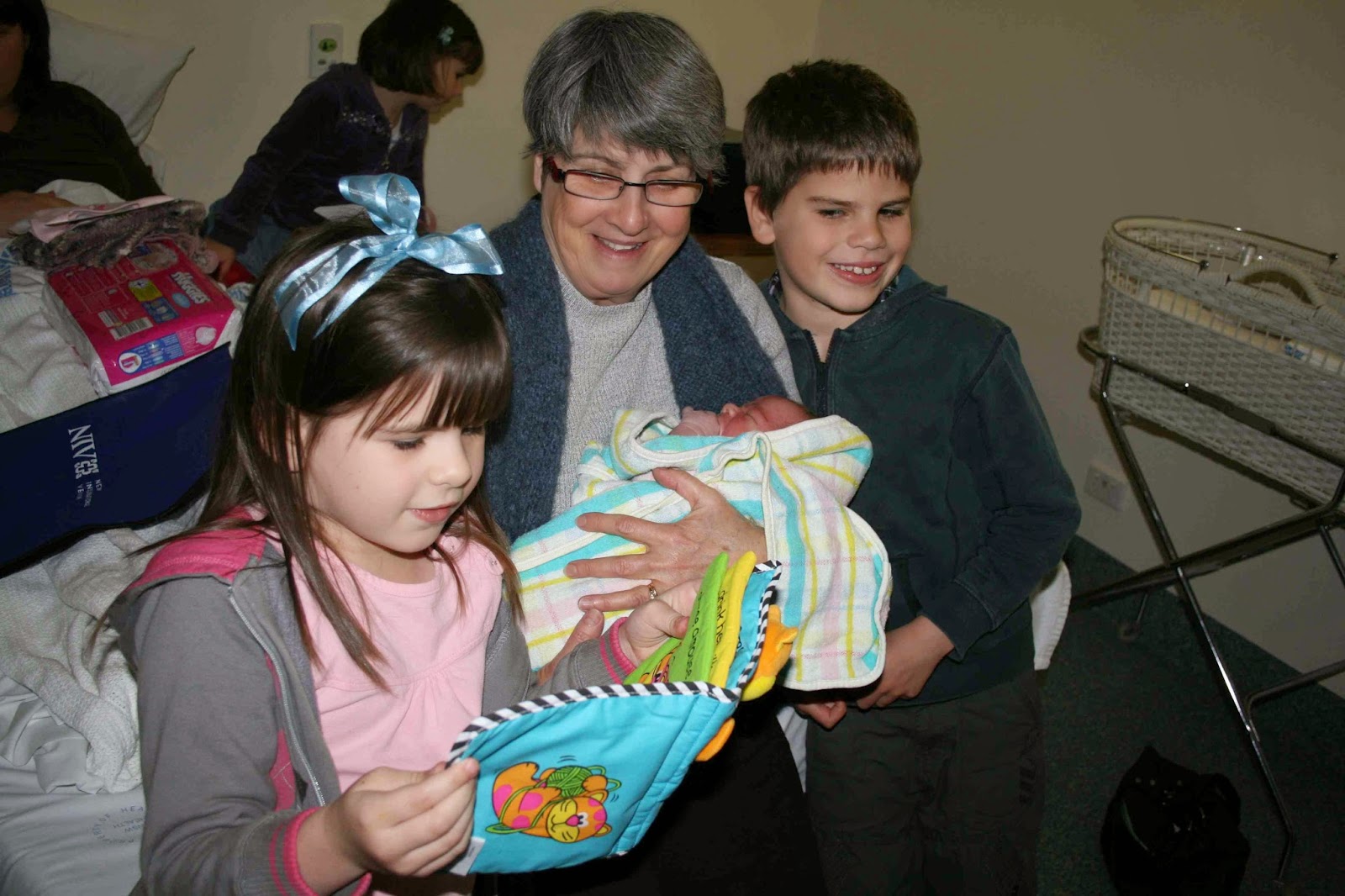
Our family had the joy of welcoming a 6th grandchild Lydia last June. I posted on this great event back then (here) and included a wonderful photo of Lydia's sister reading to her within minutes of meeting her in the delivery room. At just two hours she had been read her first book!

It's now 18 months later and I thought I'd share a video of Lydia 'reading' herself. From those first days Lydia has been read to by her parents, her siblings and anyone else that Lydia can persuade to read. She loves books and is rarely far from a pile. By 12 months she would sit with books, turn the pages, lift the flaps and try to vocalize as she revisited a story that someone else had read to her.

She has now moved beyond the page turning, pointing and listening stage, to active participation.  At this stage children will listen to the whole story, attempt to participate by saying words, making appropriate noises at the right time, and running their fingers over images, words and other features of the book. They will also pick up the books themselves and attempt to 'read' them. The video segment below shows Lydia re-reading one of her favourite books at the moment 'That's Not My Dolly' by Fiona Watt (illustrated by Rachel Wells).  In this case she becomes distracted part way through so her mum prompts her to close the cycle on the book. "Which one's your dolly?" 


So why is it important to read to babies?

1. It teaches them about language and the world.
2. It teaches them about books - their purposes, features, the way they work, the joy they give.
3. It creates a desire for them to read the books as well.
4. It builds your relationship with your child creating common ground and shared experiences.

Seven 'how to' tips?

1. Read from birth (some read while babies are in the womb!).
2. Read as if you assume that your child gets what you're doing.
3. Read as if you love the book!
4. Look at your child as much as you can, your eyes and your voice work in a kind of unison inviting reaction, sustaining mood and interest.
5. Make it as exciting as you can. Emphasize words, vary tone, volume, use pauses, change the pace, and provide gestures with your hands, arms, face and movement. Be silly if you have to! Reading aloud has a poetic or musical structure to it, which children will want to copy.
6. With more complex picture books be prepared to improvise by skipping pages (as the child takes over), shortening the text, emphasizing repetition, using your voice to help the child anticipate and predict. But try to sustain any patterns and the framework of the story.
7. Start in short bursts and build over time. When your child is 3 months you might not get more than a page or two before they try to eat the book! Persevere.


Above: Lydia's sister Elsie reading 'Where's the Green Sheep' Mem Fox, when aged 2

Other posts on early reading

'The importance of reading to and with your children' HERE
'How to listen to children reading - Part 2' HERE


Wednesday, April 20, 2011

Choosing Good Children's Books: An Encounter in ALDI

I had a depressing experience on Saturday. I had gone to ALDI to buy some sugar cane mulch that I needed for the garden. Unfortunately, the bags were small and hence expensive. But...! On a middle aisle display table I found treasure! Hidden amongst a pile of literary dross and assorted colouring and painting books, I found a series of children's picture books by a number of excellent English authors and illustrators, including:

Tony Ross - Michael Foreman - Ruth Brown - Emma Chichester Clark - David McKee - Lindsay Camp - Sandy Nightingale - Jeanne Willis - Hiawyn Oram - Frederic Joos - Susan Varley - Mary Rees - Ella Burfoot - Ken Brown


Now here's the depressing part. I stood at the box reading them one by one (must have been there for 20 minutes). On a busy wet Saturday morning there were people everywhere. There were grandmothers, young mothers, some with children and one with a pram, and there were kids on the prowl. And yet, not one person picked up one of the books. While many came to the box and rummaged through the pile, all zoomed in on colouring in books, paint with water books and various picture books from television series. The children didn't even pick one up. I even tried spreading out some interesting titles just within reach of some of the children - but they wouldn't take the bate. Several mothers picked up a 'Playschool' book (based on an Australian Children's show) but no one touched one of the books in the literature series.

I could stand it no longer. A young mum with a stroller and a 6 year old was looking at some of the books. I said pointing tentatively, "I'd look at these instead". "Really", she replied. "Oh you've got so many. Are they good?"  "Yes", I replied a little embarrassed. "They're all good. Many are by well-known authors." "I don't recognize any of the names", said the Mum. "That's because they are English", I replied. "Trust me, I know children's books, they're good, and they're only $2.99, and no, I'm not getting a commission." She began to look and her son piped up, "I just want a Playschool book, don't get me any other books." I walked away, defeated.

There were many wonderful titles. Some of my favourites were:

'Cat on the Hill' by Michael Foreman
'Why' by Lindsay Camp & illustrated by Tony Ross
'Throwaway Bear' by Sandy Nightingale
'I Want a Cat' by Tony Ross
'Can't Catch Me' by Michael Foreman
'Our Puppy's Holiday' by Ruth Brown

Well-known author/illustrator Michael Foreman
All the books were of various ages, but had been re-published in new 2010 or 2011 editions by Hinkler Books Pty Ltd. They are on sale across Australia for $2.99 each!! Hinkler have branded them as 'Silver Tales'. They are hardcover (more like board) saddle stitched and look very durable. They are on quality paper and well printed. What a bargain! I suspect if I go back in three weeks time there will be many left and there won't be a 'Play School' book in sight.

I've used a variety of links on the titles above to show that the books are widely available in varied forms. Note that at some places they are 4-5 times more expensive than the ALDI deal I found in Australia. I even found some people selling these books on eBay with a 'Buy it Now' price of $9.95. If you don't find them at ALDI the next best prices for the same books would seem to be 'Learning Discovery' in Australia (all their books are $5.95 and postage is free in Australia), Amazon in the UK (titles are 2.50 in UK pounds) and the USA (some titles from $4.50US). 

The experience in the store suggested a few things to me:

  • Children need help choosing books to read and enjoy (see my previous post on this here). 
  • We need to give a priority to reading books to children. I suspect that none of the parents I witnessed this morning were readers of many books to their children. Drawing, sticker books and paint with water books are fun and have a place, but don't offer the joy of a pile of good books read with and to children (see previous post on this here).
  • We have a very limited view of what a good children's book is. There are thousands of books and authors that go unnoticed because the books haven't won the latest Schools and libraries still need to be the champions of books. 
  • Parents need help to find books and to be able to judge a good book. Teachers have a great responsibility here.
  • Cheap books are still available if you look hard enough.
Anyway, I enjoyed reading the titles I bought on Saturday afternoon with my grandchildren.

Sunday, March 28, 2010

Choosing Great Educational Toys for Children

One of the readers of this blog (Aimee) asked me in a comment some months ago for advice on "a list of recommended age appropriate toys that are 'must haves toys that are worth buying." It was in response to one of my posts on 'The importance of simple play' (here) that talked about activities that don't really require much in the way of bought toys. There obviously is a place for bought toys. In this post I'll just talk about some of the toys I find interesting and which have worked with our children and grandchildren. I'm not trying to be comprehensive. I'll also offer some ideas at the end in relation to what I think makes a good bought toy.

For each of the toys I've chosen I will comment on what they are and how I think they help your child.

1. Timeless construction toys

No family should be without a couple of toys that encourage children to make or construct things. There are many types of construction toys that children can use from a very young age. Here are a few examples:

Above: David uses Knupferli with Jacob (his son and my grandson)

a) Wooden blocks of some type - at our house our grandchildren still use the same set of blocks in their original walker that our children did 30+ years ago (age 6 months to 3 years).
b) Lego - probably all three types will be useful. Our children's Lego is now played with by our grandchildren (suitable for age 6 months to 15 years).
c) Other more challenging connector toys - e.g. magnetic games like the Intelligence M-TIC or Knupferli Construction materials (see above). I used the soft plastic Knupferli materials in Kindergarten and only just rediscovered them (age 5-10 years).
d) Meccano - newer meccano sets (see right) are different, but they still combine all the old skills and interest of the metal Meccano I had as a child (age 5-15 years).

You can do many things with construction toys. Yes, you can build simply things like towers or shapes.
You can make houses, cars, anything (in the case of Lego).
In combination with other objects (e.g. plastic animals or people) you can tell stories - zoos can be created, aquariums, farms, space invaders and dinosaurs can invade villages etc.
In some cases your children can learn how to follow instructions and design plans (e.g. Meccano, Knupferli & Lego).

What's great about construction toys is that they:
  • Help to develop hand-eye co-ordination
  • Encourage creativity and problem solving
  • Can help to develop spatial and geometric skills
2. 'Toys' that allow you to create

These are not all toys, some are materials, but all allow children to create. Here are a few of my favourites:

a) Modelling clay - you can buy cheap multi-coloured modelling clay for $2-3 per pack, or you can make Play Dough. I've written a post on the creative use of modelling clay (here). Suitable for all ages.
b) Magnetic learning boards with letters and shapes (age 12 months to 5 years), see picture to the right.
c) Magesketch (or some other variety) of this magnetic sketching board (see an example at the top of this post), age 12 months to 4 years.
d) Felt boards - there are many products on the market (many that are very cheap), age 2-6 years.


3. Model people, animal and objects

There are many wonderful examples of toys that consist of people, animals, dwellings, and objects that go with them like dolls houses, castles, forts, arks etc. These allow children to engage in creative play either alone or with others for long periods of time. These simple objects can allow children to amuse themselves in a world of make believe and fantasy at home, in the car, at other people's houses etc. They are a wonderful way for children to creative (verbally) their first narratives.

Some of the simplest are perhaps the best:

a) Keep a box of animals - depending on the child's interests these might be farm animals (under 12 months), African animals, sea creatures, dinosaurs and people - these can be used alone or with other toys (see the shot of Sam above with his Leggo 'zoo').
b) Commercial sets like the Little People series are wonderful for young children - we have a set based on Noah's Ark to which we've added other animals that has kept all our grandchildren amused (0-3 years).
c) A doll's house will keep boys and girls amused for ages and their modern variations on the same theme with medieval castles complete within knights and dragons (age 2 -8).


4. Other categories

There are many other toys that allow children to have fun, learn, manipulate and develop fine motor skills. Here are just a few examples that I spotted at my local Toy Shop this week. If you live in Sydney Monkey Puzzle Toy Store is worth a look, it's one of the best toyshops I've seen. The owners know and are passionate about toys. Find a good local toy store where the owners choose, sell and enjoy toys.


a) Magnetic (Mudpuppy) Dress up Figures - these come in a metal box and the mannequins vary (e.g. sports model, pirate, ballerina, monster, mermaid etc).
b) Chicken Socks craft sets - These are cheap and have a variety of separate packets including 'Crayon Rubbings', 'Fun Felt', 'Simple Sewing', 'Hand Art' etc.
c) Perpetual puzzles - these are puzzles designed by Makoto Nakamura, add a new level of creativity by allowing the child to change the shape of the overall puzzle that is based on continuous and interlocking shapes.
c) Puppets - every house should have a puppet or two, there are many different types of puppets including finger puppets, hand puppets and string puppets.
d) Hungry Hippos - on the surface this toy might not seem to teach much but it helps children learn to count, helps them with hand eye co-ordination and reflexes, teaches them many social skills as they deal with winning and losing a game with some skill and lots of chance.


The above are just examples. After doing this post what I might do is feature specific toys at regular intervals.

A few principles that I apply in choosing toys

While there are single purpose toys that bring great pleasure and don't teach a lot (e.g. Hungry Hippos), on the whole, I expect a lot from toys. In fact, usually, I'd be looking for toys that offer multiple areas of learning.

1. Do they stimulate creativity and learning?
2. Do they encourage language use?
3. Do they require varied skills and multiple abilities?
4. Do they encourage the integration of many forms of learning?
5. Will they last (i.e. not fall apart)?
6. Are they good value?
7. Are they fun, interesting, challenging?
8. Will they sustain your child's attention?

There are obviously many great toys that I haven't mentioned. In my home I'd always want to have puzzles, lots of writing implements (crayons, pencils, chalk, varied papers), toys that teach numbers and letters, toys that train hand-eye co-ordination (through threading, putting things in holes etc), percussion instruments, Thomas Trains and cars (especially for boys) and so on.

Related Posts

All previous posts on play (here)