Monday, August 26, 2024

Children's Book of the Year Awards 2024

The Winners & Honour Books Younger Readers (Ages 0-6 Years)

Voting has been completed and winners in all categories announced for younger readers.  As always there were SO many great books. Glad I'm not a judge this year! I should point out that this year we have the appointed judges of the awards, and for some reason there a group of 'Appointed Judges' also suggest winners. 

In this post I will review nominations and the winners in the 'Early Childhood' & 'Picture Book of the Year' Awards.


1. Early Childhood (0-6)

And the winner is....

'

And what a worthy winner! 

Quick! Come and see! Something fabulous, it’s . . . me!

Gymnastica Fantastica! is a joyful and exuberant picture book about a child discovering and attempting new physical skills and putting on wonderfully imperfect shows for whoever will watch them.

Gymnastica is a small person with big energy, as they bend and balance, bounce and roll, attempt a cartwheel and a spectacular trapeze flip-out finale. Written in playful rhyming text and with brightly energetic and appealing illustrations, this is a book that kids and parents alike will find irresistible to read aloud and delight in its energy and humour.

The CBCA judges commented…

This book conveys so much energy and life which children will connect with immediately. The young child’s voice permeates the tight, joyful rhyming text which includes a rich assortment of verbs, nouns and adjectives. Pencil, ink, crayon, gouache, and digital illustrations are filled with zoom in action and movement matching the equally energetic text.

And the 'Shadow Judging' winner is...


Bob Graham is one of our finest writers and illustrators. Once again he doesn't disappoint! The judges said of this book:

"An exuberant group of children spill out from the confines of a grey apartment block, finding joy in a simple box of chalk. The power of creativity and strength in community shine...  The language is simple and succinct... and rich in imagery."

 As always, his illustrations have the usual use of watercolour, pastel colours, gentleness and warmth. The illustrations are so sensitively created in watercolour, pencil and pastel colours. And as always Graham leaves the reader with a view of how the world should be.

Honour Books

Now here is an unlikely pairing! And an even more unlikely dance pairing.

Bear and Duck are best friends, but they are very different. Duck likes to try new things, and Bear ... well, Bear likes not to.

When Duck needs a friend for her dance class, Bear reluctantly agrees. Bear’s big size causes problems at first, but he soon discovers that he might just be a very good dancer.

 'Grace and Milligan' Caz Goodwin & Illustrated by Pip Kruger

Grace lives next door to old Mr Milligan and his goat Charlie. They are the best of friends. But when Mr Milligan’s beloved goat dies, everything changes. Will Grace be able to help her friend overcome his sadness?

Grace and Mr Milligan is a heart-warming story of grief, love and the healing power of friendship.

2. Book of the Year Picture Books (Ages 0-18 Years)

Entries in this category should be outstanding books of the Picture Book genre, in which the author and illustrator achieve artistic and literary unity or, in wordless picture books, where the story, theme or concept is unified through illustrations. Ages 0-18 years.

Note: Some of the books in this category may be for more mature readers

Winner Picture Book

'Timeless' by Kelly Canby


Emit (whose parents turned back time to name him) is surrounded by busyness. Dad's too busy to read stories, Mum is too busy to play games and Emit’s brother and sister are simply too busy doing nothing, to do anything at all. Emit tries everything he can think of to get more time... but it’s not until Emit tries to 'buy' some time, that he learns the secret which is, if you want time, you have to make it.

Note: This award is for picture books that are relevant and of interest for readers 0-20 years of age.

BUT: Amazon lists it as suitable for children 0-8. Parent discretion should be exercised.

And the Shadow Judging Winner is...

A little lone werewolf prowls the nights on his own until he finds friendship in the most unexpected of places. This is a  whimsical and tender picture book in the spirit of Julie Fogliano’s 'My Best Friend'.

Every night at midnight, Felix turns into a wolf. His hands and feet turn into velvety paws, his senses become sharper, and he grows a long, furry tail. Felix loves exploring on four legs, and he has the nighttime world to himself. There’s no one else like him.

During the day, Felix is human, but it still feels like there’s no one like him. The other kids used to invite him to play, but now they keep their distance. That’s fine, though, Felix doesn’t need anyone else. But after a chance encounter, Felix the little lone wolf starts to wonder whether he might find his pack after all.

 There were other awards as usual in additional categories:

3. Book of the Year: Eve Pownall Award

This award is for factual books.

Entries in this category should be books which have the prime intention of documenting factual material with consideration given to imaginative presentation, interpretation and variation of style. Ages 0-18 years.

Winner: 'Country Town'

 'Timeless' by Kelly Canbee


Happy times, sad times, boom times and gloom times!
From the First Peoples camp at the river crossing in the 1820s through to Carols by Candlelight at the showground in
today’s world, this is a decade by decade wonderfully illustrated story of a small country community.

AUTHORS

Isolde Martyn and Robyn Ridgeway co-authored Country Town, each providing a unique perspective of Australian
history.

Isolde Martyn’s earlier career was in academia and publishing. She is the author of nine historical novels and her debut novel won a top award in the USA and Australia.

Country Town has been a long-term project and she hopes it encourages young readers and their families to enjoy
history in a really fun way.

Summing Up

I hope you will agree that there are some wonderful books recognized this year on the long list. as well as the winning and commended books.

Monday, June 24, 2024

"Literature and Storytelling as Exploration & Discovery"

Many people's interest in Literature begins very early in life. But not so for me. Unlike many children, my early life was not in a home where good literature was listened to, read and enjoyed. I came from a disadvantaged home where there very few books. While there was much music, yarns (as Scots call stories) and discussion in our home, there were virtually no books. Literature wasn't part of home life, but storytelling was. It was mainly experienced through Scottish yarns, stories of the Old Country, and popular music; as my parents were entertainers at weekends.
Children Bring Their Lived Experience to Reading

I wanted to do this post because I know that in our schools, there are students with quite diverse backgrounds. The title of the post owes much to Louise Rosenblatt who's book "Literature as Exploration", had a big impact on me as an adult,  after I had become a teacher and later an academic. It was later in life that I discovered the wonder and magic of literature. Rosenblatt argued that readers "project their world into what they read". The "reader seeks to participate in another's vision". An I believe this is so.

But of course, the presence of literature and story varies greatly across families and even cultures. For many children, literature isn't part of home life, but they might experience stories in different ways. In fact children's first experiences of what we know as "literature", might not come for some until school or even in later life. Our backgrounds and life experiences have a significant role in how we see and respond to literature. As Louise Rosenblatt stressed, every reader brings something of themselves and their lived experience to a book.

Key Factors in Helping Children to Embrace Literature


Margaret Meek is another scholar who taught me much about reading and storytelling. Her book "Learning to Read" first published in 1982, identified three basic assumptions about learning to read. She also wrote about the responsibility of others like teachers and parents to support young readers and storytellers. She outlined a number of key assumptions:

1. First, Literature is important

Reading is not simply for acquiring knowledge and literacy competence, it is the "active encounter of one mind and imagination with another". As the reader encounters any book, they bring with them lived experiences that matter, and this helps them to engage with a story, and respond to it in unique ways. It can also change them and their view of the world.

2. Second, reading is Learned by Reading

This might seem obvious, but Meek meant more than having time to read at school and perhaps at home. While children will start by recognizing words, they will quickly see that when words are used together, they reveal many other things. Children don't simply learn through exercises and rote learning of letters and words. They learn as they actually read for purpose, joy and to discover new things.

3. Third, what the reader reads makes a difference

The things children read shape how they see reading; including its purpose, how stories are formed and the 'other worlds' they can introduce to us. And they stimulate the growth of our imaginations. Reading should also trigger deep inner reflection on what we have encountered, and a desire to share this with others.

Further to Margaret Meek's three key points, I have always added a fourth, which looks at how storytelling and reading are related. I think she would agree with addition.

4. Storytelling has an impact on how & why we read and our lives

I include this extra point because it's important to think about how children move from being readers and recipients of stories, to creators of stories. Storytelling shifts children from being consumers of words and the reading of other people's stories, to becoming storytellers themselves.

Let me share a simple anecdote. I was visiting friends in the US late last year. They have two sons (aged 2.5 and 6.5 years old at the time). We went out to dinner with the family and while we were having a great time, the boys became a little restless. I began reading a picture book to the youngest and elaborated on the story by including the boys in the story. I became a bit creative with the story line. The younger brother was enthralled and so was his older brother.

 Above: A storyteller takes the floor!

When I finished my story, the 6 year old jumped up and began to tell his own story rather creatively and dramatically. Everyone listened intently, including us and others at nearby tables.

His own story had a similar story and structure, and he also dramatized it as he shared it with us. We listened intently as he dramatically created and shared his own story. Why do I share this?

This is the type of transformational moment that demonstrates exploration and discovery. Both boys learnt a significant lesson that night. That stories aren't just things to consume or to listen to, they are also things we can create, tell and share. As Margaret Meek taught us: 

"Given encouragement, everyone is a storyteller. Any incident becomes a story in the telling of it, and the next simple step is to write it down" (Meek, 'Learning to Read', 1982).

If you'd like to explore my fourth point on Storytelling you might consider the wonderful book "Children Tell Stories - A Teaching Guide" by Martha Hamilton & Mitch Weiss. 

Summing up

Stories and storytelling are an important part of life. Humans are instinctively listeners to and makers of stories and they love to share them. Why is this so? There are at least 6 key reasons:

  • Hearing stories stimulates children's imaginations
  • Hearing stories improves their listening skills
  • Hearing stories also helps to build a love of reading
  • Hearing stories helps children to develop listening skills
  • Hearing stories expands  children's vocabulary
  • Hearing stories helps to grow young writers, and also helps them over time to become writers as well

I might well revisit the thoughts in this post and elaborate on how to encourage children as story tellers in a future post. Happy storytelling. 


Friday, May 31, 2024

Nine Wonderful New Books for 5-13 Year Olds

I hope you enjoy my reviews of four new picture books for children aged 3-6 and five Junior novels for readers aged 8-12. A great collection!

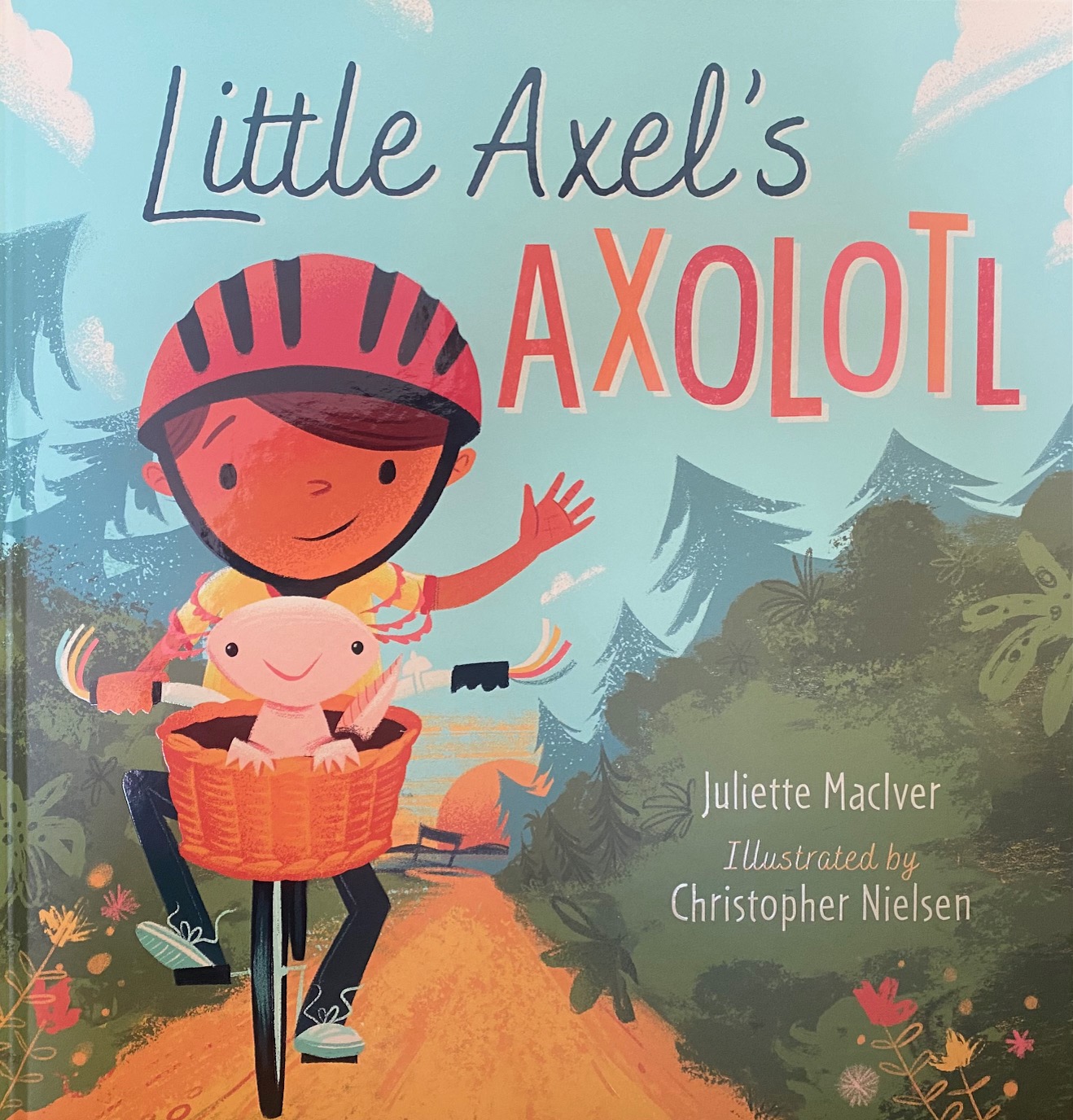
1. Little Axel's Axolotl' by Juliette MacIver and illustrated by Christopher Nielsen

This is a very funny and endearing picture book, about a very special pet axolotl; named "Harris Aristotle" by his owner Axel. This is a very spoilt pet!

Axel attends to his every wish and want and need and feeds him with the finest cheese, and warms him with the warmest of hats. Axel's fishy feet never touch the ground ... But despite his life of ease, Harris has a secret dream ... and hatches a secret, and daring scheme. Harris is about to surprise everyone!

Axel takes Harris everywhere with him, but Harris Aristotle craves the chance to bask in the sun and learn how to swim. He sets out one night on a brave (or is it foolish) adventure?

This wonderful little picture book will be released in July and will be a great hit with children aged 3-6. It has a surprising ending for this adventurous Axolotl.

2. 'The Wobbly Bike' by Darren McCallum & illustrated by Craig Smith

This is another special book from Walker Books to be released in July. Librarians should advance order! 

3. 'Florence & Fox - The Pet Mouse' Zanni Louise & illustrated by Anna Pignataro

This is a beautifully illustrated picture book which will work well as a read aloud for children 2-5 or a self-read for 5-6 year olds. The central characters are Florence the crocodile and her friend Fox. Illustrator Anna Pignataro has created wonderful images for these sweet characters who are best friends. But they are VERY competitive. Each tries to trick the other by issuing challenges that they think they can win.

My only quibble with the book is that the text is a little confusing in places. There a few gaps in the dialogue that create disjunctions for the reader particularly on the first 5 pages.

This delightful story with beautiful crayon and water colour illustrations will amuse and encourage your children's understanding of what true friendship looks like. 

4. 'Mitchell Itches: An Eczema Story', by Kristen Kelly & Illustrated by Amelina Jones 

5. 'Ducky The Spy - Expect the Unexpected' Written and Illustrated by Sean E. Avery

Just released! This funny little story about a duck who is also a spy, will amuse readers aged 7-10. 

 Laugh-out-loud who-dunnit ridiculousness in this new graphic novel from Sean E Avery

 
A thief on the farm. A goat kidnapped by a gang of cats. A giant chicken. Ducky the Spy and Donny “The Distraction” Donkey are on the case.

7. 'Stitch' by Padraig Kenny and illustrated by Steve McCarthy

Pádraig Kenny is an Irish writer who hails from Newbridge in County Kildare. His debut novel 'Tin' was published in 2018 and was Waterstones Children’s Book of the Month. It has been nominated for the CILIP Carnegie Medal and several other awards. Since then he has had success with his second novel 'Pog' (2019). And his third novel 'The Monsters of Rookhaven' (2020), received the 'Honour Award for Fiction in the 2021 KPMG Irish Children's Books Ireland awards. It was also nominated for the Carnegie Medal. This fifth novel "Stitch" was published by Walker Books in 2024. It was 'Times Children's Book of the Month' in January 2024.


Readers aged 10-13 should enjoy 'Stitch'. The central character 'Stitch' and his friend 'Henry Olaf' were brought to life by the genius Professor Hardacre. But the professor's wicked nephew takes over his laboratory. Stitch and Henry are forced to escape, but will they ever be seen as anything but 'monsters'? 
 
 A rare gothic novel for readers aged 9-13.

8. 'Knights and Bikes - Wheels of Legend' by Gabrielle Kent and illustrated by Rex Crowle & Luke Newell

Welcome to the sleepy island of Penfurzy, where nothing exciting ever really happens. OR DOES IT? Adventure awaits Demelza and her new best friend in the whole world, Nessa, as they explore the island and uncover the mysteries of the Penfurzy Knights. With a honking pet goose sidekick, quirky islanders and a legendary treasure to find, it's up to Nessa and Demelza to ride their bikes, solve the puzzles before them, and face down danger with frisbees, water-balloons, feathers .... and a toilet plunger. THEIR FRIENDSHIP WILL WARM YOUR HEART. THEIR BRAVERY WILL MAKE THEM LEGENDS.

This is is a mystery with a sprinkling of wonderful black and white images by Rex Crowle & Luke Newell. Readers aged 10-13 will enjoy the engaging story

9. 'Queen of Dogs' by Joe Weatherstone & illustrated by Nicolette Treanor 

Maddy’s family is talented and ambitious — sporting trophies, top grades, they collect them all. But Maddy would rather spend time with her best friend, her pug Gusto. When Gusto disappears … her world changes.

Her search for Gusto reveals a surprising talent and Maddy can't believe her ears. She can understand everything the neighbourhood dogs are saying and suddenly Maddy becomes the go-to canine problem solver. But when more and more dogs go missing, Maddy finds herself with a much bigger problem … and she is going to need a lot of friends – two-legged and four-legged – to help her solve it ...


This is a debut novel from Joe Weatherstone that speaks of loneliness and how friends and animals can help to overcome these challenges. It is Joe's debut middle grade novel, that 12-13 year-olds will enjoy and find relatable. Joe is actually Creative Producer and her work includes the 'Emmy' winning children's series 'Hardball', 'Oscar' nominated 'Inja' and the Logie winning 'Housos'. She lives in Sydney with her two children and two dogs!  


Tuesday, May 7, 2024

Transforming School Education 'Inside Out' and 'Outside In'

You have no doubt heard the saying, "it takes a village to raise a child". This saying is typically used to remind us that a person's family is but one aspect of such a "village". Children are also supported in their endeavour by schools, sporting coaches, neighbours and so on. Our hope is always that the "village" will help to shape them for the good. This post tells how one region in Australia is transforming school education in a novel way to achieve these goals.

Foundations for Change in Secular Education

Above: Cessnock High School

I started my teaching career as a Primary school teacher in Public education (for overseas readers, this means government run schools). This was in the city and region where I grew up. I worked there as a teacher and education adviser for 10 years. In recent times we have witnessed how one school is being transformed in an interesting way. I want to focus the new approach being used in difficult schools in Newcastle.

A Case Study of School Transformation

Cessnock is a rural town in Australia about 112km from Sydney. As a child, I spent all of my school holidays with my maternal Grandparents in Cessnock. My Mother grew up there, and her family owned and ran mixed businesses which were called 'General Stores'. This was where most people bought food and other necessities in the days before major supermarkets, shopping centres and online shopping. Cessnock was a relatively poor working class area, where coal mining was the main industry and employer. From the late 1890s until 1964 my Mother's family ran a number of General Stores in the district. They were some of the business and community leaders for a period of 70-80 years.


Above: One of my Grandparents' Stores (Closed in 1964)

My Mother and her brothers attended a government primary school at Kearsley, just two doors from their store in the town. Later they attended Cessnock High School. One of my uncles (my Mother's brother) eventually taught at Cessnock High for many years and was Science Master. In those days, it was a 'tough' school and achievements were mixed. I was posted to the town in the 1990s as a curriculum consultant for the Hunter Education region for English and Literacy learning, and could see that there were many problems. It was a tough place to be a teacher.

In recent times there have been some exciting educational developments taking place in this once difficult school for teachers? Cessnock High has been dramatically transformed! The change has been so significant, that the Department of Education in our State (New South Wales) has decided to adopt and 'role out' the Cessnock model to seek reform in all of the schools in the Hunter Region of NSW, and perhaps the whole state, if not the nation.

The school where teachers once feared having to teach due to student violence and indifference, has undergone an amazing transformation. A dedicated principal, some excellent teachers and new education methods, have led to some of the most improved NAPLAN scores in the country. NAPLAN is an international assessment program that assesses student performance on a common test covering reading, writing, language and numeracy. I sat on the national committee that oversaw these tests for 15 years and understand how difficult it is to affect significant change and improvement.

Surprisingly, Cessnock High now has some of the most improved NAPLAN scores in the country. Its year 12 results have improved by 50 per cent. Education authorities are now considering how the 'Cessnock model' they've adopted, might be rolled out across the region and the State. I find this extraordinary. In a school where violence amongst students was rife and school performance was so poor, there has been an amazing transformation.

While the principal has a key role and is clearly a great leader, he is reluctant to take the credit for it. He explains the change in these words:

"We've been able to build a culture … where there are very few negative behaviours," he said. "The violence doesn't exist at all in our school anymore and school is a calm place." Of course, there is more to it than that!

 A Whole School Approach

The transformation in this school is remarkable. One of the keys reasons appears to be a whole of school approach using a model developed by teachers with Newcastle University staff that they label "Quality Teaching Rounds".

Just what is this model? In essence, it's a structured learning model to improve classroom teaching and student results. It does this by creating small groups of teachers who take turns to observe and critique colleague's lesson against three statements or criteria:

  • Quality teaching: demonstrates a deep understanding of important knowledge and the best ways to communicate this to students.
  • Quality learning environment: ensures the classroom environment is optimized so students can absorb knowledge and learn.
  • Significance: effort is made to ensure lessons are relevant to students' lives and hold significance in order to boost engagement.

Of course, there is much more to the success than these short dot points suggest. Teachers changed the way they work together, and now support each other as they try to transform the school. What has been the outcome? Education standards have risen dramatically, and student behaviour has been transformed.

In the words of the Principal, the "lessons are more engaging, the environment to learn is safer and the learning is more significant." As a result of the changes, the behaviour of students has changed dramatically allowing learning to blossom. And academic achievement has risen markedly

So What's Different?

My definition of education in 'Pedagogy and Education for Life' is in short:

"Education is the whole of life of a community, and the experience of its members learning to live this life, from the standpoint of a specific goal."

There is no doubt that Cessnock High School has created a desire amongst parents, teachers and students to change community life, and in particular classroom behaviour, and application to school and learning. A key feature of the 'Cessnock' approach is that teachers collaborate, and even sit in on each other's lessons to offer feedback and advice. This has proven to be transformative. Teacher willingness to do this has not only been helpful, it has demonstrated they are concerned not only for their own teaching, but even more importantly, the learning and welfare of their students. 

The education authorities in the region are considering how more schools could adopt this approach, allow other teachers to occasionally sit in each others classrooms. The aim in using this approach is the desire to help teachers develop effective teaching practice. The reality is that in the cut and thrust of each day, they are not only teaching their students, they are shaping them for life. 

I'm reminded of my early years as a teacher and recall a colleague who taught next to me in a primary school in Sydney. His class was always out of control and his response was to scream constantly at the students while they just laughed and messed about. I coped by closing my door to shut out the chaos. But this new approach has made me reflect on how I might have been able to help him?

Above: My first school as a teacher

What other refinements might be made to this model?

Central to the 'Cessnock Model' is the visitation of teachers to one another's classrooms. They do this to watch, learn from and help colleagues for example to:

  • Use effective and sound methods,
  • Maintain student attention,
  • Offer feedback on how to support students, and
  • Sharing ideas on more engaging approaches to teaching subject content etc.

But hopefully, in all our schools we might identify other things we could consider. Might we also help one another to apply some additional lenses when trying to maintain classroom control while using good pedagogy. For example, we could also discuss together:

  • How the content and learning relate to and are relevant to student lives?
  • How we might present ideas and curriculum content in more engaging ways?
  • How student non-engagement can be observed? How could we unpack the cause of student disinterest or boredom?
  • How might some behaviour relate to life outside the classroom not just within it; and
  • How could student negative responses and bad behaviour, offer windows into where students stand in terms of personal happiness, life purpose and goals.

A good way for schools to begin exploring a new approach of this type is to reflect on how their school might benefit. Some broad questions might help:

First, what is the balance in classroom and school life, between promoting success in school learning, helping them to grow as people, and also as good citizens?

Second, how might the approach be implemented in a way not only to make them better students, but also to help shape their character, values and ambitions in life.

Third, how might the partnership between teachers and colleagues, be broadened to include student families as we attempt to help them grow and mature as citizens, and shape them to lead lives that will make a difference.

What do you think?


Tuesday, April 30, 2024

Six Wonderful New Picture Books to Share

 1. 'Mitchel Itches: An Eczema Story' by Kristen Kelly & illustrated by Amelia Jones

This lovely picture book is about a boy who suffers badly from Eczema, and how he manages to cope and eventually 'conquer' it. In his Mum's words, he "was born scratching". Even in his baby photos he had socks on his hands to deter him.


He grew up putting on skin cream every day and this wasn't fun! Baths helped for a little while, but sometimes the scratching would leave his skin infected, and some of his friends worried about catching it. In frustration, he would tell them "you can't catch it!" Being called "Itchy Mitchy" wasn't much fun either.

But when his Uncle Sean gave him a guitar, he was to learn many songs, and join the school band. He dazzled the school with his playing. With the support of his friends and family, over time he was able to develop resilience. 

As well as being a great story, this book teaches us about someone's experiences with this condition, and how over time you can learn to live with Eczema.

2. 'Some Families Change' by Jess Galatola & illustrated by Jenni Barrand

This special book tackles the tricky topic of the impact on children of the separation of their parents. It offers insights into the impact of such an event and how parental separation or divorce changes families, but doesn't end them. It also explains why parents might separate for varied of reasons. The parental voice within the text reminds the reader that while the make up of their family might change, their parents and many others continue to care for and love them.


Sometimes, families might get bigger as parents remarry and other children join them. And other family members like grandparents might take on bigger roles. There are even members of their extended family who help like aunties, uncles and cousins. In all the changes, children need to understand "...it's not their fault... you have done nothing wrong."

"Children grappling with these changes often harbor difficult feelings. The book validates these emotions, emphasizing that it's okay to feel upset or worried because adjusting to change takes time."

This is a tender and helpful picture books that parents and teachers will like, and from which deeper conversations might emerge. An ideal book for younger children aged 3-6.

 3. 'King Lion' by Emma Yarlett

This is a delightful, story about a lion who was King of his own Kingdom, but sadly he had no friends. So he roared from the tallest tower, "Please, will ANYBODY be my friend?" Not surprisingly no-one accepted his invitation. They all thought that "the KING is DREADFUL". Instead, everyone hid from the King. In his sadness every night he roared in his sorrow.

But one day a little girl who was playing all alone saw him. And while she could see his "dangerous claws". And heard his "deafening roars" and "feared his DRIPPING jaws" she thought, maybe I know what's wrong. That night she came up with a very brave plan. The next day as the lion prowled his empty Kingdom she was waiting for him. And when the lion roared his deafening roar at her, she roared right back! And then she said "Hello...Let's be friends". And because she knew what it was like to want a friend the King understood for the first time what it was to be a friend. And from then on, "...the girl and the King were always dreadfully happy."

A beautiful book that children aged 3-6 will love whether being read to, or trying to read it themselves. 

4. 'Glow' by Ross Morgan


This is a sumptuous book! In just 212 words with the most beautiful illustrations and almost every page simply in shades of deep blue and black, I wanted to read it again and again. There is depth not just in the illustrations but also in the story that is told.

The setting is a jungle of lost and broken cars that are a maze of wonders for creatures at night like frogs and rats. But while a 'junk' yard at night might be scary, this is a place of exploration and discovery for a little girl. She likes to make things, and her trusty dog accompanies her on their night-time journey of discoveries. But their wanderings bring a special discovery. With a flash of light a magnificent machine zooms skyward in the dark.

What a master storyteller we have here and such an accomplished artist. I want to 'steal' one of these to hang on my wall so I can revisit it's mysteries again and again. Brilliant!!

Ross Morgan is an artist from South Australia. He has won many prizes and been part of solo and group exhibitions. His gift and love for the unusual, led him to create this special book that seems to 'Glow'. In 2018 he won the 'Raising Literacy Australia' prize. He is working on a number of new picture book projects as both author and illustrator.


5. 'Pavlo Gets the Grumps', by Natalia Shaloshvili

Pavlo does not feel like going to the park. Not today.
He does not want to go swimming.
He even says no to the cinema.

What's going on, Pavlo?
Pavlo's got the grumps.


Pavlo's mother asks him over breakfast what they should do today. But Pavlo is grumpy. Every suggestion from his mother is rejected. "No! I don't want to go to the park! The swings are too swingy", and the "slidey is too slidey!". No swimming because "the water is too wet and the fishes nibble my toes!"

The cinema is no good as his "bottom is very wriggly today". His Mum replies "I think you've got the grumps." The best solution? We "will go anyway" says Mama. And when he meets his friend Mila there, and after a few cuddles, he was now rid of the grumps!

Natalia Shaloshvili's expressive illustrations are sad and funny at the same time, reassuring little ones that we are loved by our family and friends even when we're not our happiest selves.

The illustrations have a softness that looks like they were applied with a soft sponge. The 'softness' of her illustrations and the delightful text make for a book that children will want you to read over and over again, as well as reading it themselves.

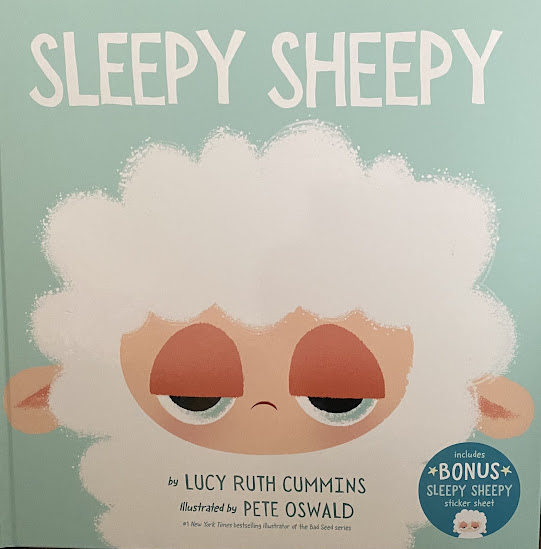
6. 'Sleepy Sheepy' by Lucy Ruth Cummins & illustrated by Pete Oswald 

This sweet picture book shows that a baby sheep can be just as reluctant to go to bed as any young toddler. Every parent will recognise the tactics used by our "sleepy sheepy" in Lucy Ruth Cummins book. They are just like those of our children at bedtime. Pete Oswald's cartoon style illustrations communicate the emotions of the parents and our Sleepy 'Sheepy' so well. illustrations are delightful.


Even when this little sheep's

"Shoulders stooped"

"His brain was pooped"

he was 

"Still NOT SLEEPY!" 

But as all parents know, eventually our little sheep goes off to sleep.

 This is a lovely book to read to our Tots at bedtime or in our classrooms as well.


Tuesday, April 2, 2024

Can You Identify Something Commendable in Every Student?

I wrote a version of this post for another blog I write
('Pedagogy and Education for Life'). That blog is specifically for teachers in Christian or faith-based schools, but the topic is just as relevant in all schools.

Let me first ask a question. Do we believe there is something commendable in every child we teach? In the first week of first term in any school year you won't have much of an idea, but if you're well into the year and you still haven't recognised something it's a problem.  It might just be that we don't know them at all. But I'd hope that after 2-4 weeks we would know something about every child. Their name (more difficult for secondary teachers), and a little about their personality. Maybe the things some are good at, and even some friendship obvious friendship groups. But at the 2 month mark we should know much more about all students.

Some children hide in the background of classroom life. It's easy to quietly withdraw, keep a low profile, look out the window, and count the minutes till recess, lunch and home time. This presents a problem for every teacher, for we must get to know our students, including their strengths, weaknesses, hopes, fears and life challenges.

Across my teaching career, I observed children who could be disinterested, under-performing and at times difficult in one class, who suddenly blossomed in a different class. "Why is this so"? I'd hope that we never see children in our classrooms who we assume haven't anything to offer.


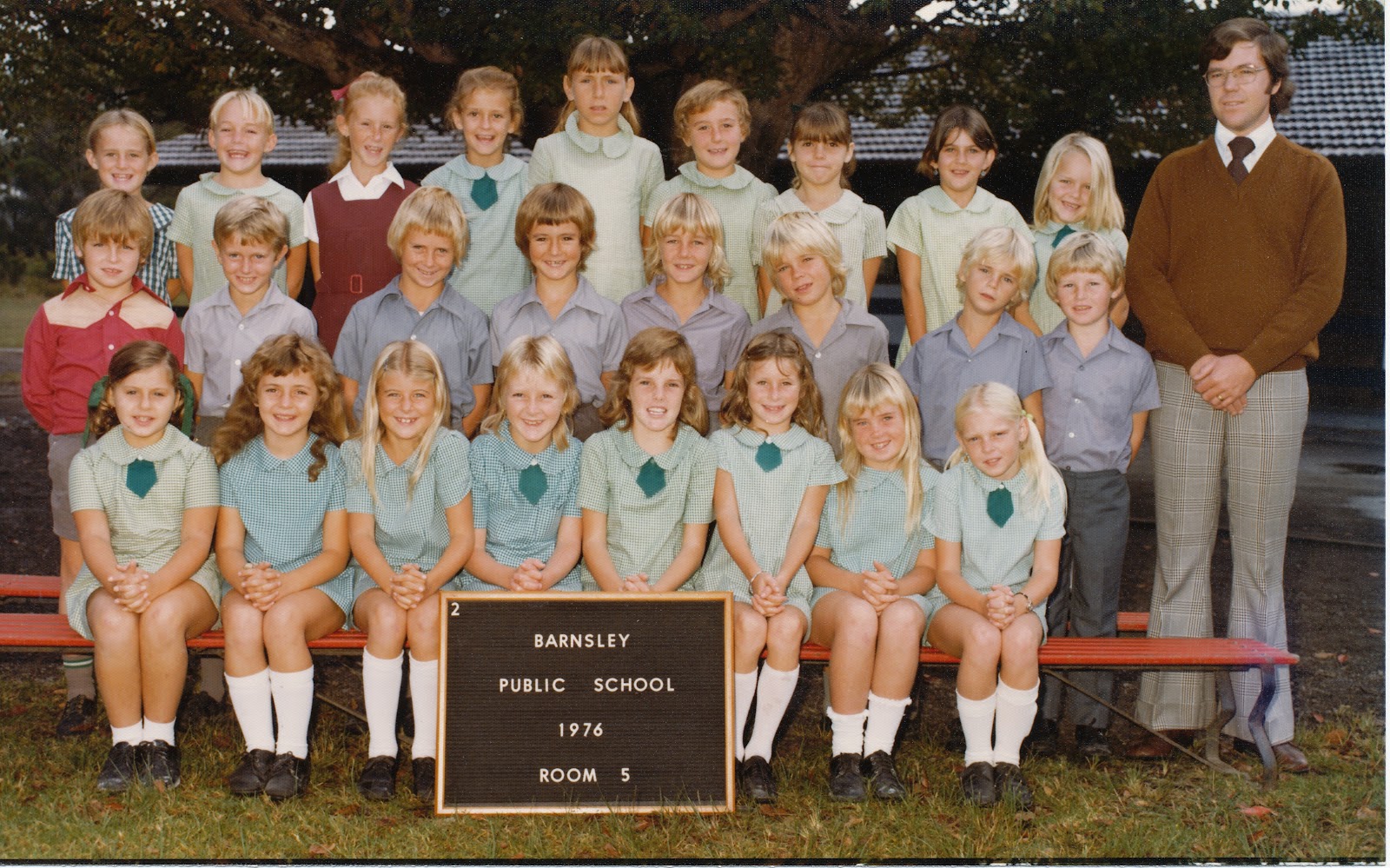
Above: My students in 1978

I taught in three different elementary schools across all age ranges. In many ways, it was my third school where the challenge to know all students became even clearer and more important to me. I was the sole teacher and head of a small school. While it had two buildings, two classrooms, a small library, a staff room and office, I was the only teacher as well as 'Head' of the school. I was the person who ran the 'Tuck Shop' each week etc. I had 26 children across seven grades (and at one stage 31). That is, Kindergarten (5 year olds) to Grade 6 in the same room. The school was situated in a small town with just 300 people.

So why am I stressing the imperative to know our students? Because, all students need to understand they are known, valued and seen as capable of doing new things. This makes a difference! Perhaps this is obvious to some, but how is it achieved in the busy life of the classroom? Let me tackle this from three angles.

a) Every child needs to feel valued, and seen as able to do things

An important ingredient for any child's success is the realization they can be successful at something. It took me until 4th grade to realize that I was good at a few things. I enjoyed Kindergarten and learnt to read and write. But by grade 3, I spent most of the day looking out the window and thinking about the fun I'd have when I got home. I managed to learn to read, write and so on, but I was pretty naughty and easily distracted. But, in grade 4 a new teacher invested some time in me. He could see my problems, including a tough home background and my previous disruptive behaviour, but he was prepared to invest in me, even in a class of 41 students across two grades (see below). I'm 4th from the left in the back row.

Mr Campbell had the sense to channel what he saw as potential in me, in a way that would motivate. I became the garbage monitor, milk monitor, duster cleaner etc to no doubt to try to keep me out of trouble (to little effect at first). This was against a backdrop of the Principal who saw me as a 'drop kick'. He simply caned me every time I messed up, which was often the case in his eyes in grades 3 to 5 Grade. But even as my behaviour improved, he found excuses to cane me. Once when he saw me looking out the window during a lesson (bored stiff), as he walked along the verandah past my classroom. He came in, took me out and caned me twice!

But a big change occurred when an aquarium with tropical fish was purchased by the school and placed in my classroom. My teacher put me in charge of it. He handed me a book on tropical fish and asked me to study it. He later asked me to give a presentation to the class on raising tropical fish. It was a success, and the fish and I both flourished.

The challenge for all teachers is that some students will present as disinterested, difficult and annoying (as I was), while others will take the front seats, smile, look engaged and answer all the questions. Being able to identify the gifts and abilities of all students is our greatest challenge, and much more important than seeing their weaknesses and problems.

Years later, after I'd become a teacher, I recall a day while on playground duty at a small Primary school in my home city that had an impact on me. I was standing next to the Principal who would come out from time to time to watch our students. The boys were playing cricket and a new boy broke a cricket bat. The Principal called him over and said "how did that happen?" The boy replied "I don't know Sir", I just missed the ball and hit the pitch. To which the principal replied, "I'm watching you son, I can remember your older brother breaking a cricket bat when he attended this school too." A colleague nearby whispered in my ear, "and I bet he's never forgotten it." How easily children are labelled. At that moment I thought to myself, I was that kid once, and this principal was like my old principal in primary school who had caned me over 40 times before Grade 5.

A fundamental mark of a good teacher is the intent to look for the good in students, and seek to identify their abilities and potential, not just their weaknesses and failures.

b) Teachers need to gain the trust of their students and in the process, seek to identify gifts in unusual places.

In 'Pedagogy and Education for Life' I share a vignette about a student name Chanda who I taught while living in the US as a visiting scholar at Indiana University some 40 years ago. As part of my research, I team taught with a relatively new teacher who was keen to have me working with her. I met a student named Chanda almost immediately. She was a larger than life boisterous student who made her presence known; but often not in the right way. 

Chanda rarely did her work. In fact, after being in her class for 6 months, I couldn't recall her completing any task. Often, she didn't even start them. One morning as usual, the children raced down the corridors having left the buses that brought them from the Trailer Courts that most lived in. Chanda burst through the door, and threw her bag onto her desk. It bounced off, fell open at my feet, and a bundle of scrappy looking paper dropped out. I was helping to pick them up and she quickly grabbed them off me. I said, "Hey, that looks like writing!" She quickly replied, "It's nothin Sir, just some music I did at home." As I held one piece, I saw it was in the form of a song. I asked could I read some. As I took one, she said, "Sir, you won't like it." I pleaded, "let me read some, PLEASE?" After saying no three times, she reluctantly agreed, and said "just a couple". There must have been 30 works in the bag. I quickly realized she was writing music, which was in effect poetry.

None of her writing had been revealed previously to her teacher or me. It's difficult at times to gain the trust of our students so that we are in a position to identify special gifts. Chanda was a difficult student from a troubled background. She didn't enjoy school subjects, but had hidden potential. You can read a bit more about Chanda and see one of her songs/poems in my book "Pedagogy and Education for Life" (Ch 2, pp 25-27).

c) Students need to know their teachers know them, and in some way 'get them'.

This statement might sound like waffle, but in reality all relationships only succeed when both parties understand the other. Mr Campbell was the first teacher who 'knew' me. He could see beyond the grubby and sometimes difficult poor kid, to a child with potential. Even the extreme introvert in a classroom can be understood. But it requires patience and close observation of the child in class, as well as their behaviour and interests outside the classroom. The latter is difficult, but nonetheless there are ways to read the signs that disclose what makes each child tick. In particular, what they like, dislike and feel passionate about. As a young teacher, I coached many of the school sporting teams and spent much of lunchtime in the playground talking to students, playing paddle tennis with other teachers (and some students). In essence, I was observing and getting to know them in different contexts. This was easy at my One Teacher School, but a little harder with classes of 35+ as I had in my early years of teaching in large city schools.

Teacher expectations matter. The school principal who caned me so many times in my early primary school years had no idea who I really was. I say that even though my sister had been at the school before me and was well-loved. Her sporting skill and a beautiful singing voice made her a stand out. Mr Whitaker saw little good in me, and had no idea who I really was. But Mr Campbell took the time to get to know what made me tick. My interests, my hidden abilities and what switched me on as a learner, weren't that obvious. As a result, I often withdrew and gazed out the window. Dreaming up ideas for what I'd do after school. Projects to start, cubby houses to build, boats to build and bushland to explore near my home. 

Working hard to engage every student is a challenge for all of us. It might well be that it's only across many years of schooling that each of us experience teachers who see something special in us. One such teacher will make a difference. Mr Campbell was mine. Who might you inspire and help to shape? Perhaps a kid like me, or Chanda?