Showing posts with label chapter books. Show all posts

Saturday, September 26, 2020

Five Unique Children's Books that will Captivate & Engage Readers 3-12 years

I review lots of children's books for younger readers (aged 3-12) but rarely do I have a set of books land on my desk that are all so different, and yet all have their own unique qualities that sets them apart. I hope that you track them down and enjoy them with some children.

1. 'Go Away Worry Monster!' by Brooke Graham & illustrated by Robin Tatlow-Lord

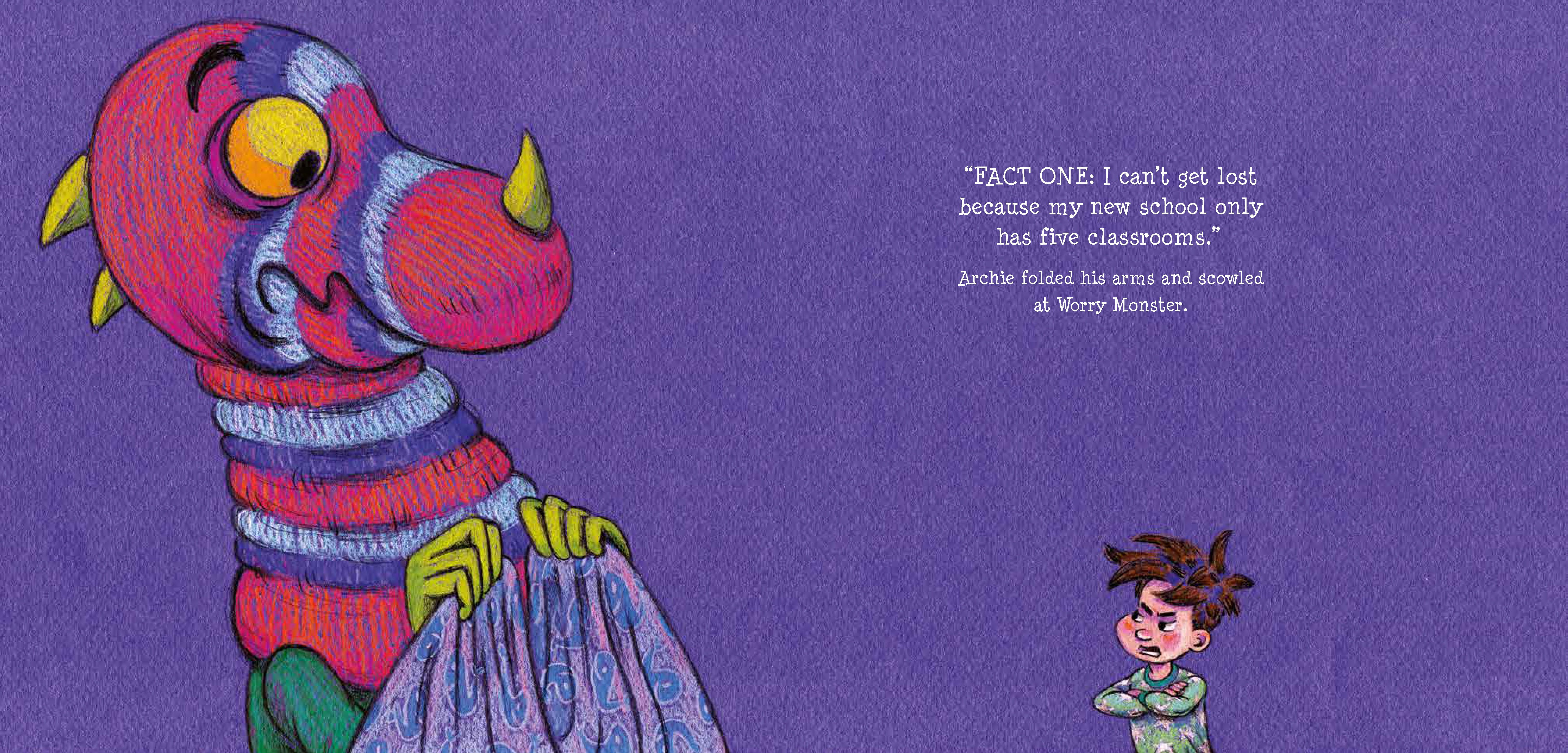
At one level, 'Go Away Worry Monster loves!' is tale about a boy who has trouble sleeping at night because of the worries and fears of each day. The 'Worry Monster' seems to visit him each night. "Please go away," begs Archie. But the book also shows how the love of parents can help to build the essential resilience needed to deal with anxiety. The book also illustrates how the love and support of others is essential to help our children head out each day with confidence to encounter fears that with help they can conquer. The author and illustrator combine to create a book that offers every parent a window in order to support their children with their fears and worries. But it is also simply a delightful read for any parent and child.

Robin Tatlow-Lord as the illustrator seems to have chosen the perfect medium and colour palette for the topic. She is a writer and animator who has done many things. The author of this wonderful book is Brooke Graham, who is based near Ipswich in Queensland. 
 

2. 'Rain Before Rainbows' by Smrtiti Halls & illustrated by David Litchfield 

This is a wonderful picture book not much more than 100 words in length (well 145), that brings poetry, illustration and story together in a memorable book. Each word is chosen with such great care to create a book that will encourage and uplift readers while sharing some simple wisdom and truths:

"Rain before rainbows"

"Clouds before sun"

"Night before daybreak"

"The old day is done."

A little girl sets out with a fox for companion fleeing from a sinister looking castle. As they leave what are their hopes and fears? They depart a place where there seems to have been despair and hopefulness to seek a new place. The road ahead will be uncertain times, but will there be hope? The reader is reminded that before rainbows their will be rain, "clouds before sun", "night before daybreak". And while there will be hopeful dreams along the way, there will be "battles to win". But in time there may just be "treasure to find", before finally, a bright new morning might dawn.

This is a wonderful picture book with a careful weaving of a simple yet poignant text, with illustrations that complement and enhance the story and reader journey. I highly recommend this book for readers aged 4 to 8 years.

I commend Walker Books for releasing Rain Before Rainbows as an free eBook to raise awareness for the "Save with Stories campaign" that has been initiated to help children most affected by the coronavirus pandemic. The rainbow of course has been an incredible symbol of hope and optimism as the world has battled to cope with Covid-19. 

Above: Author Smriti Halls

3. 'There's something weird about Lena' by Sigi Cohen & illustrated by James Foley


This book comes to us from the award-winning picture book team that gave us 'My Dead Bunny: A Zombie Rabbit Tale'. It is another hilarious rhyming tale. There is certainly something that seems weird about Lena.

On my first day back at school 

I met a girl called Lena.  

Every time she acted mean 

she laughed like a hyena. 

The sound she made was kind of gross: 

a cackling, giggling howl, 

starting as a high-pitched shriek 

and ending as a growl.

Is Lena hiding a secret, or is her behaviour just good fun when she indulges in schoolyard pranks? But how to explain the accompanying beastly and hideous laugh? Will her classmates uncover a hideous truth?

 Sigi Cohen's text will engage young readers, and James Foley's illustrations in black, grey and orange will be familiar to readers of 'My Dead Bunny'. The combination of Sigi Cohen's wonderful rhyming text and James Foley's hilarious illustrations will ensure this is a winner with kids aged 7 to 10. It will appeal to kids who love horror, unexplained weirdness and all things gross. Sigi Cohen's rhyming text is a joy to read aloud! The playful words he uses fill the story with vibrancy and a sense of fun.

Sigi grew up in Port Elizabeth, South Africa, but now lives in Perth, Western Australia. His first book, 'My Dead Bunny', was shortlisted for the 2016 Children’s Book Council of Australia Book of the Year Awards. This is his third book. 

James Foley started his illustration career in primary school, drawing cartoons for the school newspaper. His book 'In the Lion' was selected for the International Youth Library’s prestigious White Raven List in 2013. He lives in Perth with his wife, son and labrador.

4. 'Timeline Science & Technology: A Visual History of Our World, Written and illustrated by Peter Goes 


'Timeline Science & Technology' is an extraordinary book. In size alone, it will stand out from most books. At 27.5cm x 38cm in size, this almost a folio sized book and won't be easily tucked under the arm. But I can see groups of 2-3 children gathered around reading it at the same time, engaging and interacting as they discover new things. This stunning visual history of the technology of our world is a feast of images and rich text. Each page has a different coloured background, and intricate and fascinating black line drawings, with just a splash of extra colour. The author and illustrator Peter Goes lives in Belgium where he does freelance work as an illustrator. He has also worked as a stage manager and studied animation at the Royal Academy of Fine Arts (KASK) in Ghent, Belgium. 

The book is a history of science and technology with each giant double page spread dealing with a distinct period in time. It begins with the 'Old Stone Age or Paleolithic'. Each double page typically has approximately 100 words in conventional text, and a double page spread of related images from the period, with about 10 scenes each time. Each page also has smaller associated curved text next to each of the scenes. The single page image below is just one of the two pages for the Mesolithic era.
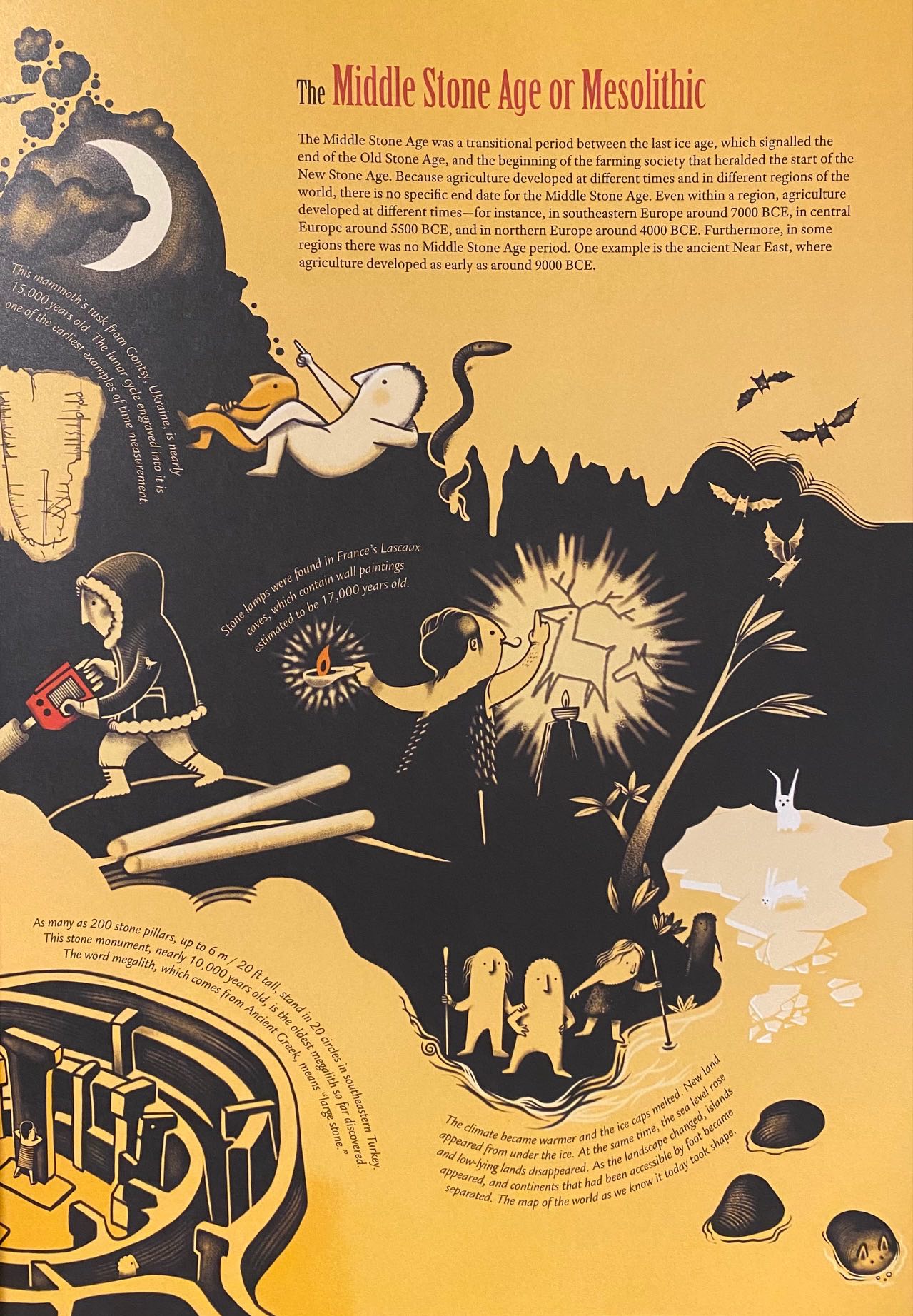


Above: One page from the Mesolithic Era

Peter Goes offers an overview of the most fascinating technologies, from first tools to the most specialized IT, from medical breakthroughs to the creation of YouTube. He includes remarkable scientists and innovators and highlights lesser-known stories. It is a compelling history of technology from the Stone Age to the present day, from America to the Southern hemisphere and beyond.

I love the quirkiness of the images and text which children aged 7-12 will enjoy a great deal. Any child interested in their world will spend many hours dipping into and working through this book. It is also a wonderful book for an adult to enjoy with their child.

4. 'Fly on the Wall' by Remy Lai

This is a very funny diary-style illustrated novel from the award-winning author of 'Pie in the Sky'. A twelve-year-old boy goes on a (forbidden) solo adventure halfway around the world to prove his independence to his overprotective family. It is brilliantly written and illustrated by Remy Lai. 


You see, Henry Khoo has a plan to prove his independence. His family always seems (to him) to be on his back, and he feels they treat him like a baby. His “helicopter” family seems to be at him all the time, choosing his clothes, collecting him from after-school activities, controlling his diet. He can't cope with the suffocating attention. So, will he do you do about this? Well, take a surprise solo journey to see you dad who is living in Singapore of course! Sound easy? Nothing could go wrong. Could it? Read this funny book to find out what does happen.

Henry's story (and adventure) is presented in the form of a top-secret notebook or diary. In it Henry records regular entries and illustrates them with comic-like images and diagrams. There's a bit of poetry, a recipe, snippets of different languages, and quirky images. While the book is over 300 pages, each page is filled with variation, including its handwritten text and numerous notes, illustrations and diagrams. The book will be lots of fun for readers aged 8-12.

Remy Lai studied fine arts, with a major in painting and drawing. She was born in Indonesia, grew up in Singapore, and lives in Brisbane, Australia where she writes and draws stories for kids, with her two dogs by her side.

5. 'Zombierella: Fairy Tales Gone Bad' by Joseph Coelho & illustrated by Freya Hartas

This very funny and wonderfully illustrated book is the first in a three-part series of twisted classic stories, as the the title divulges. Framed by a deliciously funny (and creative) premise that just like food, when old books are left unread, unthumbed and unloved, they start to:

"... bloom on the skin... flesh goes brown and soft... flies lay eggs, maggots squirm, horrid smells find their way into the fruit ... The same happens with books!"

Forget about the 'Boy Who Cried Wolf'! It is now 'The Boy Who Puked Up a Wolf'. And as well, 'Sleeping Beauty' transforms into 'Creeping Beauty' and 'Cinderella' becomes 'ZOMBIERELLA'!!


The wonderful text of Joseph Coelho is perfectly supported by the hillarious illustrations of Freya Hartas. The black line drawings generously spread through the text add life and humour to the wonderful text. It is both a visual and literary feast! As the Prince prepares for the ball things are ominous.

"It was in the cold, dark bite of night that the prince arrived at the mansion.

The mansion protruded from the crown of Grimmsville's only hill like a growth - next to the old abandoned cemetery.

Inside, the prince was preparing for the first of his three balls..."

When Cinderella makes an appearance as the fairy story suggests she must, she slips on the winding stairs and dies (but only briefly!).

"Cinderella, you have died,

Tis sad but true, 

You fell and hit your head,

After slipping on some poo!"

This is a very funny book, that is cleverly written and delightfully illustrated. I look forward to seeing the second and third books in the series from this wonderful English team. 

Friday, January 3, 2014

How & Why to Get Children Reading Chapter Books?

I'm asked by many parents just when should they start reading chapter books to their children.  In short, if he or she won’t sit still long enough to hear a chapter through, then it’s too early. But, then again, you might just be choosing books that are dull, or those that are just too hard and complex as narratives. But as well, you might also need to sharpen up your story reading skills. As well, what I will say in this post should be balanced against what say elsewhere about why the complexity of picture books, and whay they are essential for children (HERE). So, this post has two purposes:

First, to remind readers that 'long form' texts will enrich the experience of story, grow language and deepen children's knowledge of the world. 

Second, that chapter books help to grow reading 'stamina', language proficiency and a rich and deeper understanding of the world and its challenges. In short, they help to grow young minds.

Here are some quick questions that you might think about in assessing whether your child is ready:
  • Can your son or daughter listen for 20 minutes plus of reading aloud from picture books?
  • Do they seem to enjoy the text as much as the pictures?
  • Do they seem to relate to the characters and can they follow more complex picture books?
  • Do they ask you to read favourite books over and over?
  • Are they showing growing understanding of written language and asking questions about it (e.g. “What does calamity mean?” “Why does it say….?).
If you answer yes to most of these questions then they are probably ready. Children who have been read to constantly during the preschool years are typically ready to listen to chapter books from age 5 years and up (some even earlier). I also add that some children will be ready before 5 years.

In a post I wrote in 2008 on ‘Guiding children’s learning’ (here) I talked a little about Jerome Bruner’s concept of “scaffolding”. He identified scaffolding as a process where an adult helps children to learn in advance of their developmental level. The adult does this by doing what the child cannot do by themselves; allowing students to slowly take over parts of the process as they are able to do so. In many ways, this is the most fundamental reason to read chapter books to your children once they have become avid listeners to stories and beginning readers themselves. They can listen to more complex stories than they can read themselves as emerging readers.

In practical terms, chapter books offer children:
  • More complex narrative forms and plot development
  • Richer and more complex language
  • New areas of knowledge about their world and the human condition
  • Different literary devices
  • They train your children to be able to sustain longer periods of reading
As well as the above, chapter books will enable you to build an even richer shared literary history with your children. Shared books will become part of your literary common ground within the family, and more broadly, they will help to connect your children to a literary culture that others will share with them.

A couple of warnings

Having said all of the above, there are a couple of warnings that I’d give:
  • Don’t push your children too quickly; all learning requires periods of consolidation before moving on to more difficult terrain.
  • Be aware that while your children might be able to follow the story line, relate to the characters and so on, they may not be emotionally ready for some of the content.
  • Be prepared to offer support - with chapter books you may need to explain new words, discuss new concepts, offer new knowledge etc.
  • Don’t forget, that reading a chapter book still needs to be interesting and enjoyable and that it will be harder to achieve this without pictures so you’ll need to work harder on varying your character voices (see my earlier post on reading to and with your children HERE).
One final warning. Don't assume that once you commence chapter books that picture books no longer have a place (again, see my recent post). Young children still need to read picture books and hear them read to them. They continue to have an important role in children's literacy development throughout the primary years of schooling.

Some Chapter Books to try


The list below is not meant to be extensive, just illustrative. It has a particular Australian flavour (but not entirely). I preface the following suggestions by saying that individual children will handle these books at different ages. For the very youngest readers it is best to start with books that have some illustrations to maintain interest until they develop more 'stamina' for harder books. The age guide that I have given is meant to be a ‘group age’ guide for teachers sharing such books with larger groups. Parents reading to a single child will perhaps find that their child can deal with books I’ve listed at an earlier stage. Conversely, your child might not be ready for some of these books as suggested. You may also find that they can handle even more difficult books not on the list (but don’t forget the warnings above).

I'd love to have your suggestions for other books to add to the list.

a) Suitable for 5-6 year-olds

‘Aurora and the little blue car’, by Anne-Cath Vestly, 1969
‘Arlo the dandy lion’, by Morris Lurie, 1971
‘Charlotte’s Web’, by E. B. White, 1952
‘Fantastic Mr Fox’, by Roald Dahl, 1970
‘Morris in the apple tree’, by Vivian French, 1995
‘Pippi Longstocking’, by Astrid Lindgren, 1945
‘Snugglepot and Cuddlepie’, by May Gibbs, 1940
‘The Complete Adventures of Blinky Bill’, by Dorothy Wall, 1939
‘The Littlest Dragon Goes for Goal’, by Margaret Ryan, 1999
‘Winnie-the-Pooh’, by A.A. Milne, 1926

b) Suitable for 7-8 year-olds

‘The BFG’, by Roald Dahl, 1982
‘Billy Fishbone King of the kid’, by Dianne Bates, 1997 (Bushranger series)
‘Bud Buster’, by Sofie Laguna, 2003 (Aussie Nibbles series)
‘Dragon ride’, by Helen Cresswell, 1987 (Colour Young Puffin series)
‘Elephant in the kitchen’, Winsome Smith, 1980
‘Grandma Cadbury’s Trucking Tales’, Di Bates, 1987
‘James and the Giant Peach’, by Roald Dahl, 1961
‘Hazel the Guinea Pig’, by A. N. Wilson, 1989
‘Mr. Popper's Penguins’, by Richard & Florence Atwater, 1939
'My Naughty Little Sister', by Dorothy Edwards, 1950
‘Rabbit Hill’, by Robert Lawson, 1944.
‘Superfudge’, by Judy Blume, 1984
‘Tashi and the Genie’, by Anna Fienberg, 1997, (series)
‘The Shrinking of Treehorn’, by Florence Parry Heide, 1971
‘The 27th Annual African Hippopotamus Race’, by Morris Lurie, 1969
‘The Wind in the Willows’, by Kenneth Grahame, 1908

c) Suitable for 9-11 year-olds

‘Boss of the Pool’, by Robin Klein, 1986
‘Bottersnikes and Gumbles’, by S. A. Wakefield, 1969
‘Boxer’, by Ian Charlton, 1999
‘Boy’, by Roald Dahl, 1984
‘Callie’s castle’, by Ruth Park, 1974
‘Charlie and the Chocolate Factory’, Roald Dahl, 1964
‘Charlie up a gum tree’, by E. A. Schurmann, 1985
'Darius Bell and the Glitter Pool', by Odo Hirsch, 2009
‘Dear writer’, by Libby Gleeson, 2001
‘Dog tales’, by Emily Rodda, 2001
‘Foggy’, by Allan Baillie, 2001
‘Frog thunder’, by Jill Morris, 2001
‘Hating Alison Ashley’, by Robin Klein, 1984
‘James and the giant peach’, by Roald Dahl, 1961
‘Jodie’s Journey’, by Colin Thiele, 1997
‘Just So Stories’, by Rudyard Kipling, 1902
‘Let the Balloon Go’, by Ivan Southall, 1968
‘Little House on the Prairie’, Laura Ingalls Wilder, 1935
‘Little Old Mrs Pepperpot’, by Alf Prøysen, 1959
‘Matilda’, by Roald Dahl, 1989
'Matty Forever', by Elizabeth Fensham, 2009 
‘Mike’, by Brian Caswell, 1993
‘Misery Guts’, by Morris Gleitzman, 1991
‘Onion Tears’, by Diana Kidd, 1989
‘Over the top’, by Ivan Southall, 1972
‘Penny Pollard’s Diary’, by Robin Klein, 1983
‘Selby’s Secret’, by Duncan Ball, 1985
‘Storm Boy’, by Colin Thiele, 1976
‘The adventures of Stuart Little’, by Daphne Skinner, 2000
‘The amazing adventures of Chilly Billy’, by Peter Mayle, 1980
‘The borrowers’, by Mary Norton, 1958
‘The Eighteenth Emergency’, by Betsy Byars, 1973
‘The Iron Man’, by Ted Hughes, 1968
‘The enemies’, by Robin Klein, 1985
‘The lion, the witch and the wardrobe’, by C.S. Lewis, 1950
'The Mostly True Adventures of Homer P. Figg', by Rodman Philbrick
‘The penguin friend’, by Lucy Sussex, 1997 (Collins Yellow Storybook series)
‘The Twits’, by Roald Dahl, 1980
‘The turbulent term of Tyke Tiler’, by Gene Kemp, 1977
'The Wish Pony', by Catherine Bateson, 2008
'When Hitler Stole Pink Rabbit' by Judith Kerr, 1971 
‘Wiggy and Boa’, by Anna Fienberg, 1988
‘Wendy’s whale’, by Colin Thiele, 1999


Book series

I’ve written about book series in another post (here) and offer a detailed lost for many ages. There are a number of book series that children aged 5-7 years will enjoy, here are just some:

Alf Prøysen’s ‘Mrs Pepperpot’ series
Anna Branford's 'Violet Mackerel' series
Arnold Lobel’s ‘Frog and Toad’ books
Astrid Lindgren’s ‘Pippi Longstocking’ books
Dick King-Smith's 'Sophie' series
Donald Sobol's 'Encyclopedia Brown' series
Dorthy Edwards' 'My Naughty Little Sister' series 
Emily Rodda's 'Rowan of Rin' and 'Deltora Quest' series 
Enid Blyton's 'Faraway Tree' series
Hugh Lofting's 'Dr Dolittle' series
Jeff Brown's 'Flat Stanley' series
Laura Ingalls Wilder's 'Ingalls family' series
Mairi Hedderwick's 'Katie Morag' series 
Michael Bond’s ‘Paddington Bear’ series
R.A. Spratt's 'Nanny Piggins' series
Sarah Pennypacker's 'Clementine/ series 
'The Chronicles of Narnia' by C.S. Lewis
'The Sword Girl' series by Frances Watts  
'Violet Mackerel' series by Anna Branford


Some related links

The importance of literature (here)
How to listen to your child reading (here)
Helping children to choose books (here)
The benefits of repeated reading of literature (here)
Why Older Readers Should Read Picture Books (here)

Tuesday, February 19, 2013

Chapter Books for Girls & Boys to Get Them Reading

* This is a revised version of a post I wrote in 2011

I'm asked by many parents just when they should start reading chapter books to their children. All that I will say in this post should be balanced against what I said in my recent post on picture books (HERE). If he or she won’t sit still long enough to hear a chapter through, then it’s too early. But, then again, you might just be choosing books that are dull or those that are just too hard and complex as narratives. You might also need to sharpen up your story reading.

Here are some quick questions that you might think about in assessing whether your child is ready:
  • Can your son or daughter listen for 20 minutes plus of reading aloud from picture books?
  • Do they seem to enjoy the text as much as the pictures?
  • Do they seem to relate to the characters and can they follow more complex picture books?
  • Do they ask you to read favourite books over and over?
  • Are they showing growing understanding of written language and asking questions about it (e.g. “What does calamity mean?” “Why does it say….?).
If you answer yes to most of these questions then they are probably ready. Children who have been read to constantly during the preschool years are typically ready to listen to chapter books from age 5 years and up (some even earlier). I also add that some children will be ready before 5 years. My two daughters and my two oldest grandchildren all started to love chapter books before 5 years of age. The starting time will reflect their maturity, language proficiency and the depth of the literary and narrative experiences that they have had in the early years.

Why read chapter books to younger readers?

In a post I wrote in 2008 on ‘Guiding children’s learning’ (here) I talked a little about Jerome Bruner’s concept of “scaffolding”. He identified scaffolding as a process where an adult helps children to learn in advance of their developmental level. The adult does this by doing what the child cannot do by themselves; allowing students to slowly take over parts of the process as they are able to do so. In many ways, this is the most fundamental reason to read chapter books to your children once they have become avid listeners to stories and beginning readers themselves. They can listen to more complex stories than they can read themselves as emerging readers.

In practical terms, chapter books offer children:
  • More complex narrative forms and plot development
  • Richer and more complex language
  • New areas of knowledge about their world and the human condition
  • Different literary devices
  • They train your children to be able to sustain longer periods of reading
As well as the above, chapter books will enable you to build an even richer shared literary history with your children. Shared books will become part of your literary common ground within the family, and more broadly, they will help to connect your children to a literary culture that others will share with them.

A couple of warnings

Having said all of the above, there are a couple of warnings that I’d give:
  • Don’t push your children too quickly; all learning requires periods of consolidation before moving on to more difficult terrain.
  • Be aware that while your children might be able to follow the story line, relate to the characters and so on, they may not be emotionally ready for some of the content.
  • Be prepared to offer support - with chapter books you may need to explain new words, discuss new concepts, offer new knowledge etc.
  • Don’t forget, that reading a chapter book still needs to be interesting and enjoyable and that it will be harder to achieve this without pictures so you’ll need to work harder on varying your character voices (see my earlier post on reading to and with your children HERE).
One final warning. Don't assume that once you commence chapter books that picture books no longer have a place (again, see my recent post). Young children still need to read picture books and hear them read to them. They continue to have an important role in children's literacy development throughout the primary years of schooling.

Some Chapter Books to try


The list below is not meant to be extensive, just illustrative. It has a particular Australian flavour (but not entirely). I preface the following suggestions by saying that individual children will handle these books at different ages. For the very youngest readers it is best to start with books that have some illustrations to maintain interest until they develop more 'stamina' for harder books. The age guide that I have given is meant to be a ‘group age’ guide for teachers sharing such books with larger groups. Parents reading to a single child will perhaps find that their child can deal with books I’ve listed at an earlier stage. Conversely, your child might not be ready for some of these books as suggested. You may also find that they can handle even more difficult books not on the list (but don’t forget the warnings above).

I'd love to have your suggestions for other books to add to the list.

a) Suitable for 5 year-olds

‘Aurora and the little blue car’, by Anne-Cath Vestly, 1969
‘Arlo the dandy lion’, by Morris Lurie, 1971
‘Charlotte’s Web’, by E. B. White, 1952
‘Fantastic Mr Fox’, by Roald Dahl, 1970
‘Morris in the apple tree’, by Vivian French, 1995
‘Pippi Longstocking’, by Astrid Lindgren, 1945
‘Snugglepot and Cuddlepie’, by May Gibbs, 1940
‘The Complete Adventures of Blinky Bill’, by Dorothy Wall, 1939
‘The Littlest Dragon Goes for Goal’, by Margaret Ryan, 1999
‘Winnie-the-Pooh’, by A.A. Milne, 1926

b) Suitable for 6 year-olds

‘The BFG’, by Roald Dahl, 1982
‘Billy Fishbone King of the kid’, by Dianne Bates, 1997 (Bushranger series)
‘Bud Buster’, by Sofie Laguna, 2003 (Aussie Nibbles series)
‘Dragon ride’, by Helen Cresswell, 1987 (Colour Young Puffin series)
‘Elephant in the kitchen’, Winsome Smith, 1980
‘Grandma Cadbury’s Trucking Tales’, Di Bates, 1987
‘James and the Giant Peach’, by Roald Dahl, 1961
‘Hazel the Guinea Pig’, by A. N. Wilson, 1989
‘Mr. Popper's Penguins’, by Richard & Florence Atwater, 1939
'My Naughty Little Sister', by Dorothy Edwards, 1950
‘Rabbit Hill’, by Robert Lawson, 1944.
‘Superfudge’, by Judy Blume, 1984
‘Tashi and the Genie’, by Anna Fienberg, 1997, (series)
‘The Shrinking of Treehorn’, by Florence Parry Heide, 1971
‘The 27th Annual African Hippopotamus Race’, by Morris Lurie, 1969
‘The Wind in the Willows’, by Kenneth Grahame, 1908

c) Suitable for 7 year-olds

‘Boss of the Pool’, by Robin Klein, 1986
‘Bottersnikes and Gumbles’, by S. A. Wakefield, 1969
‘Boxer’, by Ian Charlton, 1999
‘Boy’, by Roald Dahl, 1984
‘Callie’s castle’, by Ruth Park, 1974
‘Charlie and the Chocolate Factory’, Roald Dahl, 1964
‘Charlie up a gum tree’, by E. A. Schurmann, 1985
'Darius Bell and the Glitter Pool', by Odo Hirsch, 2009
‘Dear writer’, by Libby Gleeson, 2001
‘Dog tales’, by Emily Rodda, 2001
‘Foggy’, by Allan Baillie, 2001
‘Frog thunder’, by Jill Morris, 2001
‘Hating Alison Ashley’, by Robin Klein, 1984
‘James and the giant peach’, by Roald Dahl, 1961
‘Jodie’s Journey’, by Colin Thiele, 1997
‘Just So Stories’, by Rudyard Kipling, 1902
‘Let the Balloon Go’, by Ivan Southall, 1968
‘Little House on the Prairie’, Laura Ingalls Wilder, 1935
‘Little Old Mrs Pepperpot’, by Alf Prøysen, 1959
‘Matilda’, by Roald Dahl, 1989
'Matty Forever', by Elizabeth Fensham, 2009 
‘Mike’, by Brian Caswell, 1993
‘Misery Guts’, by Morris Gleitzman, 1991
‘Onion Tears’, by Diana Kidd, 1989
‘Over the top’, by Ivan Southall, 1972
‘Penny Pollard’s Diary’, by Robin Klein, 1983
‘Selby’s Secret’, by Duncan Ball, 1985
‘Storm Boy’, by Colin Thiele, 1976
‘The adventures of Stuart Little’, by Daphne Skinner, 2000
‘The amazing adventures of Chilly Billy’, by Peter Mayle, 1980
‘The borrowers’, by Mary Norton, 1958
‘The Eighteenth Emergency’, by Betsy Byars, 1973
‘The Iron Man’, by Ted Hughes, 1968
‘The enemies’, by Robin Klein, 1985
‘The lion, the witch and the wardrobe’, by C.S. Lewis, 1950
'The Mostly True Adventures of Homer P. Figg', by Rodman Philbrick
‘The penguin friend’, by Lucy Sussex, 1997 (Collins Yellow Storybook series)
‘The Twits’, by Roald Dahl, 1980
‘The turbulent term of Tyke Tiler’, by Gene Kemp, 1977
'The Wish Pony', by Catherine Bateson, 2008
‘Wiggy and Boa’, by Anna Fienberg, 1988
‘Wendy’s whale’, by Colin Thiele, 1999

Book series

I’ve written about book series in another post (here) and offer a detailed lost for many ages. There are a number of book series that children aged 5-7 years will enjoy, here are just some:

Alf Prøysen’s ‘Mrs Pepperpot’ series
Anna Branford's 'Violet Mackerel' series
Arnold Lobel’s ‘Frog and Toad’ books
Astrid Lindgren’s ‘Pippi Longstocking’ books
Dick King-Smith's 'Sophie' series
Donald Sobol's 'Encyclopedia Brown' series
Dorthy Edwards' 'My Naughty Little Sister' series 
Emily Rodda's 'Rowan of Rin' and 'Deltora Quest' series 
Enid Blyton's 'Faraway Tree' series
Hugh Lofting's 'Dr Dolittle' series
Jeff Brown's 'Flat Stanley' series
Laura Ingalls Wilder's 'Ingalls family' series
Mairi Hedderwick's 'Katie Morag' series 
Michael Bond’s ‘Paddington Bear’ series
R.A. Spratt's 'Nanny Piggins' series
Sarah Pennypacker's 'Clementine/ series 
'The Chronicles of Narnia' by C.S. Lewis

Some related links

The importance of literature (here)
How to listen to your child reading (here)
Helping children to choose books (here)
The benefits of repeated reading of literature (here)
Why Older Readers Should Read Picture Books (here)

Sunday, August 5, 2012

Getting Young Readers into Chapter Books

This post has two purposes. It offers suggestions for chapter books that are suitable for children aged 5-8 years. First, for you to read to your children to enrich their experience of story, language and the world and, second, for precocious young readers to do likewise, by reading the books themselves. The latter can be a challenge for parents and teachers as they quickly move from early tentative reading of predictable books to fluency in just months. By age six many young readers develop an insatiable appetite for books and can be ready (and keen) to move on to chapter books.  But exercise care, for it is unwise to push young readers to read chapter books without the rich language and textual grounding of many picture books (see my previous post on the importance of picture books HERE). As well, you need to be careful that you don't push them into books with content for which they are not ready emotionally and intellectually.

Here are some quick questions that you might think about in assessing whether your child is ready:
  • Can the children listen for 20 minutes plus of reading aloud from picture books?
  • Do they seem to enjoy the text as much as the pictures?
  • Do they seem to relate to the characters and can they follow more complex picture books?
  • Do they ask you to read favourite books over and over?
  • Are they showing growing understanding of written language and asking questions about it (e.g. “What does calamity mean?” “Why does it say….?).
If you answer yes to most of these questions then they are probably ready. Children who have been read to constantly during the preschool years are typically ready to listen to chapter books from age 5 years and up (some even earlier). I also add that some children will be ready before 5 years. My two daughters and my grandchildren all started to love chapter books before 5 years of age. The starting time will reflect their maturity, language proficiency and the depth of the literary and narrative experiences that they have had in the early years.

Why read chapter books to younger readers?

In a post I wrote in 2008 on ‘Guiding children’s learning’ (here) I talked a little about Jerome Bruner’s concept of “scaffolding”. He identified scaffolding as a process where an adult helps children to learn in advance of their developmental level. The adult does this by doing what the child cannot do by themselves; allowing students to slowly take over parts of the process as they are able to do so. In many ways, this is the most fundamental reason to read chapter books to your children once they have become avid listeners to stories and beginning readers themselves. They can listen to more complex stories than they can read themselves as emerging readers.

In practical terms, chapter books offer children:
  • More complex narrative forms and plot development
  • Richer and more complex language
  • New areas of knowledge about their world and the human condition
  • Different literary devices and genres
  • They train your children to be able to sustain longer periods of reading
As well as the above, chapter books will enable you to build an even richer shared literary history with your children. Shared books will become part of your shared history within the family or your class, and more broadly, they will help to connect your children to a literary culture that others will share with them.

A couple of final comments before the list

Having said all of the above, there are a couple of warnings that I’d give:
  • Don’t push your children too quickly; all learning requires periods of consolidation before moving on to more difficult terrain.
  • Be aware that while your children might be able to follow the story line, relate to the characters and so on, they may not be emotionally ready for some of the content.
  • Be prepared to offer support - with chapter books you may need to explain new words, discuss new concepts, offer new knowledge etc.
  • Don’t forget, that reading a chapter book still needs to be interesting and enjoyable and that it will be harder to achieve this without pictures so you’ll need to work harder on varying your character voices (see my earlier post on reading to and with your children HERE).
One final comment. Don't assume that once you commence chapter books that picture books no longer have a place. Young children still need to read picture books and hear them read to them. They continue to have an important role in children's literacy development throughout the primary years of schooling (again, see my previous post on this HERE).

Some Chapter Books to try


The list below is not meant to be extensive, just illustrative. It has a particular Australian flavour (but not entirely). I preface the following suggestions by saying that individual children will handle these books at different ages. For the very youngest readers it is best to start with books that have some illustrations to maintain interest until they develop more 'stamina' for harder books. The age guide that I have given is meant to be a ‘group age’ guide for teachers sharing such books with larger groups. Parents reading to a single child will perhaps find that their child can deal with books I’ve listed at an earlier stage. Conversely, your child might not be ready for some of these books as suggested. You may also find that they can handle even more difficult books not on the list (but don’t forget the warnings above).

a) Suitable for 5 year-olds

‘Aurora and the little blue car’, by Anne-Cath Vestly, 1969
‘Arlo the dandy lion’, by Morris Lurie, 1971
‘Charlotte’s Web’, by E. B. White, 1952
‘Fantastic Mr Fox’, by Roald Dahl, 1970
‘Morris in the apple tree’, by Vivian French, 1995
'Little Witch' by Juliette MacIver, 2012 (see others in the Walker Stories series too).
‘Pippi Longstocking’, by Astrid Lindgren, 1945
‘Snugglepot and Cuddlepie’, by May Gibbs, 1940
‘The Complete Adventures of Blinky Bill’, by Dorothy Wall, 1939
‘Littlest Dragon Goes for Goal’, by Margaret Ryan,2005
‘Winnie-the-Pooh’, by A.A. Milne, 1926

b) Suitable for 6 year-olds

‘The BFG’, by Roald Dahl, 1982
‘Billy Fishbone King of the kid’, by Dianne Bates, 1997 (Bushranger series)
‘Bud Buster’, by Sofie Laguna, 2003 (Aussie Nibbles series)
‘Dragon ride’, by Helen Cresswell, 1987 (Colour Young Puffin series)
‘Elephant in the kitchen’, Winsome Smith, 1980
‘Grandma Cadbury’s Trucking Tales’, Di Bates, 1987
‘James and the Giant Peach’, by Roald Dahl, 1961
‘Hazel the Guinea Pig’, by A. N. Wilson, 1989 
‘Mr. Popper's Penguins’, by Richard & Florence Atwater, 1939
'My Naughty Little Sister', by Dorothy Edwards, 1950
‘Rabbit Hill’, by Robert Lawson, 1944.
‘Superfudge’, by Judy Blume, 1984
‘Tashi and the Genie’, by Anna Fienberg, 1997, (series)
‘The Shrinking of Treehorn’, by Florence Parry Heide, 1971
‘The 27th Annual African Hippopotamus Race’, by Morris Lurie, 1969
‘The Wind in the Willows’, by Kenneth Grahame, 1908

c) Suitable for 7 year-olds

‘Boss of the Pool’, by Robin Klein, 1986
‘Bottersnikes and Gumbles’, by S. A. Wakefield, 1969
‘Boxer’, by Ian Charlton, 1999
‘Boy’, by Roald Dahl, 1984
‘Callie’s castle’, by Ruth Park, 1974
‘Charlie and the Chocolate Factory’, Roald Dahl, 1964
‘Charlie up a gum tree’, by E. A. Schurmann, 1985
'Darius Bell and the Glitter Pool', by Odo Hirsch, 2009
‘Dear writer’, by Libby Gleeson, 2001
‘Dog tales’, by Emily Rodda, 2001
‘Foggy’, by Allan Baillie, 2001
‘Frog thunder’, by Jill Morris, 2001
‘Hating Alison Ashley’, by Robin Klein, 1984
‘James and the giant peach’, by Roald Dahl, 1961
‘Jodie’s Journey’, by Colin Thiele, 1997
‘Just So Stories’, by Rudyard Kipling, 1902
‘Let the Balloon Go’, by Ivan Southall, 1968
‘Little House on the Prairie’, Laura Ingalls Wilder, 1935
‘Little Old Mrs Pepperpot’, by Alf Prøysen, 1959
‘Matilda’, by Roald Dahl, 1989
'Matty Forever', by Elizabeth Fensham, 2009 
‘Mike’, by Brian Caswell, 1993
‘Misery Guts’, by Morris Gleitzman, 1991
‘Onion Tears’, by Diana Kidd, 1989
‘Over the top’, by Ivan Southall, 1972
‘Penny Pollard’s Diary’, by Robin Klein, 1983
‘Selby’s Secret’, by Duncan Ball, 1985
‘Storm Boy’, by Colin Thiele, 1976
‘The adventures of Stuart Little’, by Daphne Skinner, 2000
‘The amazing adventures of Chilly Billy’, by Peter Mayle, 1980
‘The borrowers’, by Mary Norton, 1958
‘The Eighteenth Emergency’, by Betsy Byars, 1973
'The Hobbit', by J.R.R. Tolkien

‘The Iron Man’, by Ted Hughes, 1968
‘The enemies’, by Robin Klein, 1985
‘The lion, the witch and the wardrobe’, by C.S. Lewis, 1950
'The Mostly True Adventures of Homer P. Figg', by Rodman Philbrick
‘The penguin friend’, by Lucy Sussex, 1997 (Collins Yellow Storybook series)
‘The Twits’, by Roald Dahl, 1980
‘The turbulent term of Tyke Tiler’, by Gene Kemp, 1977
'The Windvale Sprites' written and illustrated Mackenzie Crook, 2011.
'The Wish Pony', by Catherine Bateson, 2008
‘Wiggy and Boa’, by Anna Fienberg, 1988
‘Wendy’s whale’, by Colin Thiele, 1999

Book series

I’ve written about book series in another post (here) and offer a detailed lost for many ages. There are a number of book series that children aged 5-7 years will enjoy, here are just some:

Alf Prøysen’s ‘Mrs Pepperpot’ series
Anna Branford's 'Violet Mackerel' series
Arnold Lobel’s ‘Frog and Toad’ books
Astrid Lindgren’s ‘Pippi Longstocking’ books
Dick King-Smith's 'Sophie' series
Donald Sobol's 'Encyclopedia Brown' series
Dorthy Edwards' 'My Naughty Little Sister' series 
Emily Rodda's 'Rowan of Rin' and 'Deltora Quest' series 
Enid Blyton's 'Faraway Tree' series
Hugh Lofting's 'Dr Dolittle' series
Jeff Brown's 'Flat Stanley' series
'Katie Morag' series by Mairi Hedderwick
Laura Ingalls Wilder's 'Ingalls family' series
Mairi Hedderwick's 'Katie Morag' series 
Michael Bond’s ‘Paddington Bear’ series
'My Royal Story' series by Vince Cross (and others)
'Our Australian Girls' series and of course 'Our American Girls'
R.A. Spratt's 'Nanny Piggins' series
Sarah Pennypacker's 'Clementine/ series
'Sophie's Adventure' series by D.K. Smith
'The Chronicles of Narnia' by C.S. Lewis
'The Dragonkeeper Chronicles' by Carole Wilkinson
'Violet Mackerel' series by Anna Branford

Some related links

The importance of literature (here)
How to listen to your child reading (here)
Helping children to choose books (here)
The benefits of repeated reading of literature (here)

Thursday, September 29, 2011

Getting Boys & Girls into Chapter Books

I'm asked by many parents just when they start reading chapter books to their children. If he or she won’t sit still long enough to hear a chapter through, then it’s too early. But, then again, you might just be choosing dull books or books that are just too hard and complex as narratives. You might also need to sharpen up your story reading.

Here are some quick questions that you might think about in assessing whether your child is ready:
  • Can your son or daughter listen for 20 minutes plus of reading aloud from picture books?
  • Do they seem to enjoy the text as much as the pictures?
  • Do they seem to relate to the characters and can they follow more complex picture books?
  • Do they ask you to read favourite books over and over?
  • Are they showing growing understanding of written language and asking questions about it (e.g. “What does calamity mean?” “Why does it say….?).
If you answer yes to most of these questions then they are probably ready. Children who have been read to constantly during the preschool years are typically ready to listen to chapter books from age 5 years and up (some even earlier). I also add that some children will be ready before 5 years. My two daughters and my two oldest grandchildren all started to love chapter books before 5 years of age. The starting time will reflect their maturity, language proficiency and the depth of the literary and narrative experiences that they have had in the early years.

Why read chapter books to younger readers?

In a post I wrote in 2008 on ‘Guiding children’s learning’ (here) I talked a little about Jerome Bruner’s concept of “scaffolding”. He identified scaffolding as a process where an adult helps children to learn in advance of their developmental level. The adult does this by doing what the child cannot do by themselves; allowing students to slowly take over parts of the process as they are able to do so. In many ways, this is the most fundamental reason to read chapter books to your children once they have become avid listeners to stories and beginning readers themselves. They can listen to more complex stories than they can read themselves as emerging readers.

In practical terms, chapter books offer children:
  • More complex narrative forms and plot development
  • Richer and more complex language
  • New areas of knowledge about their world and the human condition
  • Different literary devices
  • They train your children to be able to sustain longer periods of reading
As well as the above, chapter books will enable you to build an even richer shared literary history with your children. Shared books will become part of your shared history within the family, and more broadly, they will help to connect your children to a literary culture that others will share with them.

A couple of warnings

Having said all of the above, there are a couple of warnings that I’d give:
  • Don’t push your children too quickly; all learning requires periods of consolidation before moving on to more difficult terrain.
  • Be aware that while your children might be able to follow the story line, relate to the characters and so on, they may not be emotionally ready for some of the content.
  • Be prepared to offer support - with chapter books you may need to explain new words, discuss new concepts, offer new knowledge etc.
  • Don’t forget, that reading a chapter book still needs to be interesting and enjoyable and that it will be harder to achieve this without pictures so you’ll need to work harder on varying your character voices (see my earlier post on reading to and with your children HERE).
One final warning. Don't assume that once you commence chapter books that picture books no longer have a place. Young children still need to read picture books and hear them read to them. They continue to have an important role in children's literacy development throughout the primary years of schooling.

Some Chapter Books to try


The list below is not meant to be extensive, just illustrative. It has a particular Australian flavour (but not entirely). I preface the following suggestions by saying that individual children will handle these books at different ages. For the very youngest readers it is best to start with books that have some illustrations to maintain interest until they develop more 'stamina' for harder books. The age guide that I have given is meant to be a ‘group age’ guide for teachers sharing such books with larger groups. Parents reading to a single child will perhaps find that their child can deal with books I’ve listed at an earlier stage. Conversely, your child might not be ready for some of these books as suggested. You may also find that they can handle even more difficult books not on the list (but don’t forget the warnings above).

a) Suitable for 5 year-olds

‘Aurora and the little blue car’, by Anne-Cath Vestly, 1969
‘Arlo the dandy lion’, by Morris Lurie, 1971
‘Charlotte’s Web’, by E. B. White, 1952
‘Fantastic Mr Fox’, by Roald Dahl, 1970
‘Morris in the apple tree’, by Vivian French, 1995
‘Pippi Longstocking’, by Astrid Lindgren, 1945
‘Snugglepot and Cuddlepie’, by May Gibbs, 1940
‘The Complete Adventures of Blinky Bill’, by Dorothy Wall, 1939
‘The Littlest Dragon Goes for Goal’, by Margaret Ryan, 1999
‘Winnie-the-Pooh’, by A.A. Milne, 1926

b) Suitable for 6 year-olds

‘The BFG’, by Roald Dahl, 1982
‘Billy Fishbone King of the kid’, by Dianne Bates, 1997 (Bushranger series)
‘Bud Buster’, by Sofie Laguna, 2003 (Aussie Nibbles series)
‘Dragon ride’, by Helen Cresswell, 1987 (Colour Young Puffin series)
‘Elephant in the kitchen’, Winsome Smith, 1980
‘Grandma Cadbury’s Trucking Tales’, Di Bates, 1987
‘James and the Giant Peach’, by Roald Dahl, 1961
‘Hazel the Guinea Pig’, by A. N. Wilson, 1989
‘Mr. Popper's Penguins’, by Richard & Florence Atwater, 1939
'My Naughty Little Sister', by Dorothy Edwards, 1950
‘Rabbit Hill’, by Robert Lawson, 1944.
‘Superfudge’, by Judy Blume, 1984
‘Tashi and the Genie’, by Anna Fienberg, 1997, (series)
‘The Shrinking of Treehorn’, by Florence Parry Heide, 1971
‘The 27th Annual African Hippopotamus Race’, by Morris Lurie, 1969
‘The Wind in the Willows’, by Kenneth Grahame, 1908

c) Suitable for 7 year-olds

‘Boss of the Pool’, by Robin Klein, 1986
‘Bottersnikes and Gumbles’, by S. A. Wakefield, 1969
‘Boxer’, by Ian Charlton, 1999
‘Boy’, by Roald Dahl, 1984
‘Callie’s castle’, by Ruth Park, 1974
‘Charlie and the Chocolate Factory’, Roald Dahl, 1964
‘Charlie up a gum tree’, by E. A. Schurmann, 1985
'Darius Bell and the Glitter Pool', by Odo Hirsch, 2009
‘Dear writer’, by Libby Gleeson, 2001
‘Dog tales’, by Emily Rodda, 2001
‘Foggy’, by Allan Baillie, 2001
‘Frog thunder’, by Jill Morris, 2001
‘Hating Alison Ashley’, by Robin Klein, 1984
‘James and the giant peach’, by Roald Dahl, 1961
‘Jodie’s Journey’, by Colin Thiele, 1997
‘Just So Stories’, by Rudyard Kipling, 1902
‘Let the Balloon Go’, by Ivan Southall, 1968
‘Little House on the Prairie’, Laura Ingalls Wilder, 1935
‘Little Old Mrs Pepperpot’, by Alf Prøysen, 1959
‘Matilda’, by Roald Dahl, 1989
'Matty Forever', by Elizabeth Fensham, 2009 
‘Mike’, by Brian Caswell, 1993
‘Misery Guts’, by Morris Gleitzman, 1991
‘Onion Tears’, by Diana Kidd, 1989
‘Over the top’, by Ivan Southall, 1972
‘Penny Pollard’s Diary’, by Robin Klein, 1983
‘Selby’s Secret’, by Duncan Ball, 1985
‘Storm Boy’, by Colin Thiele, 1976
‘The adventures of Stuart Little’, by Daphne Skinner, 2000
‘The amazing adventures of Chilly Billy’, by Peter Mayle, 1980
‘The borrowers’, by Mary Norton, 1958
‘The Eighteenth Emergency’, by Betsy Byars, 1973
‘The Iron Man’, by Ted Hughes, 1968
‘The enemies’, by Robin Klein, 1985
‘The lion, the witch and the wardrobe’, by C.S. Lewis, 1950
'The Mostly True Adventures of Homer P. Figg', by Rodman Philbrick
‘The penguin friend’, by Lucy Sussex, 1997 (Collins Yellow Storybook series)
‘The Twits’, by Roald Dahl, 1980
‘The turbulent term of Tyke Tiler’, by Gene Kemp, 1977
'The Wish Pony', by Catherine Bateson, 2008
‘Wiggy and Boa’, by Anna Fienberg, 1988
‘Wendy’s whale’, by Colin Thiele, 1999

Book series

I’ve written about book series in another post (here) and offer a detailed lost for many ages. There are a number of book series that children aged 5-7 years will enjoy, here are just some:

Alf Prøysen’s ‘Mrs Pepperpot’ series
Anna Branford's 'Violet Mackerel' series
Arnold Lobel’s ‘Frog and Toad’ books
Astrid Lindgren’s ‘Pippi Longstocking’ books
Dick King-Smith's 'Sophie' series
Donald Sobol's 'Encyclopedia Brown' series
Dorthy Edwards' 'My Naughty Little Sister' series 
Emily Rodda's 'Rowan of Rin' and 'Deltora Quest' series 
Enid Blyton's 'Faraway Tree' series
Hugh Lofting's 'Dr Dolittle' series
Jeff Brown's 'Flat Stanley' series
Laura Ingalls Wilder's 'Ingalls family' series
Mairi Hedderwick's 'Katie Morag' series 
Michael Bond’s ‘Paddington Bear’ series
R.A. Spratt's 'Nanny Piggins' series
Sarah Pennypacker's 'Clementine/ series 
'The Chronicles of Narnia' by C.S. Lewis

Some related links

The importance of literature (here)
How to listen to your child reading (here)
Helping children to choose books (here)
The benefits of repeated reading of literature (here)