I regularly do a post on non-fiction books for two reasons. First, all children need to have a good range of non-fiction books as well as narrative in their early reading life. Second, some children who are reluctant readers when faced with just narratives can be reluctant readers.
The latter is often more likely to occur with boys, and non-fiction can be a good way into reading.
I discuss this in greater detail in a post I did a number of years ago (
HERE).
The current post is
a review of a range of good books published mostly in the last few years, that might appeal to the reluctant readers in your life. Some of the books have already been shared in other mixed review posts in the last few years.
I have arranged the examples I
offer
roughly in order of difficulty and age interest. It goes without saying
that there are girls who are also reluctant readers, for whom non-fiction may also be more engaging.
1. 'Before After' by Anne-Margot Ramstein & Matthias Arégui (Walker Books)
Everyone knows that a
tiny acorn grows into a mighty oak and a caterpillar becomes a
butterfly. But in this clever, visually simple and yet stunning hardcover book, French
artists Ramstein and Arégui do much more than offer a simple book of
word concepts. They offer visual springboards to problem solving and
imagination. The authors play with numerous hidden dimensions of one's
view of the world. A view of a great mountain across fields can leave
the fields as simple foreground, but what if the view of the mountain is
from within the foliage that covers the ground? A rocket waiting on the
launch pad is positioned next to a moonscape and offers a visual point
of view across the moon's surface. A landscape that displays human
footprints against a backdrop of a familiar distant planet.
Turn
a page and cooking ingredients sit next to a well decorated cake, and
as we turn the page we encounter a mountain field complete with cow
adjacent to a bottle of milk. The next double spread returns to the
mountain field, but this time in the foreground we have an easel with a
painting of the scene and the cow.
So
the 'reader' is invited to contemplate how a cow can result in both a
bottle of milk and a painting, an ape in a jungle may become an urban
King Kong, a many-tiered cake is both created and
eaten, a quill pen sits beside a typewriter, a pack of cards can
transform into a pyramid and so on. These simple, graphic illustrations,
gently tinted with pastel colours, will appeal to readers of all ages
and will make them think and contemplate their world. This is a book
that doesn't just explore the concepts of 'before' and 'after' it
invites the 'reader' to reflect on time, perspective and reality.
Readers aged 3 to 8 will be fascinated by this book.
2. '
Ambulance Ambulance!' by Sally Sutton & illustrated by Brian Lovelock
I've
enjoyed and reviewed the wonderful work of award winning Sally Sutton
and Brian Lovelock before on this blog. Their attraction to big machines
is a topic that many young readers enjoy, and previous books like
'Construction' and 'Roadwork' are great examples. They have teamed up
again for 'Ambulance Ambulance!'.
Once again, the same simple, bright and action packed images support the simple text that exploits rhyme,
onomatopoeia and action.
Bleep, bleep. Emergency! News just through: Crash, crash, there’s been a crash. Let’s go, crew!
Nee nar nee nar nee nar nee nar ...
Now what child 3-5 years old won't join in a shared reading of this book!
3. '
Crazy About Cats' by Owen Davey
This is part of Owen Davey's bestselling series.
Did you know that the fishing cat has partially webbed paws for catching
fish? Or that pumas can leap over 15 feet into trees? There are roughly
38 species of cats today, each one superbly adapted to their
environment - whether that be in the rainforest or the desert!
I have previously reviewed '
Smart About Sharks'. But your children will enjoy '
Mad About Monkeys'
and many more books by Owen Davey. I love the almost geometric nature
of the images, the beautifully toned colours and the multi-layered
nature of the texts. Stunning work. Wonderful for children aged 4-8
years.
4. '
A is for Australian Animals', by
Frané Lessac
If you haven't come across
Frané Lessac before, you must correct this significant gap in your experience of children's literature. She
is a U.S born author, illustrator and painter who currently lives and
works in Western Australia. She has published over 40 books for children
and won numerous awards for her illustrations. Don't assume that this
is a simple alphabet book. While it adopts this form, this is a book
that will deepen children's knowledge of some of Australia's most
amazing animals. Each letter has one to three unique animals. Each has
multiple illustrations with an introduction to each animal in larger
font and then short paragraphs associated with separate illustrations.
Every page has a depth of information in the varied texts and gorgeous
illustrations that use the rich colours of the Australian landscape.
'The Blue-tongue is a lizard which, if threatened, puffs up its body, opens its mouth wide and sticks out its dark blue tongue'
'The Bilby is a desert-living marsupial with rabbit-like ears'
'Bilbies don't hop like a rabbit or jump like a kangaroo - they gallop like a pony'
A stunning book with carefully crafted text and stunning illustrations with a riot of colour and detail.
5. 'Funny Faces' by Mark Norman (Black Dog Books)
Dr Norman is Head of Sciences at Museum Victoria where he leads the
large and active natural sciences research team. He
studies octopuses, squid, cuttlefishes and nautiluses (the
cephalopods). He is also a trained teacher, an educational display
designer and an experienced underwater cinematographer. His research and
projects with documentary makers including BBC, National Geographic and
Discovery Channel has covered giant squid, poisonous blue-ringed
octopuses, huge aggregations of southern giant cuttlefish and diving
surveys of remote Indo-Pacific coral reefs.
He has published a series of simple factual picture books framed by the word 'funny'. His first was 'Funny Bums' published in 2013. 'Funny Faces' is the second in the series. From oversized noses to bulging eyes, elaborate beaks to gigantic ears -
the faces of some animals may look funny to us, but their peculiar
features are exactly what those animals need to survive. Find out "Why
the funny face?"
6. 'Funny Homes' by Mark Norman (Black Dog Books)
As
with the first two books in this series Dr Norman considers the
complexity and beauty of the natural world, while at the same time
considering its 'strangeness'.
With his customary scientifically accurate and informative text, and
stunning photographs, he invites us to explore aspects of the world
around us. You see, some creatures live in funny places - prickly
cactuses, dark caves, high
treetops. These are strange places where humans would not survive for
five minutes. Just why do these animals have such strange homes?
7. '
Funny Families' by Mark Norman (Black Dog Books)
The fourth book in Mark Norman's series has just been released in recent weeks, 'Funny Families'.
If
you think your family is funny, imagine being a baby alligator carried
around in its mother's mouth! Find out why some families of the animal
world are so funny.
Inquisitive children and lovers
of wildlife will enjoy this new title just as much as previous ones. As
with the other titles they are suitable for readers aged 5-8 years.
8. '
A Kiwi Year: Twelve Months in the Life of New Zealand's Kids' by Tania McCartney & illustrated by Tina Snerling
This
book is the latest in a wonderful series that helps children to
understand the different lives that children lead around the world. Each
book takes the reader through a typical year to reveal the everyday
celebrations, cultural events, special holidays, sport and lifestyle.
I have reviewed previous titles by this team on my blog - 'An Aussie Year', 'A Scottish Year' and 'An English Year' (
HERE).
Now it's time to find out what life is like in 'A Kiwi Year'. Each book
in the series begins by introducing us to five children from diverse
backgrounds. We then follow them through the year. As the seasons
change, so too do the things children play, celebrate, learn and do. In
January, some play 'cricket', plant veggies in the garden, go camping
and enjoy summer holidays. In February, there are celebrations for
Chinese New Year, Valentine's Day and hot weather at the height of
summer. In March, there is a national Maori celebration (New Zealand's
First People), the celebration of Pacific communities, 'Children's Day',
and homework!
Children will love this simple but
effective introduction to the life and culture of people from another
land. Tina Snerling's wonderful images will have children wanting to dip
into the book many times.
9. '
A Canadian Year: Twelve Months in the Life of Canada's Kids' by Tania McCartney & illustrated by Tina Sterling
Just
as with 'A Kiwi Year', children are given an insight into the life and
culture of another country - this time Canada! All the books in this
splendid series offer so much more than any geography text for children
ever could. The teacher in me wants to race off to a classroom to share
this book as a basis for a whole unit of work on Canada.
What
better way to understand a nation's history, social and cultural
practices, natural wonders, climate and more. Children have the chance
to view another culture through the eyes and experiences of the children
who live it every day. Wonderful stuff! The texts are carefully crafted
by Tania McCartney who doesn't waste a word, the descriptive text for
each event or activity complements the illustrations, and judicious
labelling also add depth with few extra words. Another great book to
read from front to back, or to leave on the table to be dipped into over
and over again. Each time, young readers will notice new things, have
additional questions, and be actively learning about other cultures and
nations.
10. 'Bilby Secrets' Edel Wignel, illustrated by Mark Jackson
This
is a delightful non-fiction picture book that teaches us in narrative
form about the life of the wonderful bilby, an Australian marsupial.
It traces the events of a typical day for mother and baby, and the
perils of native and feral animals as the baby Bilby tries to survive
life in the Australian landscape. Edel Wignel's story keeps the reader
interested, while Mark Jackson's brightly coloured illustrations add
drama and detail to this piece of discovery learning in narrative
form. Children aged 2-6 will love this book. It is also a great book
for classroom-based units and learning.
11. '
Tom the Outback Mailman' by Kristin Weidenbach and illustrated by Timothy Ide (Lothian)
 '
Tom the Outback Mailman
' by
Kristin Weidenbach and
illustrated by Timothy Ide won the Eve Pownall prize for information
books. This delightful true story of a great Australian character is
based on Weidenbach's story of Tom Kruse who was the driver of the
Marree-to-Birdsville mail. Once a fortnight for twenty years Tom loaded
his Leyland Badger truck and drove 1,000 km across perilous territory on
little more than a dusty dangerous rutted track. His job was to deliver
mail and provisions to arguably the most isolated residents in the
world. Tom was a great Australian character who lived in the middle
decades of last century
The book is a version for younger children (aged 5-8 years) that Weidenbach has adapted into a delightful picture book for young
readers. It offers just a small slice of the events of Tom's life. When floods cut the Birdsville Track, the station
residents run out of supplies and worse still, the
Birdsville
Hotel runs out of beer! It
takes Tom’s ingenuity to beat the floodwaters and get the mail
and the beer through. Timothy Ide provides wonderfully detailed
watercolour illustrations that add to what is already a compelling
narrative account.
12. 'Children's Quick and Easy Cookbook' by Angela Wilkes and published by
DK Publishing.
The
Children's Quick and Easy Cookbook has 60 simple recipes that children
will enjoy. The recipes are easy enough for most children to use, and
are mostly suitable for the whole family. It contains a mix of healthy
snacks, full meals, and
delicious treats and sweets. The meal recipes include pita pockets,
falafel, pizzas, Turkish meatballs, tacos, Thai satay kebabs, lemon fish
sticks, filled crepes, chicken curry and rice. There are also many
wonderful sweets including simple baked bomb Alaska, Tiramisu, parfaits,
carrot cake, cookies and many more.
The book also
outlines cooking techniques, good food hygiene, kitchen safety, and
step-by-step instructions. Full colour photographs are used throughout
the book.
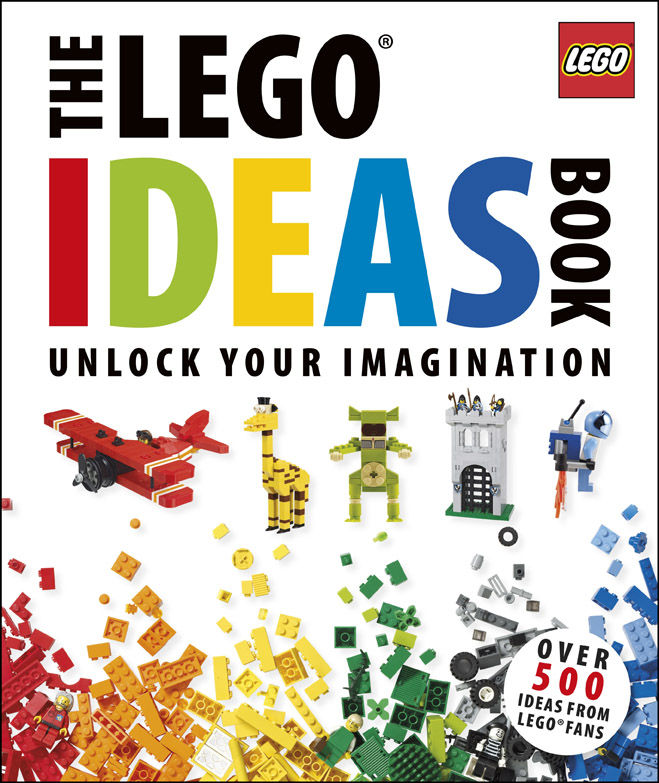
13. 'The Lego Ideas Book' by Daniel Lipkowitz and published by
DK Publishing
If
you have a box of Lego pieces resulting from your purchase of dozens of
Lego sets, then you need this book. The book has 500 ideas for how you
can make new things out of your box of Lego pieces. The book has six
themed chapters—transportation, buildings, space, medieval history,
adventure, and useful things to make. Each section has templates for
models and
ideas for how you might create your own. The book has 200 pages of tips
and advice, illustrations and ideas. It is well illustrated and
beautifully designed. This book will keep children aged 7 to 70 years
busy for hours.
14. 'Into the Unknown' by Stewart Ross and illustrated by Stephen Biesty
This
wonderful hard cover book from tells the story of 14 famous journeys
throughout history, including 'Pytheas the Greek Sails to the Arctic
Circle in 340BC', 'Admiral Zheng He Crosses the Indian Ocean in
1405-07', 'Neil Armstrong & Buzz Aldrin Land on the Moon in
1969', 'Marco Polo Rides the Silk Road to China in 1271-74' and many
more.
Each story has multiple drawings, maps and a
giant fold out cross-section. Boys will read and look through this book
for hours. You will also enjoy reading this exciting book to boys. There
are many other 'cross-section' books by Stephen Biesty and others
(here), including 'Egypt in Cross Section', 'Castles' and 'Rome'.
15. 'How Machines Work: The Interactive Guide to Simple Machines and Mechanisms' by Nick Arnold & Allan Sanders, published by
Quarto Children's Books and distributed in Australia by
Walker Books.
This
book is a unique interactive guide to understanding simple
machines and mechanisms. It introduces basic physics both in words and
through models that the reader manipulates. It has 9 double-page spreads
that introduce the reader to a key mechanical
principle that you then put into practice by building one or more
working
models. The text and illustrations offer an easy to understand
description of the mechanical principle and how to make a model that
demonstrates it. This hands-on approach makes it easy to understand how
these
principles work and how they can be applied to everyday objects, such as
cars, bicycles cranes and seesaws. Everything that you need is within,
or attached to the book. The concept is brilliant
16. '
You Can Draw Anything' by Kim Gamble
Kim
Gamble is a well-known illustrator of Australian picture books. In
this very accessible book he shows you how to draw just about anything
you want to. Most how-to-draw books are either simple and recipe like
or far too complex. The book offers principles and guidance for drawing
many objects, including varied animals, people (bodies and faces), and
landscapes including perspectives. He also offers techniques for
shading and colouring. He intersperses the many diagrams and drawings
with stories, jokes and examples that make the approach lots of fun,
engaging and effective. It is ideal for children aged 7-10 years.
17. 'Locomotive', written and illustrated by Brian Floca (Atheneum Books for Young Readers, an imprint of Simon & Schuster
Children’s Publishing, 2013).
Floca is the author and illustrator of many books for children, including three Robert F. Sibert Honour Books: '
Moonshot: The Flight of Apollo 11', '
Lightship', and '
Ballet for Martha: Making Appalachian Spring',
written by Jan Greenberg and Sandra Jordan.
'Locomotive'
is the story a family’s journey across America in 1869 on the newly
completed transcontinental railroad. The star of the story is the steam
engine, but a mother and her two children and all those who keep the
train moving are essential extras as it races down the Californian
coast.
For the true enthusiast of trains the author
gives us plenty of technical information about 19th-century railroading.
This is not surprising, as Floca seems to have aimed at a very broad
audience. Some will be pulled along by rhythm of the story, others will
love the train details, and some will revel in the sense of history
(even in the very typefaces used). Floca uses free verse and as you'd
expect plays with words and sound to great effect.
The technical craft and book
design are both brilliant, as Floca uses every device to good effect to
engage readers in this exciting journey by an incredible piece of 19th
century technology.
Even the way he uses his
pictures provides a cinematic style that is hard to create, but which
adds to the richness of the text. The detail in the illustrations is
superb; it is as much draftsmanship as it is fine illustration.
'Locomotive' won the 2014 Caldecott Medal.
18. 'Kubla Khan: Emperor of Everything' by Kathleen Krull and illustrated by Robert Byrd
Kubla
Khan is not well known and has often been mentioned historically only
indirectly or in passing. Who was the man who Coleridge described in
his famous poem 'Kubla Kahn'? This is the presumed grandson of Genghis
Khan who reputedly built the imperial city of Beijing, and fathered a
hundred or more children. History and legend suggest that he ruled over
the greatest empire of the time, and that it was more advanced than
previous civilisations in science, art and technology. The narrative
text is engaging and should hold the interest of young readers, and
Robert Byrd beautifully illustrates the book. Readers aged 7-9 years
will enjoy this 42 page illustrated book.
19. '
Simpson and his Donkey' by Mark Greenwood & illustrated by Frané Lessac
Every
Australian and English child who grew up in the 1950s to 70s in
Australia would know of the story of Simpson and the donkey he used to
retrieve wounded men on the WWI battlefields of the Gallipoli Peninsula
in Turkey. This was one of the greatest of all defeats for the forces of
Britain, France and of course the Australian and New Zealand armed
forces (the
ANZACs). In the
midst of the massacre of thousands of allied troops and the eight-month
siege of this isolated beachhead, a man and his donkey were responsible
for saving many lives, before Simpson was eventually killed on yet
another mission.
Mark Greenwood offers a moving story
of John Simpson Kirkpatrick and how he and his donkey, Duffy, rescued
over 300 men during the campaign at Gallipoli. It traces his life from
his home in South Shields in Newcastle (England) and his journey from
the Tyne Dock to Turkey. Informed by detailed research, the text
includes a brief biography of the man, details of his work at Gallipoli
and also the little known story of how one of the many he rescued was
actually a childhood friend.
Frané Lessac's
illustrations are a wonderful complement to the story and have strength
of colour that is not controlled by conventions. There are skies of
yellow, orange, aqua, purple and all shades of blue. Her unique style
draws your eye deep into each plate; no details can easily be missed.
20. 'Usborne Complete Book of Art Ideas' by Fiona Watt and published by
Usborne
The Usborne Art book has almost 300 pages
of
original ideas for painting, drawing and making collage. This fantastic
book is ideal for children of varied (and minimal) artistic ability. It
is also suitable for just about any age (but it's ideal for 7-12 year
olds). The book will help
children to explore varied artistic forms and materials, including
chalk,
pencil, paint and watercolour. It offers ideas that require the use of a
wide variety of artistic techniques, including painting, drawing, sticking, ink, ripping,
rubbing, smudging and colouring. Each of the many ideas is illustrated
with very easy to follow step-by-step instructions. The book also
offers tips on brushwork, mixing colours, thinning and thickening paint,
how to shade and add patterns, using oil pastels, acrylics and more.
21. 'I Was Only Nineteen' by John Schumann and illustrated by Craig Smith (Allen & Unwin)
John Schumann wrote an unforgettable song 'I Was Only 19' in 1983 with the band
Redgum. It had the memorable refrain 'God help me, I was only 19'. The
lyrics
of this well-known Australian song have been brought to life in a
children's picture book illustrated by the widely acclaimed Australian
illustrator
Craig Smith.
The words are used exactly as in the song. With Craig Smith's
wonderful watercolour and line drawings they are a moving reminder of the
Vietnam War. This was a war that was fought in different ways to the
previous great wars and had less universal support than previous
conflicts in which Australia and other nations had fought. This was a
war that for many didn't seem 'quite real', and our servicemen still
carry the physical and mental scars. The book is a moving insight into a
war fought by young men who knew little about the country in which they
fought and why they were there. It would be an ideal book to share with
children aged 6-12 years as we approach
ANZAC Day in Australia on April 25th.
22. 'The Book of Potentially Catastrophic Science: 50 Experiments for Daring Young Scientists' by Sean Connolly
I
wanted this book as soon as I saw it. Well, as soon as I saw the
title! The book is all about igniting interest in science. Sean
Connolly achieves this with lively, hands-on activities that suggest
excitement and "danger". Simple experiments that pop, ooze, surprise and
teach will delight boys and girls in upper primary. He also leads the
reader through the history of science, and uses simple experiments to
demonstrate key scientific principles.
The reader can
rediscover the wheel and axle with the ancient Sumerians, or perform an
astounding experiment demonstrating the theory of angular momentum.
Children can build a simple telescope like Galileo's and find the four
moons he discovered orbiting Jupiter. They can experiment safely with
electricity and avoid the more risky approach of Ben Franklin with his
Lightning experiment. They will also learn how to re-create the Hadron
Collider in a microwave with marshmallows, calculator, and a ruler to
demonstrate the speed of light. Or they might simply crush a can using
Stephenson's steam can experiment. This is a wonderful book for children
aged 9-12 years.
23. 'Tales of the Greek Heroes' by Green Roger Lancelyn (Penguin, 2009)
The beautiful land
of Greece is haunted by more than three thousand years of legend and
history. In this gripping retelling of the Heroic Age, you'll meet the
mighty Poseiden, God of the Sea; Zeus, the King of Heaven and Earth;
Hades, Lord of the Dead; Artemis the Huntress; Aphrodite, Immortal Lady
of Beauty and Love; and many more mortals and gods. Their adventures
are some of the oldest and most famous stories in the world.
This collection of well-known Greek myths will be enjoyed by readers aged 11+
24. 'A Tale of Troy' by Lancelyn Roger Green (Penguin, 2012)
This book is a companion to 'Tales of the Greek Heroes'.
Step
back into the Heroic Age with the story of Helen and the judgement of
Paris; of the gathering of the heroes and the siege of Troy; of Achilles
and his vulnerable heel. And join Odysseus, the last of the heroes –
famous for his wisdom and cunning – on his thrilling adventures as he
makes the long journey home to Greece.
Once again, perfect reading for children aged 11+
25. 'Tales of Ancient Egypt' by Lancelyn Green Roger (Penguin, 2011)
In
this thrilling collection of the great myths, you'll encounter Amen-Ra,
who created all the creatures in the world; Iris, searching the waters
for her dead husband, Osiris; the Bennu bird and the Book of Thoth. But
there are also tales told purely for pleasure, about treasure and
adventure – and even the first ever story of Cinderella.
Ages 10+ will love this collection
26. 'The Dangerous Book for Boys' by Conn Iggulden & Hal Iggulden (
Harper Collins)

As they say, this book is an 'oldie' but a 'goodie'. It offers a range of ideas for making and doing things. For
example, how to make the greatest paper plane in the world, building a
tree house, all about dinosaurs, making a G0-cart, how to go fishing,
juggling, all about Australian snakes, skimming stones and so on. This
isn't a simple book (about grade 4-5 standard) but the content will help
boys to 'stretch' themselves. It is also a great book for boys to read
and 'do' with an adult. I've reviewed it in more detail
here.
27. '
Amazing Grace: An Adventure at Sea' by Stephanie Owen Reeder
This
is a story about the courage of 16-year-old Grace Bussell. The year
is 1876, when a steam ship, the 'Georgette', runs aground near Margaret
River in Western Australia. On shore an ordinary 16 year-old girl sees
the unfolding drama and heads off on horseback with the family servant
Sam Isaacs to try to help the stranded passengers. Grace and Sam head
into the water with their horses and rescue many people. Using
eyewitness accounts and other historical documents as well as some
slight embellishment to fill in details to sustain the narrative,
Stephanie Reeder brings this true story to life. This
wonderful story is an excellent follow on from Stephanie Reeder's
previous book, 'Lost! A True Tale From the Bush'. This previous story
was also a true story. It told the story of 3 children who became lost
on their way home in 1864 and spent eight days alone. It was shortlisted
in the 2010 CBCA children's literature awards.
28. '
The Boy from Bowral' by Robert Ingpen
Robert
Ingpen is known primarily as an illustrator but he is also a fine
writer with 13 works of fiction and over 20 non-fiction. His most recent
book as writer and illustrator is 'The Boy from Bowral' which tells
the biographical story of Australian cricketer
Sir Donald Bradman
who is the greatest cricketer of all time. Bradman is seen as a legend
in any cricket playing nation and Ingpen provides a lucidly written
and historically accurate picture of Bradman's early life in Bowral,
his rise to prominence as a cricketer, and his sporting career. The
images are drawings based primarily on existing photographs, so the
keen cricket fan (like me) will feel that they recognise some of them.
The cover (which wraps around to the back) is a wonderful sequence of
images that appear like a series of video frames that capture the
classic Bradman cover drive. I loved this book and any cricket
following child or adult will also enjoy it.
29. '
Australian Writers of Influence' by Bernadette Kelly (Black Dog Books)
Bernadette
Kelly loves writing non-fiction and in this book she writes about
writers. But not ordinary writers, she writes about some of our pioneers
of poetry, plays and novels. They are all great names that many of us
know by reputation and the odd work, but just how much do we know about
these greats who have made their mark on our literary culture. These are
the writers of the 19th century who influenced our grandparents and
great grandparents.
With 200-400 word descriptions,
beautiful illustrations and historic photographs and paintings, she
makes us want to explore the great works of Adam Lindsay Gordon, Banjo
Paterson, Miles Franklin, Henry Lawson, CJ Dennis, Mary Gilmore, May
Gibbs and more. This book will be enjoyed by children aged 10 to 13
years. Suited ideally for use in classrooms, it will be a valuable
resource and a good individual read for children who love literature.
The work has no doubt been a labour of love for Bernadette Kelly. In her words:
"Researching this book was a joy, and I learnt a lot in the process. The
writers, poets and journalists of colonial and post-federation days in
this country were a tough lot and they shared my love of words and
stories. So it’s out there now. May it find its way into the hands of
Australian history lovers and learners."
30. Get Coding (Walker Books)
Where
can we start to inspire young girls (and boys as well) to explore
coding? There are some great resources appearing on the market that
will help. I was recently sent a great little book designed for primary
or elementary school children -
Get Coding (Walker Books) that has been produced by
Young Rewired State (see below). This is a wonderful little book, it made me want to get to a computer, and to start doing some coding.
It
is well designed and very inviting. Each page combines text, step by
step instructions and projects to undertake. The first 15 pages are
text-based with some headings, pictures and diagrams to make sense of
the limited amount of the word descriptions. The reading level is about
8-10 years. Once the reader is through this introduction they can begin a
series of missions with Professor Harry Bairstone, 'a famous explorer'
who is '... in desperate need of [our] help'. Once we are introduced to
the mystery of the lost 'Monk Diamond', we are ready to code our way
towards completing our mission. Yes, we will need to know what HTML tags
are. And we will learn how to use them as we learn to write HTML code,
on our way towards completing the mission. Very soon, we are writing the
code for a simple web page, with text and images. Eventually we build
our own 'Monk Diamond Discovery Web Page'.
By Mission 5
our young coders will be making their own game 'The House of Volkov's
Security Team' that is responsible for protecting some valuable jewels
on display in the The House of Volkov'.
This is wonderful stuff, and should be part of every child's primary school education.
31. 'Courage Has No Color: The True Story of the Triple Nickles. America’s First Black Paratroopers' (Candlewick Press, 2013)

This
is a true story that has been a long time coming. It tells in a fair
but powerful way of the racism that has often existed in armed forces
around the world. Americans may well have heard of the
Tuskegee Airmen, but few would know of the
555th Parachute Infantry Battalion
- the Triple Nickle. These were the first US black paratroopers. They
showed that black soldiers could do anything their white counterparts
could do. The text and over 100 carefully labelled photographs in this
150 page book offer us an insight into how some brave and persistent
African American men paved the way for others to be a full part of the
US armed forces.
Tanya Lee Stone (author of 'Almost
Astronauts') has done extensive
research to tell her true story for readers of all ages. Boys in
particular will love reading and looking at the historic photos. The
work took Stone almost 10 years and the meticulous care and passion
shows in this wonderful book. This amazing story will challenge all
readers irrespective of age, race or ethnicity. The book recently won the
YALSA Award for Excellence in Nonfiction. It is a very worthy
winner.
32. 'Neurology: The Amazing Central Nervous System' by April Chloe Terrazas (Crazy Brainz, 2013)
Neurology explores the
complexities of the Central Nervous System, beginning with the different
sections (lobes) of the brain, continuing to the spinal cord and
concluding with the structure and function of the neuron. Readers will learn
how to pronounce key terms like Cerebellum, Occipital Lobe and
Sensorimotor Cortex. They will also discover the
functions of the Cerebral Cortex, Basal Ganglia and the Hippocampus! The
book will also help them to understand the way the brain is organised -
Forebrain, Midbrain,
Hindbrain... and much more.
The
book has wonderful images
that will engage them and color-coded text will reinforce lots of new
learning. A great book for boys who love science and fancy themselves as
brain surgeons! This is a book that will appeal to boys (and girls) of all ages.
33. 'Movie Maker' by Tim Grabham, Suridh Hassan, Dave Reeve and Clare Richards
'Movie
Maker' is another wonderful resource from Walker Books designed for
primary school aged children (7-12 years). It is a kit that contains
ideas for making movies, and a handbook that shows you how armed simply
with a video camera, you can make movies. The handbook talks about
techniques like storyboarding, production, equipment, sound and
lighting, design, special effects, how to vary camera shots and so on.
It also includes some very cute aids such as a binocular mask, an
adjustable frame, sample story boards, character props (e.g. glasses,
moustache) and even authentic theatre tickets. All it doesn't include
is the popcorn.
'Getting Boys into Books Through Non-Fiction'
HERE
'Making Reading Exciting for Boys'
HERE


 They meet a distraught worm nearby who is complaining because he can't feel his legs. Ever helpful Bee suggests they must help him. Bee tries some of his jokes. Mmm, these don't seem to work. What next?