Saturday, October 15, 2011

Film Making for Kids: Three great resources

I have written previously about 'Digital Storytelling' (here), but in this post I want to mention several excellent resources that help children to understand and experiment with film and animation as a vehicle for storytelling. Story is important! I talk about this in a series of previous posts titled 'The Power of Story' (here). Narrative is an important part of what it means to be human. Across all cultures, story seems to be a key way that people share something of who they are, how they see themselves, how they envisage the past, present and future. Story can entertain, build community, develop shared cultural understanding, maintain culture and social groups, help to shape identity, and help us to interpret the past, present and future.

A narrative is a story created in varied forms, including writing, speech, song, art and images, sculpture, video, dramatic presentation, dance, mime and so on.  While the modes used can vary, what is common is that a narrative describes a sequence of events that can be works of fiction or non-fiction. Story is based on the Latin verb narrare, which means 'to recount', translate or tell. The purpose of story is so enable us to learn, know, remember or share knowledge. We often used the word 'story' to refer to the sequence of events that are the focus, but it can also be used interchangeably with 'narrative'.  

Puppet Pals

Puppet Pals is available as a free app for the iPod Touch, iPhone and iPad. It is essentially a simple way to create an animated movie using 'cut-out' themed characters and a variety of backdrops and scenes to create an animated 'puppet' play.

There is a free version that comes with Wild West backgrounds and actors.  However, you can also purchase different themes for $US0.99 or the 'Director's Cut' in which you can access all the themes for $US2.99. These allow you to obtain a range of additional scenarios and characters based on themes such as monsters, space, pirates, arthropod armada, Christmas and so on. You can even make your backdrops and characters.

This is a very simple to use app that provides very easy storyboarding. You can record dialogue, move characters around, create some simple effects, change backdrops and settings and characters. Below is an example that my eight year old grandson produced with little instruction and next to no preparation at his second attempt using the app. While ideally, before creating the animation, the writer/producer prepares plot summaries and story ideas, Jacob made this excellent animation as a first take. He used the 'Arthropod Armada' theme from 'Director's Cut'.

Puppet Pals is a wonderful resource for supporting story telling, writing, language development, creativity, and problem solving, while at the same time introducing them to film making and animation. I could see myself using a smartboard to collaboratively develop a story with my class before introducing individuals and groups to this smart little app.


Above: 'Bob & Theodore' Written, produced and directed by Jacob aged 8 years

Movie Maker (Walker Books)

'Movie Maker' was developed by Tim Grabham, Suridh Hassan, Dave Reeve and Clare Richards. It is another wonderful resource from Walker Books designed for primary school aged children (7-12 years). It is a kit that contains ideas for making movies, a handbook that shows you how armed with a simple video camera you can make movies. The handbook talks about techniques like storyboarding, production, equipment, sound and lighting, design, special effects, how to vary camera shots and so on. It also includes some very cute aids such as a binocular mask, an adjustable frame, sample story boards, character props (e.g. glasses, moustache) and even authentic theatre tickets.  All it doesn't include is the popcorn.

The Klutz Book of Animation

'The Klutz Book of Animation' by John Cassidy and Nicholas Berger is another excellent aid for child film makers. The book provides step by step guidance to primary aged children to make simple animations using a video camera (as simple as a web cam) and computer and a variety of props, objects, plasticine and so on. The publishers provide a number of videos online that teach children the fundamentals of animation and film making (here). At the publisher's site you can download free instructional videos (here), free sound effects (here) and sample videos made by children (here). Below is a sample using the Klutz methodology. This is a great resource for young film makers. Steven Spielberg would have loved to have this as a child.


Other Related Posts

'Digital Storytelling' HERE

Thursday, October 6, 2011

Why 'cross section' & diagrammatic books work with boys

 I was reading one of Stephen Biesty's most recent cross section books with my grandson aged 9 (almost) the other day - 'Into the Unknown' (2011) illustrated by Stephen Biesty and written by Stewart Ross. It is published by Walker Books. It has to be one of my favourite books of this type. The book is a wonderful collection of stories and cross sections of 14 'Amazing Journeys'. The journeys include the epic travels of Marco Polo down the Silk Road to China in 1271-1274, David Livingstone exploring the Zambesi in 1858-1864, Captain Cook mapping Australia and the Pacific in 1768-1771, Umberto Nobile flying over the North Pole in 1928, Jacques Piccard's travels to the top of the Stratosphere by balloon in 1932 and then by submarine to a depth of almost 11,000 metres in the ocean in 1960. It is suited for boys (and some girls) aged 7-14 years.

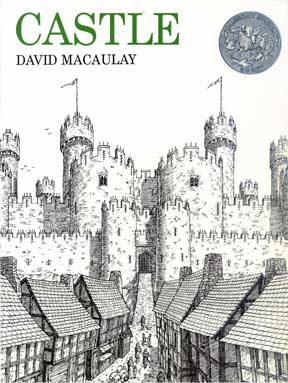
As a child I loved books with cross-sections, maps and detailed diagrams or drawings - bodies, buildings, vehicles, the Earths' crust, mummies and so on. David Macaulay's books, including  'The Way Things Work', 'Castle' and 'The Way We Work', are other excellent examples in this genre. My recent post 'Making Reading Exciting for Boys' covers some of this wonderful material. But why do they work?

There is something about a good cross section or diagram that got my brain whirring as a child (and still does). And the same thing seems to happen for many boys.  Why? I think there are a bunch of reasons:

Cross sections teach you things - A cross section of a mountaineer's clothing and equipment gives an immediate sense that climbing Mount Everest must be VERY cold, heightening the sense of this amazing achievement. Jacob already knew about Sir Edmund Hillary and Tenzing Norgay and the first ascent of Mount Everest in 1953, but seeing Biesty's drawings made concrete many of the things he heard or read previously, and opened his eyes to others he didn't know.

Cross sections and diagrams offer a better sense of size, quantity and significance - You can read about the famous crossing of the Indian Ocean by Chinese Admiral Zheng He in 1405-1407, but understanding the shear scale of his 'Treasure Fleet' becomes a jaw dropper when Biesty's fold out drawing of the largest fleet ever sailed by a single commander is revealed. Seeing 62 nine-masted treasure ships, 47 eight-masted horse ships, 48 seven-masted supply ships, 60 five-masted cannon carrying warships, 40 patrol boats and 20 water tankers helps you to visualize the shear scale and wonder of this phenomenon.


Cross sections stir the imagination - They encourage boys (and girls) to come up with their own ideas and to represent the learning that has been stimulated in new ways. As soon as Jacob finished reading the book with me he raced off to find some cardboard to make up his own board game of the Hillary & Norgay ascent of Everest. We then had to play it and 'relive' the journey through the game. It had many novel elements. For example, if you failed to land on the spot where you received a critical rope you were doomed not to make the descent safely. Spontaneous child-initiated activities of this type enrich the experience of the book, stimulate the imagination and reinforce learning.


Cross section books encourage boys (in particular) to revisit - A good cross section book will be looked at time and time again, and each time it will fire imagination and increase the desire to learn once again. Even at my age, I never tire of revisiting diagrammatic representations of Apollo 11 and the first moon landing. The experience of growing up during the space race and seeing the Apollo 11 landing live, was one of life's great memories, and it floods back with new richness with Biesty's images.

Cross section books also help you to enrich and enliven previous learning & experience - Jacob and I had the chance to see and crawl through an exact replica of Captain Cook's famous ship the 'Endeavour' when he was six. As we looked at Biesty's cross section of the book yesterday we recalled where we had climbed, how low the roof had been and speculated about the exact location of the Captain's cabin.


Summing up

Books that incorporate diagrams, cross-sections and maps have special interest for boys as readers and learners. They encourage them to read and use visual material to reinforce and enrich learning as well as stimulating their imagination and creativity. I would love to hear your recommendations for similar books.

Short video introduction to Stephen Biesty's book 'Stowaway'


For a full description of Stephen Biesty's work visit his website HERE

Monday, October 3, 2011

'Literacy, Families & Learning NEWS'

Readers of this blog might not know that I have an online newsletter of the same name that brings my various Twitter links to readers daily. You don't have to use Twitter to see and access some of the various tweets I send. You can monitor the tweets and the material they link to in two main ways:

 
1. Watch the Twitter Boxes - You can simply watch either the Twitter box on the sidebar of this blog or the 'Literacy, Families & Learning NEWS' box that displays the content summary.  The downside is that the tweets change daily (I tend to tweet once or twice per day in short bursts) so if you only visit once a week you will have missed lots of links.


2. Subscribe to the Online Newsletter - The second way is simply to subscribe to my daily newsletter that offers a spread of the links as stories in the form of an online newspaper, with sections like 'Top Stories', 'Kids Lit', 'Education', 'Technology', 'Parents', 'Leisure' etc. It also has direct feeds for video and photos. The newsletter includes most of my tweets plus some of those from people who follow me. It is generated automatically each day and can be accessed like any blog or website and read as a newsletter online. The screenshots above and below show just part of the newsletter for today. Each edition has varied sections that reflect tweets in the last 24 hours. It's easy to subscribe by email, or by using the display on the sidebar of this blog. You can also subscribe once you've reached the newsletter just like you do for any blog (HERE).

Thursday, September 29, 2011

Getting Boys & Girls into Chapter Books

I'm asked by many parents just when they start reading chapter books to their children. If he or she won’t sit still long enough to hear a chapter through, then it’s too early. But, then again, you might just be choosing dull books or books that are just too hard and complex as narratives. You might also need to sharpen up your story reading.

Here are some quick questions that you might think about in assessing whether your child is ready:
  • Can your son or daughter listen for 20 minutes plus of reading aloud from picture books?
  • Do they seem to enjoy the text as much as the pictures?
  • Do they seem to relate to the characters and can they follow more complex picture books?
  • Do they ask you to read favourite books over and over?
  • Are they showing growing understanding of written language and asking questions about it (e.g. “What does calamity mean?” “Why does it say….?).
If you answer yes to most of these questions then they are probably ready. Children who have been read to constantly during the preschool years are typically ready to listen to chapter books from age 5 years and up (some even earlier). I also add that some children will be ready before 5 years. My two daughters and my two oldest grandchildren all started to love chapter books before 5 years of age. The starting time will reflect their maturity, language proficiency and the depth of the literary and narrative experiences that they have had in the early years.

Why read chapter books to younger readers?

In a post I wrote in 2008 on ‘Guiding children’s learning’ (here) I talked a little about Jerome Bruner’s concept of “scaffolding”. He identified scaffolding as a process where an adult helps children to learn in advance of their developmental level. The adult does this by doing what the child cannot do by themselves; allowing students to slowly take over parts of the process as they are able to do so. In many ways, this is the most fundamental reason to read chapter books to your children once they have become avid listeners to stories and beginning readers themselves. They can listen to more complex stories than they can read themselves as emerging readers.

In practical terms, chapter books offer children:
  • More complex narrative forms and plot development
  • Richer and more complex language
  • New areas of knowledge about their world and the human condition
  • Different literary devices
  • They train your children to be able to sustain longer periods of reading
As well as the above, chapter books will enable you to build an even richer shared literary history with your children. Shared books will become part of your shared history within the family, and more broadly, they will help to connect your children to a literary culture that others will share with them.

A couple of warnings

Having said all of the above, there are a couple of warnings that I’d give:
  • Don’t push your children too quickly; all learning requires periods of consolidation before moving on to more difficult terrain.
  • Be aware that while your children might be able to follow the story line, relate to the characters and so on, they may not be emotionally ready for some of the content.
  • Be prepared to offer support - with chapter books you may need to explain new words, discuss new concepts, offer new knowledge etc.
  • Don’t forget, that reading a chapter book still needs to be interesting and enjoyable and that it will be harder to achieve this without pictures so you’ll need to work harder on varying your character voices (see my earlier post on reading to and with your children HERE).
One final warning. Don't assume that once you commence chapter books that picture books no longer have a place. Young children still need to read picture books and hear them read to them. They continue to have an important role in children's literacy development throughout the primary years of schooling.

Some Chapter Books to try


The list below is not meant to be extensive, just illustrative. It has a particular Australian flavour (but not entirely). I preface the following suggestions by saying that individual children will handle these books at different ages. For the very youngest readers it is best to start with books that have some illustrations to maintain interest until they develop more 'stamina' for harder books. The age guide that I have given is meant to be a ‘group age’ guide for teachers sharing such books with larger groups. Parents reading to a single child will perhaps find that their child can deal with books I’ve listed at an earlier stage. Conversely, your child might not be ready for some of these books as suggested. You may also find that they can handle even more difficult books not on the list (but don’t forget the warnings above).

a) Suitable for 5 year-olds

‘Aurora and the little blue car’, by Anne-Cath Vestly, 1969
‘Arlo the dandy lion’, by Morris Lurie, 1971
‘Charlotte’s Web’, by E. B. White, 1952
‘Fantastic Mr Fox’, by Roald Dahl, 1970
‘Morris in the apple tree’, by Vivian French, 1995
‘Pippi Longstocking’, by Astrid Lindgren, 1945
‘Snugglepot and Cuddlepie’, by May Gibbs, 1940
‘The Complete Adventures of Blinky Bill’, by Dorothy Wall, 1939
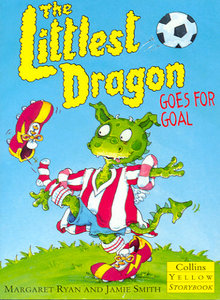
‘The Littlest Dragon Goes for Goal’, by Margaret Ryan, 1999
‘Winnie-the-Pooh’, by A.A. Milne, 1926

b) Suitable for 6 year-olds

‘The BFG’, by Roald Dahl, 1982
‘Billy Fishbone King of the kid’, by Dianne Bates, 1997 (Bushranger series)
‘Bud Buster’, by Sofie Laguna, 2003 (Aussie Nibbles series)
‘Dragon ride’, by Helen Cresswell, 1987 (Colour Young Puffin series)
‘Elephant in the kitchen’, Winsome Smith, 1980
‘Grandma Cadbury’s Trucking Tales’, Di Bates, 1987
‘James and the Giant Peach’, by Roald Dahl, 1961
‘Hazel the Guinea Pig’, by A. N. Wilson, 1989
‘Mr. Popper's Penguins’, by Richard & Florence Atwater, 1939
'My Naughty Little Sister', by Dorothy Edwards, 1950
‘Rabbit Hill’, by Robert Lawson, 1944.
‘Superfudge’, by Judy Blume, 1984
‘Tashi and the Genie’, by Anna Fienberg, 1997, (series)
‘The Shrinking of Treehorn’, by Florence Parry Heide, 1971
‘The 27th Annual African Hippopotamus Race’, by Morris Lurie, 1969
‘The Wind in the Willows’, by Kenneth Grahame, 1908

c) Suitable for 7 year-olds

‘Boss of the Pool’, by Robin Klein, 1986
‘Bottersnikes and Gumbles’, by S. A. Wakefield, 1969
‘Boxer’, by Ian Charlton, 1999
‘Boy’, by Roald Dahl, 1984
‘Callie’s castle’, by Ruth Park, 1974
‘Charlie and the Chocolate Factory’, Roald Dahl, 1964
‘Charlie up a gum tree’, by E. A. Schurmann, 1985
'Darius Bell and the Glitter Pool', by Odo Hirsch, 2009
‘Dear writer’, by Libby Gleeson, 2001
‘Dog tales’, by Emily Rodda, 2001
‘Foggy’, by Allan Baillie, 2001
‘Frog thunder’, by Jill Morris, 2001
‘Hating Alison Ashley’, by Robin Klein, 1984
‘James and the giant peach’, by Roald Dahl, 1961
‘Jodie’s Journey’, by Colin Thiele, 1997
‘Just So Stories’, by Rudyard Kipling, 1902
‘Let the Balloon Go’, by Ivan Southall, 1968
‘Little House on the Prairie’, Laura Ingalls Wilder, 1935
‘Little Old Mrs Pepperpot’, by Alf Prøysen, 1959
‘Matilda’, by Roald Dahl, 1989
'Matty Forever', by Elizabeth Fensham, 2009 
‘Mike’, by Brian Caswell, 1993
‘Misery Guts’, by Morris Gleitzman, 1991
‘Onion Tears’, by Diana Kidd, 1989
‘Over the top’, by Ivan Southall, 1972
‘Penny Pollard’s Diary’, by Robin Klein, 1983
‘Selby’s Secret’, by Duncan Ball, 1985
‘Storm Boy’, by Colin Thiele, 1976
‘The adventures of Stuart Little’, by Daphne Skinner, 2000
‘The amazing adventures of Chilly Billy’, by Peter Mayle, 1980
‘The borrowers’, by Mary Norton, 1958
‘The Eighteenth Emergency’, by Betsy Byars, 1973
‘The Iron Man’, by Ted Hughes, 1968
‘The enemies’, by Robin Klein, 1985
‘The lion, the witch and the wardrobe’, by C.S. Lewis, 1950
'The Mostly True Adventures of Homer P. Figg', by Rodman Philbrick
‘The penguin friend’, by Lucy Sussex, 1997 (Collins Yellow Storybook series)
‘The Twits’, by Roald Dahl, 1980
‘The turbulent term of Tyke Tiler’, by Gene Kemp, 1977
'The Wish Pony', by Catherine Bateson, 2008
‘Wiggy and Boa’, by Anna Fienberg, 1988
‘Wendy’s whale’, by Colin Thiele, 1999

Book series

I’ve written about book series in another post (here) and offer a detailed lost for many ages. There are a number of book series that children aged 5-7 years will enjoy, here are just some:

Alf Prøysen’s ‘Mrs Pepperpot’ series
Anna Branford's 'Violet Mackerel' series
Arnold Lobel’s ‘Frog and Toad’ books
Astrid Lindgren’s ‘Pippi Longstocking’ books
Dick King-Smith's 'Sophie' series
Donald Sobol's 'Encyclopedia Brown' series
Dorthy Edwards' 'My Naughty Little Sister' series 
Emily Rodda's 'Rowan of Rin' and 'Deltora Quest' series 
Enid Blyton's 'Faraway Tree' series
Hugh Lofting's 'Dr Dolittle' series
Jeff Brown's 'Flat Stanley' series
Laura Ingalls Wilder's 'Ingalls family' series
Mairi Hedderwick's 'Katie Morag' series 
Michael Bond’s ‘Paddington Bear’ series
R.A. Spratt's 'Nanny Piggins' series
Sarah Pennypacker's 'Clementine/ series 
'The Chronicles of Narnia' by C.S. Lewis

Some related links

The importance of literature (here)
How to listen to your child reading (here)
Helping children to choose books (here)
The benefits of repeated reading of literature (here)

Wednesday, September 21, 2011

Improving on 'The Iron Man'?

"The Iron Man came to the top of the cliff.
How far had he walked? Nobody knows. Where had he come from? Nobody knows. How was he made? Nobody knows.
Taller than a house, the Iron Man stood at the top of the cliff, on the very brink, in the darkness.
"

So begins one of the great modern fairy stories; or is it science fiction? No matter, 'The Iron Man: A Story in Five Nights' is a wonderful work of fiction for readers aged 6-10 years and has thrilled readers since it was published by Faber in 1968. It is a modern classic which in its 1st edition used the wonderfully simply line drawings of George Adamson. Illustrations stripped bare, as 'miserly' as the text, giving just enough to inflame the curiosity and imagination of readers. Illustrations as intriguing as the words and complementing the masterful text. 

Surely, such a work cannot be improved on? Surely, it would be foolish even to try? Warner Brothers tried with an animated film titled 'The Iron Giant' (1999) and it was (in my view) an abomination, in light of the quality of the book. But.... it seems there was a way to improve on the classic work. Laura Carlin is the secret weapon, surprising this reader, with the same killer blows as the Iron Man dealt to the Space-bat-angel-dragon. In her own way, Carlin improves on Adamson's contribution as illustrator in the original edition.

Here is an illustrated junior novel turned into a graphic novel with wonderful success. I have seen the odd review (odd in number, and odd in nature), that have spoken of the 'simplicity of the drawings', 'the child-like figures', the 'imprecise details' etc. Theses comments show neither understanding nor appreciation of the genius of the text. Hughes offers a text with simplicity of vocabulary and sentence structure that helps to create the mood, the intrigue and 'space' for young minds to imagine. This is precise descriptive language that allows the reader to see with equal preciseness, the path of the characters, the events and even the plot. Carlin wonderfully partners Ted Hughes in this new edition from Walker Books (even though he's been dead since 1998).


I applaud Walker Books for its work in recent years producing new editions of classic works. Many publishers attempt to do the same thing. Old books can be reprinted and good profit made for low cost. But Walker has been trying to offer something new and significant in each of its attempts.  I have reviewed the Classic Series that Robert Ingpen has illustrated (here) which in their own way add value for new readers to well-known works. The purpose of course, in new editions, is to introduce such works to a new generation. This new edition of 'The Iron Man' will do just that. Can you improve on 'The Iron Man'? I think Walker have succeeded in this new format. The production and the illustrations are superb.


Laura Carlin's illustrations are in rich watercolours that offer a somewhat impressionistic interpretation of Ted Hughes's text, mostly in full-colour, with occasional two-colour stylised images across part and whole pages for dramatic effect. A simple example is an image of the two red eyes of the Iron Man shining in the deep black pit where he is trapped. The images are well integrated with the text, sometimes appearing as almost marginal sketches and, at other times, detailed double-page spreads. The publishers also make good use of other devices such as varied text fonts and styles, paper sculpture holes to slowly reveal the space-bat-angel-dragon, and they use multiple page fold-outs in places, including a dramatic 6 page spread that folds out to the reveal story's conclusion. The sensitivity with which Carlin interprets the text and the clever book design, offers a wonderful example of a graphic novel that improves the reader's experience of the original work. It is brilliant stuff!

Plot summary

The Iron Man describes the unexpected arrival in England of a mysterious giant "metal man" who wreaks havoc on the countryside by attacking the neighbouring farms and eating all their machinery. A young boy called Hogarth befriends him and he and the extraordinary being end up defending and saving the earth when it is attacked by a fearsome "space-bat-angel-dragon" from outer space.

The book was written at a high point of the Cold War and it would seem that the intent of the author was to place a spotlight on the futility of war, violence, and the arms race.  Many see the space-bat-angel-dragon as an idealized version of the Soviet Union offering a threat because of the hostility of nations toward one another. It offers a message of hope and peace. A solution to the problems of the world devised by a child who showed compassion and empathy, and was prepared to talk to the 'enemy'.

About the Author

Ted Hughes was born in Yorkshire in 1930. His first book, 'The Hawk in the Rain', was published by Faber in 1957, and was followed by many volumes of poetry and prose for both children and adults, including 'How The Whale Became', 'Under the North Star', 'Tales from Ovid' and 'Birthday Letters'. He was Poet Laureate from 1984 and was appointed to the Order of Merit in 1998, the year in which he died. There has been much written about him and his ill-fated marriage to American Poet Sylvia Plath who died by suicide aged 30 in 1963. But he should be remembered first as a great poet and writer for adults and children.

About the illustrator

Laura Carlin is a graduate of the Royal College of Art and the winner of several awards including the Shelia Robinson Drawing Prize, the Quentin Blake Award and the 2004 National Magazine Award. Laura's work as a ceramic artist and illustrator has featured in publications such as Vogue, the Guardian, and the Independent. Books she has illustrated include 'The Silver Donkey' by Sonya Hartnett and Michael Morpurgo's 'The Kites are Flying!'.

Book details

Title: 'The Iron Man' Ted Hughes, illustrated by Laura Carlin
ISBN: 9781406324679
Imprint: Walker Books
Binding: HARDBACK
Release Date: November 1, 2010
Dimensions: 200 x 270mm, 96pp
Australian RRP: $34.95

Related posts

Author Focus: Robert Ingpen (HERE)
Aussie Book Reviews: Graphic Novels (HERE)

Books for children by Ted Hughes

'The Earth Owl and Other Moon People' (1960)
'Meet my Folks!' (1961)
'How the Whale Became' (1963)
'Nessie the Mannerless Monster' (1964)
'The Iron Man' (1968) Illustrated by George Adamson
'Coming of the Kings and Other Plays' (1970)
'Season Songs' (1976) Illustrated by Leonard Baskin
'Moon-Whales and Other Moon Poems' (1976) Illustrated by Leonard
Baskin
'Moon-Bells and Other Poems' (1978) Illustrated by Felicity Roma
Bowers
'Under the North Star' Illustrated by Leonard Baskin (1981)
'Ffangs the Vampire Bat and the Kiss of Truth' (1986) Illustrated by Chris
Riddell
'The Cat and the Cuckoo' (1987) Illustrated by R. J. Lloyd
'Tales of the Early World' (1988) Illustrated by Andrew Davidson
'The Iron Woman' Illustrated Douglas Carrell (1993)
'The Mermaid's Purse' (1993) Illustrated by R.J. Lloyd
'Collected Animal Poems: Vols. 1–4' (1995)

Tuesday, September 13, 2011

Using Technology to Develop Vocabulary & Reading

In a recent edition of the International Reading Association journal 'The Reading Teacher', Bridget Dalton and Dana Grisham discuss the merits of electronic strategies that can be used to increase children's vocabularies. They call these strategies 'eVoc' strategies (i.e. electronic vocabulary strategies)

How important is vocabulary?

The short answer is, very! We know that in spite of the rise of the visual medium that words are still the primary basis of language, communication and learning. Literacy research studies have consistently shown the significant relationship between knowledge of vocabulary and reading and writing ability. Pearson, Hiebert & Kamil (2007) showed that there is a very high positive correlation (0.6 to 0.8) between vocabulary and reading comprehension. This confirms consistent findings that span more than 30 years (see for example Anderson, R. C., & Freebody, P., 1985).

While we know children learn much of their vocabulary through experience of spoken and written language, it also grows as a result of good instruction. There is wide support within the research literature for a varied approach to vocabulary instruction, including:
  • Language experience 
  • Encouragement of wide reading 
  • Explicit teaching of words
  • The promotion of active interest in words as a natural part of learning
Some key eVoc strategies

Dalton & Grisham in their excellent article suggest 10 strategies that relate primarily to the third and fourth approaches. I will share just 5 strategies, which I have modified for use in primary classrooms based on the examples provided.

1. Tools for displaying relationships between vocabulary and text meaning

The use of graphic organizers and visual displays has proven helpful in expanding vocabulary as well as comprehension, because they help to show the relationship between words and concepts. An example of this strategy is the creative use of 'Word Clouds'. Using the free application 'Wordle' you are able to create word arrays that display the frequency of words in any text. This can then be used to enhance discussion of the text as students speculate what the word cloud might tell you about key themes, dominant ideas, the relationship between ideas, the central purpose of the text, the meaning of the text and so on.

The Word Cloud above is one that I prepared by taking a Wikipedia description of 'Rock Lobster' and inserting it into Wordle. The display shows the dominance of key words and concepts and their relationship to one another. This display makes it pretty clear that we are not discussing crustaceans but rather the first hit song performed by the rock band the B-52s in 1978. A display like the above based on a relevant passage can be used for intensive discussion of the text, developing and reinforcing vocabulary while increasing text comprehension.

2. Using TrackStar to create a shared research 'field trip' for your class


TrackStar is a free online application similar in many ways to WebQuest. It allows the teacher to identify a topic and collect a series of relevant websites or online sources that can then be shared with the class for individual, group or class use. It also allows teachers to choose previously developed online lessons that are referred to as 'tracks'.  The example below is for a topic on Ancient Civilizations and features 4 key sites for children aged 5-9 years. The tracks can be used in varied ways. An ideal format is to use a track in association with a Smart Board for group or class work. Students can be guided through the research process (a 'field trip') and can be asked to record observations, key words or phrases, new learning and so on. The process builds vocabulary as students engage in writing, reading, discussion and shared learning,

3. Using Online Reference Tools

A variety of online reference tools can also help vocabulary and reading development. Dalton and Grisham suggest the use of several tools. One of them is the Visual Thesaurus. The Visual Thesaurus is an interactive dictionary and thesaurus that enables the teacher or child to create word maps elaborate meanings and show relationships to other words. The tool allows you to enter a single word, which is then represented as a visual display web of related vocabulary. The tool can be used to stimulate discussion in relation to a topic as part of the research process in English, social studies, science, history and so on. It can also be used as a tool for writing and reading individually or in groups.

Another example is the 'Back in School' web page of the Dictionary.com site that offers a means to find words and then represent them in varied ways as well as offering some varied strategies to reinforce their meaning. This can include hearing the word spoken, reading word definitions and meanings, creating lists of words, sharing words using social media like Facebook and Twitter, playing games and so on.

Above: 'Back in School' site from Dictionary.com

4. Using Language Translation Devices

There are a variety of language translation devices available for computer and tablet use. One of my favourite tools is the free iTranslate for iPad. But if you don't have access to an iPad there are many other online tools that allow you to input English language text and automatically translate it to a variety of other languages. These also allow the child to type in foreign words for instant translation to English. Google Translate is an obvious and easy choice that once again allows you to input language for instant translation.  Yahoo's Babelfish also offers similar functions.

What I like about the translation tools is that as children experiment and explore how text is translated into other languages, they learn how many words are borrowed from other languages, they learn more about derivations, and it offers a way to discuss the subtle changes in meaning as words move from one language into another. This word play is helpful for vocabulary learning. These tools also offer the benefit of stimulating a desire to learn other languages, which we know can have benefit for learning a first language.

5. Using Presentation Tools Like Powerpoint

Another helpful strategy is to capitalize on multimodality to reinforce learning of vocabulary, reading comprehension, writing and learning. Dalton and Proctor (2007) have shown that there are benefits to vocabulary learning if children experience the vocabulary in varied ways. For example, understanding a word by writing it, reading and developing a definition, listening to it, viewing graphic displays, creating captions for pictures, completing word maps etc. Dalton and Grisham suggest using PowerPoint to apply some of these options to the learning of vocabulary. The example opposite is a very simple template than can be used by individual students or can be built up as part of group activities. This example requires just the word, a meaning which students write (or even look up in a dictionary), and images to illustrate the word meaning. There are more complex versions that can be used including the addition of a pronunciation option. They could also have a section for synonyms, opposites, word categories and perhaps even hyperlinks to sites that elaborate on the vocabulary that has been discussed.

Once again this is an ideal group activity for use with Smart Boards. Electronic whiteboards allow you to access the Internet, use existing software and tools to manipulate text, image and sound. It is an exciting way to allow children to use multimodal strategies to acquire deeper understanding of vocabulary and reading comprehension. The video below is a good introduction to some of the ways we can use Smart Boards, including ideas for developing vocabulary and conceptual knowledge.


Summing up

While children develop vocabulary naturally as part of their language experiences there is a place for instruction. My suggestion is that such instruction should adhere to a few basic principals:
Vary the ways in which vocabulary is introduced and discussed
Try always to deal with vocabulary within authentic texts that are being used to learn content not just words
Stress meaning and use, not testing and learning isolated words
Utilize individual, group and class learning contexts but don't over-use class-based instruction
Make good use multimodal methods as much as possible

Related Posts

See my previous post on 'Advance Organizers' HERE 
'The Language Experience Approach' (LEA) HERE
'Rethinking Language & Learning' HERE
'English, the Inventive Language' HERE

Wednesday, September 7, 2011

Indigenous Literacy Day

Today is Indigenous Literacy Day!

In recognition of the importance of this day I have provided links below to some of my previous posts dealing with Indigenous literacy and education issues.

'Better education outcomes for Indigenous students' HERE

'Indigenous tales of the Dreamtime' HERE

'Indigenous students making literacy progress' HERE

'The Lucky Country: How are the kids faring?' HERE 

'Australia Day: A time for storytelling and action' HERE 

'Catching a glimpse of our nation through children's literature' HERE

'Requiem for a Beast: A review' HERE