Tuesday, April 7, 2015

29 Great Examples of Children's Books that Feature Birds

Above: One of the Ospreys observed at Tuncurry
I wrote a post about birds in books and have just had the joy of observing osprey while on holidays. So here's a refrain of my previous post. I want to encourage parents and teachers to share some children's literature that feature birds. I had fun brainstorming this list with daughter, son-in-law and 3 of my grandchildren. Why not celebrate the wonder of birds with some great literature.  Here are some examples that teachers might consider using.

Young Readers (0-7 years)

The following books are varied in age range from first books like 'Boo to a Goose' to more demanding picture books like 'How to heal a Broken Wing'.


1. 'Are You my Mother' by P.D. Eastman

A baby bird is hatched while his mother is away. Fallen from his nest, he sets out to look for her and asks everyone he meets -- including a dog, a cow, and a plane -- "Are you my mother?"


2. 'Don't Let the Pigeon Drive the Bus' by Mo Willems

When a bus driver takes a break from his route, a very unlikely volunteer springs up to take his place - a pigeon! But you've never met one like this before. As he pleads, wheedles, and begs his way through the book, children will love being able to answer back and decide his fate. In his hilarious picture book debut, popular cartoonist Mo Willems perfectly captures a preschooler's temper tantrum.

'Don't Let the Pigeon Drive the Bus' was a Caldecott Honour Book in 2004. Other books in this delightful series include 'Don't let the Pigeon Stay up Late!' and 'The Pigeon Finds a Hot Dog'.

3. 'The Lighthouse Keeper's Lunch' by Rhonda Armitage and illustrated by David Armitage. Other books in the series include 'The Lighthouse Keeper's Rescue' and 'The Lighthouse Keeper's Picnic'.

My children and grandchildren have all loved these books about Mr Grinling's adventures.

4. 'Waddle, Giggle, Gargle!' by Pamela Allen

Sitting in a tree outside Jonathan's house is a black and white magpie. 'Waddle Giggle Gargle!' the magpie shouts. A delightful story about a boisterous, swooping, waddling, giggling, gargling bird!

This book is worth a read for the language alone. A great read aloud book.


5. A bunch of books about ducks & geese. Some of my favourites:

a) 'Alexander's Outing' by Pamela Allen
b) 'Fix it Duck' , 'Duck in the Truck' and others in the same series by Jez Alborough
c) 'I Went walking' by Sue Williams and illustrated by Julie Vivas
d) 'Make Way for Ducklings' by Robert McCloskey (Caldecott Medal winner 1942).
e) 'The Story About Ping' by Marjorie Flack and illustrated by Kurt Wiese
f) 'Boo to a Goose' by Mem Fox and illustrated by David Miller
g) 'Stickybeak' by Hazel Edwards and illustrated by Rosemary Wilson
h) 'Duck and Goose' series by Tad Hills
i) 'The Tale of Jemima Puddleduck' by Beatrix Potter


6. 'Edward the Emu' by Sheena Knowles and illustrated by Rod Clement and of course 'Edwina the Emu' and by the same duo.
Edward the emu was sick of the zoo,
There was nowhere to go, there was nothing to do,
And compared to the seals that lived right next door,
Well being an emu was frankly a bore.
Tired of his life as an emu, Edward decides to try being something else for a change. He tries swimming with the seals. He spends a day lounging with the lions. He even does a stint slithering with the snakes. But Edward soon discovers that being an emu may be the best thing after all. And so he returns to his pen, only to find a big surprise awaiting him. . . .

7. 'Feathers for Phoebe' by Rod Clements

Phoebe doesn′t want to be ordinary. She wants to turn heads and be noticed - she wants to be fabulous! But when she seeks the help of the outrageous and beautiful Zelda, her transformation leads to some unexpected results.

8. Three great books about penguins

a) 'Tacky the Penguin' by Helen Lester and illustrated by Kim Munsinger
b) 'That's Not my Penguin' by Usborne Children's Books. A great first book for babies.
c) 'The Truth About Penguins' by Meg McKinlay, illustrated by Mark Jackson,


9. 'Slinky Malinki, Open the Door' by Lynley Dodd

"Slinky Malinki and Stickybeak Syd were a troublesome pair; do you know what they did? Alone in the house one mischievous day, they opened a door and they started to play." Room by room, the terrible twosome wreak havoc...until they decide to see what's behind that last door. Slinky Malinki's curiosity finally gets the best of him. Collect all the Slinky Malinki books!
This is a funny book that children love from a great New Zealand author.

10. 'Owl Babies' by Martin Waddell and illustrated by Patrick Benson
The bay owls came out of their house,
and they sat on the tree and waited.
A big branch for Sarah, a small branch for Percy,
and an old piece of ivy for Bill.
A gorgeous book. Wonderful illustrations and delightful text.


11. 'Puffling' by Margaret Wild

Puffling is a baby—small, white, and very hungry. Every day he waits in the burrow while his parents, Big Stripy Beak and Long Black Feather hunt for food. As he grows, Puffling dreams of the day when he will leave his nest and fly away—but he isn’t ready yet, not until he’s tall and brave enough to fend for himself. Every day Puffling asks his parents, but every day they say he must wait until he has grown bigger. Will he ever be ready to head out into the world on his own?

12. 'How to Heal a Broken Wing' by Bob Graham

'How to Heal a Broken Wing' is a delightful story about a little boy who finds a bird with an injured wing. He takes the bird home and with his parents help, and some rest, time and a dash of hope will the bird will fly again? The book has all the usual Bob Graham trademarks, simple and engaging illustrations and an economy of words that are well crafted. It was the winner of the Australian Children's Book Council award in 2009 for best book in the Early Childhood category.


13. 'Cat and Canary' by Michael Foreman

I just love English author illustrator Michael Foreman. This is a favourite around our place.

Cat’s best friend is the canary in his apartment. Once their owner has gone out, Cat lets Canary out of his cage and they go up onto the roof together. Cat wishes he could fly, like all the birds around him, and when he finds a kite tangled in an aerial, it is too much of a temptation. But the kite carries him much too high and much too far, and Canary needs to marshall a crowd of feathered friends to tow the kite home. But Cat isn’t the least bit deterred: “Tomorrow, we can go to the land beyond the river, and still be back for tea!”
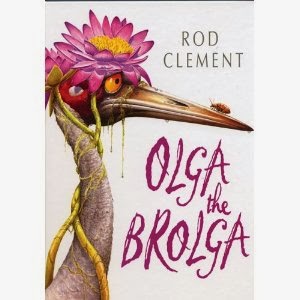

14. 'Olga the Brolga' by Rod Clement

Olga is in a terrible mood. She desperately wants to dance, but know one will dance with her. Her parents have other things to do. So, Olga decides to dance by herself, and something wonderful happens.

This great book about the famous Australian Brolga bird is ideal for kids aged 3-7 years.
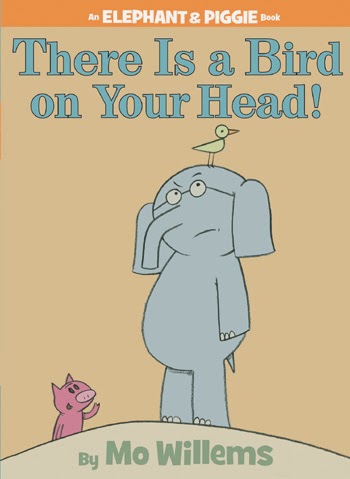
15. 'There's a Bird on Your Head' by Mo Willems

If your children loved 'Don't Let the Pigeon Drive the Bus' they will also love 'There's a Bird on Your Head'. It is one of a series of very funny tales for beginner readers from this award-winning writer and illustrator.

16. 'The Last Egret: The Adventures of Charlie Pierce' by Harvey E. Oyer III

This is the second book in the series 'The Adventures of Charlie Pierce' and was inspired by the teenaged adventures of his great grand-uncle. It is an illustrated novel for grade schoolers

The experiences of his uncle were of the late 19th century Florida Everglades, when the vast South Florida wilderness was twice the size of today. In those days it was alive with snowy egrets green herons,  roseate spoonbills and many wading birds. But the birds were the target of plume hunters, shooting them simply for their feathers to use in ladies’ hats.  A great read for children aged 6-10 years.


17. 'The Bush Concert' by Helga Visser

There has been a terrible drought and the birds put on a gala concert to cheer themselves up. There is singing and dancing and magic tricks, but the final performance is the perfect end to a wonderful bush concert.


Independent readers (8-12)

18. 'Storm Boy' by Colin Thiele

Storm Boy likes to wander alone along the fierce deserted coast among the dunes that face out into the Southern Ocean off the coast of South Australia near the Coorong. A pelican mother is shot and Storm Boy rescues the three chicks, and brings them back to health. He names them Mr Proud, Mr Ponder and Mr Percival. He finally lets them go, but Mr Percival returns. The story follows the struggle to let Mr Percival go and has a memorable ending. A classic story from one of Australia's great writers.

19. 'The Landing: A Night of Birds' by Katherine Scholes and illustrated by David Wong

One stormy night at her grandfather's place on the windswept coast, Annie enters a boathouse occupied by injured sea birds and finds herself able to understand their speech.

This is a wonderful book that isn't known very well by children today. Check it out.


20. 'Mr Popper's Penguins'  by Richard Atwater and illustrated by Florence Atwater (Newberry Medal winner 1939).

A classic of American humour, the adventures of a house painter and his brood of high-stepping penguins have delighted children for generations. "Here is a book to read aloud in groups of all ages. There is not an extra or misplaced word in the whole story."--The Horn Book. Newbery Honour Book.

21. 'Sticky Beak' by Morris Gleitzman.

Rowena Batts has enough problems in her life without adopting a crazy cockatoo. She's just splattered two hundred grown-ups with jelly and custard, and her dad's getting married to her teacher. But Sticky the cockatoo turns out to be just the friend she needs . . .

22. 'A Kestrel for a Knave' by Barry Hines

Barry Hines's acclaimed novel continues to reach new generations of teenagers and adults with its powerful story of survival in a tough, joyless world. Billy Casper is a troubled teenager growing up in a Yorkshire mining town. Treated as a failure at school and unhappy at home, Billy discovers a new passion in life when he finds Kes, a kestrel hawk. Billy identifies with her silent strength and she inspires in him the trust and love that nothing else can. Ken Loach's well-known film adaptation, Kes, has achieved cult status and in his new afterword Barry Hines discusses working on the screen version (he adapted the novel) and reappraises a book that has become a popular classic.

This is a classic book for older readers.


23. 'Coot Club' by Arthur Ransome

It all started with a coot's nest. Dorothy and Dick meet Tom Dodgeon, Port and Starboard, and three pirate salvagers all members of the Coot Club Bird Protection Society. When one of the coot's nests is disturbed by a shipful of Hullabaloos-rude holiday boaters - trouble begins. Frantic chases, calamitous boat collisions, and near drownings fill the pages of this exciting fifth addition to Ransome's classic children's series.

You don't have to like birds to enjoy this wonderful book from one of England's most famous and awarded children's authors.
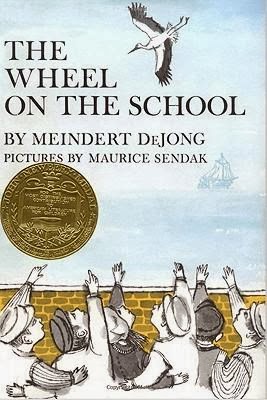
24. 'Wheel on the School' by Meindert DeJong

This 1955 Newbery Medal winner is one of my favourite books. Suitable for childrens aged 10-12. A story about how the children at a small Dutch school set out to get storks back to their village.

"Six school children bring the storks (harbingers of good luck) back to their little Dutch village. (A story) written with dramatic power and a deep insight into the minds and hearts of children".--Booklist. Newbery Medal; ALA Notable Children's Book.

25. 'The Phoenix and the Carpet' by E. Nesbitt


This wonderful novel for older readers deals with the Phoenix bird from Greek mythology that has the ability to come back to life after death. It does this by rising from the ashes after the burning of the egg from its predecessor.

The Phoenix and the Carpet is E. Nesbit's second fantasy novel and is the sequel to Five Children and It. From Robert, Anthea, Jane and Cyril's new nursery carpet there falls a mysterious egg which is hatched in the fire to reveal a benevolent, resourceful and ingenious Phoenix who explains that the carpet is possessed of magic qualities. And so begins a series of fantastic and bizarre adventures as the carpet transports the children and the Phoenix to places as diverse as a chilling French castle, a desert island and even the Phoenix Fire Insurance Company's offices, which the Phoenix believes to be a shrine for his followers.

26. 'Silly Birds' by Gregg Dreise (Magabala Books)


This is a charming and humorous morality tale published by an independent Aboriginal Company that aims to restore, preserve and maintain Aboriginal and Torres Strait Islander cultures. In this story, Maliyan, a proud eagle meets a turkey, Wagun, who is a silly bird. Together these two begin to do silly-bird things. The Elders and Maliyan’s parents are very disappointed, warning Maliyan that it’s hard to soar like an eagle when you are surrounded by turkeys. Maliyan sees the error of his ways and together with the other animals, works to clean up the mess wrought by too many silly birds. But some birds will always be silly.

27. 'Guardians of Ga'Hoole' by Kathryn Lasky (Scholastic)

These wonderful fantasy books have been written by Kathryn Lasky the Newbery Honour author of over one hundred fiction and nonfiction books. The series has a total of 18 books. It was intended to end in 2008 with the publication of The War of the Ember until a prequel The Rise of a Legend was published in 2013. There have now been a total of sixteen books. The first three books of the series were adapted into the animated 3D film Legend of the Guardians: The Owls of Ga'Hoole, directed by Zack Snyder.


28. 'Cockatoos' by Quentin Blake  (Red Fox Picture Books)

Ten very cleaver cockatoos take an absent minded Professor through a crazy adventure, through every room of the house. Readers will have fun looking for birds hiding in unlikely and unusual places. They will also count the elusive cockatoos. As always, Blake's illustrations are brilliant!

29. 'One Cool Friend' by Toni Buzzeo & illustrated by David Small (Penguin)

When well-mannered Elliot reluctantly visits the aquarium with his distractible father, he politely asks whether he can have a penguin, and then removes one from the penguin pool and places it in his backpack. The fun of caring for a penguin in a New England Victorian house is followed by a surprise revelation by Elliot's father. This is a Caldecott Honour Book


Summing up

I would love to hear from you about some of your favourite 'bird' books. Send me a comment with your ideas.

If you're interested in some non-fiction books on birds for children check out this great post from the 'Delightful Children's Books' blog (here).


Updated 12th April 2015

Friday, March 27, 2015

16 Holiday Activities that Stimulate Creativity & Learning

This is a revised version of a post I wrote a few years ago. As Australian schools prepare for the Easter holidays I thought I'd remind you of some well known activities that can reduce screen time and boredom when your kids have more time on their hand.

Parents who have children to care for might try some of the fifteen easy activities. All are fun, simple and can be done at home. Of course, while it's a post about holiday activities any of the ideas can also be used at other times.

For many parents holidays mean more hours to fill each day with activities that will keep your children occupied, stimulated and happy. I've written a number of posts in the past about things to do in the holidays with kids (here) and simple travel games to fill the time on trips with your children (here). There is also an excellent post on Planning With Kids that offers '10 Activities to Do With Kids at Home'.

I thought I'd offer my top 16 activities that can work inside and outside, in pretty much any type of weather. My criteria for choosing them are that the activities should:
  • Stimulate creativity
  • Encourage exploration and discovery
  • Involve using their hands as well as their minds
  • Encourage interaction between you and your children
  • Foster literacy development
  • Increase their knowledge
  • Keep them interested

Encourage your children to make a film


1. Use a simple animation app to get them started - This sounds a big deal but its not with the write app. I wrote a post about some wonderful apps for digital story telling a year or so ago (HERE). One of my favourites is 'Puppet Pals, for one thing, it's VERY easy to use. Your children will work it out in minutes. Puppet Pals is available as a free app for the iPod Touch, iPhone and iPad. It is essentially a simple way to create an animated movie using 'cut-out' themed characters and a variety of backdrops and scenes to create an animated 'puppet' play.

There is a free version that comes with Wild West backgrounds and actors.  However, you can also purchase different themes for $US0.99 or the 'Director's Cut' in which you can access all the themes for $US2.99. These allow you to obtain a range of additional scenarios and characters based on themes such as monsters, space, pirates, arthropod armada, Christmas and so on. You can even make your backdrops and characters.

This is a very simple to use app that provides very easy storyboarding. You can record dialogue, move characters around, create some simple effects, change backdrops and settings and characters. Below is an example that my eight year old grandson produced with little instruction and next to no preparation at his second attempt using the app. While ideally, before creating the animation, the writer/producer prepares plot summaries and story ideas, Jacob made this excellent animation as a first take. He used the 'Arthropod Armada' theme from 'Director's Cut'.

Puppet Pals is a wonderful resource for supporting story telling, writing, language development, creativity, and problem solving, while at the same time introducing them to film making and animation. I could see myself using a smartboard to collaboratively develop a story with my class before introducing individuals and groups to this smart little app.

Books with a difference

2. Pick some special books they haven't seen - try to borrow or buy at least 2 books for each child that you think they'll enjoy. Op shops, book exchanges and libraries are the place to start. See my post on book exchanges, op shops and web exchange sites here. Take your children with you to the op shop or library to choose them.

3. Books as a creative stimulus - While the shear joy of the book is usually enough, sometimes books can stimulate many wonderful creative activities. For example:

After reading Maurice Sendak's "Where the Wild Things are" go outside and dramatise it. Let one child be Max and let others take turns at being the wild things. Make a boat out of bits of wood, or even have a go at making one out of a large cardboard box (or several).

After reading Jeannie Baker's book "Where the Forest Meets the Sea" (a book about the Daintree Rainforest in which all the pictures are collage) encourage them to make a collage out of natural materials (and maybe some wool, straws etc to supplement) in response to Baker's pictures. Or read a second book and have them use collage in response.

After reading Graeme Base's "The Waterhole" get them to paint the waterhole (they can draw the animals, cut them out and paste them around the waterhole).

4. Dramatisation - Dramatisation is an excellent way to respond to a book. If you have a dress-up box all the better. Let your children either re-tell the story through dramatisation or improvise. Get involved to help set the pattern for turn taking etc. I play a mean wolf, and an even better Grandma!

Writing

5. Diaries and journals - Introduce older children to diaries or holiday journals. Make this fun, not a school activity. If they just want to make it a scrapbook by pasting in tickets, leaves they collect, food wrappers etc, then let them. But you can also show them how to create a travel diary.

6. A holiday blog - Tech savvy mums and dads might encourage their children to write online. Why not set up a family blog that can be read by friends and relatives (even if only for two weeks). You could use this as part of a trip away, or just use it at home. Older children could set up the blog themselves and all family members could contribute. Let them have access to a digital camera and a scanner and the sky is the limit. See my recent post on 'Children as bloggers' (here).

7. Start a family joke or riddle book - give them some jokes as models ("Knock, knock", "Why did the centipede cross the road"....)

Craft

8. Structured Craft ideas - simple beadwork, noodle craft, mask making, making plaster moulds (and painting them), anything for young children that requires paper tearing, gluing, glitter, stickers.

9. Unstructured creative craft - Stock up when you go to the supermarket with simple materials like paper plates (good for masks), brown paper bags, sticky tape, glue, cotton balls, tooth picks, paper cupcake holders, straws (cutting up and threading), noodles (for threading).

Creative Play

I've written a number of previous posts on play (here) but planning for play is important. While you can say to your children go outside and 'play', doing some simple planning at times will lead to more stimulating play times.

10. Dress-up box - If you don't have one take the kids to an Op shop to start one. You might even pick up some gems like old helmets, hats, belts (you can cut them down), handbags etc.

11. Water play - This is hard in cold weather, but maybe you could make bath-time special for littlies with extra bubbles, different stuff to take into it . In warmer weather give them a bucket of water and some things to scoop, sieve etc - obviously only UNDER SUPERVISION.

12. Play dough - You can buy cheap coloured modelling clay but home-made playdough works well. My wife 'Carmen's can't fail' recipe is 1 tablespoon of oil, 1 cup of plain flour, 0.5 cup of cooking salt, 2 tablespoons Cream of Tartar, 1 cup of water, colouring. Mix together and put in a saucepan on medium heat until it binds together, stirring all the time. Fold together by hand. If you keep it in a sealed plastic bag it will last for ages in or outside the fridge.

There are endless things to do with play dough. Try to move beyond just cutting out shapes (which kids still love). Encourage them to make a house, a farmyard, a bed, and an aquarium. Use some plastic animals with the play dough or small plastic people. If you don't mind tossing the play dough out you can let them use sticks, plants etc to make simple dioramas. Kids will create complex stories as they manipulate the play dough.

The blanket cubby!
13. Build a cubby house - No not with wood, just use a table, some chairs, wardrobes (hitch the blankets into the top of the doors, some pegs and sheets and blankets. By draping them over other objects you should be able to create a special space (about 2x2 metres is enough for three small kids). Try to get at least 1.5 metres of height. Have the kids 'help' and then get them to collect some special things to have in the cubby. Use a toy box for a table, some cushions to sit on. I always let my grandchildren have my cheap transistor radio from my shed (lots of fun). Girls might like a tea set; boys will collect animals and toys, both will like books. If you're up to it, climb in as well and read some stories. They'll like the edges tucked in to cut out light so you might need a torch. I've seen a cubby of this kind amuse kids for half a day. Then of course for the adventurous you can share some snack food as well. You can even build a cubby inside! See my post on cubbies (here).

Above: Jacob in a 'house' that he made (with help) from a box we saved

Indoor and back yard fun

14. Treasure hunts - Write the clues on paper using words and pictures depending on ages and make the treasure worthwhile (chocolate, a coupon for an ice cream in the kitchen etc). For something a little more challenging why not try a map with grid references (see picture opposite).

15. Cooking - Kids love cooking with their mothers or fathers. Do simple stuff. Nicole (Planning With Kids) has lots of great ideas for cooking with kids on her site. Don't forget to make it a language activity as well by getting them to follow the recipes.

16. Insect scavenger hunt - Try an insect scavenger hunt (one of my grandchildren's favourite activities). You'll be surprised just how many you can find. You'll to be careful turning rocks over and digging around, but even in Australia it's low risk if you supervise. Place a pile of bricks in a damp place and then let the kids help you to uncover them a few days later - watch the critters scurry. We always enjoy a good snail race afterwards!

A few basics hints
  • Have a strategy for the holidays - map out a timetable (post it on the wall) and try to plan a few significant events and think through the general structure of each day.
  • If you have younger children still at home, being joined by school kids on holidays, try to think about how you will cope with all their interests and think about varying daily routines a little.
  • Pace yourself - don't use all your best ideas in the first few days (you'll wear them and yourself out and you'll struggle to keep up the variation later).
  • Expect bad weather - think about some ideas that will work in rainy weather as well. It's called the "Law of Holidays" - expect lots of wet weather and a day or two of sick kids.

Thursday, March 19, 2015

Eight ways early writing reinforces reading

The desire to write starts early!
This is a revised version of a post that I did in 2013. I thought that I'd revisit it.


Children begin to write early - very early! In fact, they begin to make marks on their world as soon as they can dip fingers into food, water and dirt. Once they can hold a pencil or crayon they are ready to 'compose'! It is important that in the first two years of life that children are given the chance to experience writing. By this, I don't mean structured learning activities, I simply mean an encouragement to try to make marks that might just represent meaning. Very early on children will scribble or make marks and attribute meaning to it.

There are many simple ways to encourage children to write:


a) Provide them with varied writing implements and materials to write on.
b) Encourage them to try to write letters and words.
c) Let them see you writing words and letters.
d) Encourage them to write their name, numbers and letters.
e) Let them see you writing and reading words at the same time.

Rich experiences of early writing have an impact on language and learning generally, and certainly reading.   Offering rich early experiences for writing are as important as reading to and with your children. As well, children who have rich early reading experiences will often be more precocious as writers.  To illustrate the interrelatedness of all aspects of language and meaning making, I want to suggest eight ways that early writing reinforces reading.

Photo from TTALL Literacy Project
1. Being read to and reading oneself offers us a rich experience of story - I've written in other posts about the importance of story to life and learning (e.g. here). Harold Rosen once suggested that 'Narratives...make up the fabric of our lives...'.  Jerome Bruner and others have gone further to suggest that story is 'a fundamental mode of thought through which we construct our world or worlds.' And of course, story is fuel for writing.

2. Reading offers models for writing - Reading also introduces us to varied ways to share a story, and how to start a story and end it. It helps us to learn how to develop a character, the art of description, humour, rhyme and rhythm. Dr Seuss is a master at such lessons.

3.  Reading teaches us about 'readership' -When children begin to have books read to them, and later begin to read for themselves, they realize that these stories have been written for them, the reader. Good writing requires a sense of audience, and stories read teach this. When children begin receiving letters, cards, or simply being shown print in their world, they begin to grasp that language isn't just to be received, but can also be created and shared with others as a writer.  They also learn that if you write for readers, and receive responses, that this is enjoyable and strengthens relationships.

An early letter from Elsie

4. Reading enriches language - There is no doubt that reading feeds children's writing. It introduces children to new words, novel use for old words, and the very important need to 'play' with language if you are to be a successful writer. Robert Ingpen's book 'The Idle Bear' demonstrates this well. It is essentially a conversation between two bears but it is rich in language and metaphor. He starts this way:

"What kind of bear are you?" asked Ted
"I'm an idle Bear."
"But don't you have a name like me?"
"Yes, but my name is Teddy. All bears like us are called Teddy." 
Later in the story a very confused bear asks:

"Where do you come from, Ted?"
"From an idea," said Ted definitely.
"But ideas are not real, they are only made-up," said Teddy. "You have to come from somewhere real to have realitives."
"Not realitives, relatives!" said Ted trying to hide his confusion.

Elsie's TV instructions
5. Reading introduces us to varied written genres - While children experience story from a very young age, reading also introduces them to the fact that language can be represented in different genres. Through reading at home and within their immediate world, children quickly discover that people write and read lists, notes, labels on objects, poems, jokes, instructions, maps and so on. Parents read and point out these varied text forms and eventually children try to use them.

My granddaughter Elsie's 'TV Instructions' (left), written aged five years, is a priceless set of instructions that she wrote for her Nanna just before she went to bed, so that Nanna could watch her favourite programs while babysitting.

6. Reading helps us to understand the power of words - Stories and other texts quickly teach children that words can have power. Signs give clear instructions in powerful ways - 'STOP', 'BEWARE OF THE DOG', 'CHILDREN CROSSING', 'KEEP OUT'. But well-chosen words express emotions too - "I love you", "It was dark and scary". Children also discover that words can do other things. With help they will enjoy discovering language forms like onomatopoeia, e.g. atishoo, croak, woof, miaow, sizzle, rustle etc.


7. Reading offers us knowledge - Children also discover that reading offers us knowledge that can feed writing. Without content there won't be writing. Books can captivate children and offer new areas of learning and interest. As they are read books, they also learn about their world. For example, they might discover that trees don't just have green leaves, but sometimes these leaves change colour, fall off and create a habitat for many creatures. Trees drop seeds which animals eat, offer shelter for animals, material to build homes and so on. But they are also homes for elves and animals that talk, places where strange lands appear regularly, and where a lost dragon might rest. Reading feeds writing with knowledge as raw material for writing.


8. Reading helps us to imagine and think - As children are introduced to varied literary genres and traditions, imaginations are awakened to the realms of fantasy, time travel, recreation of life in other times, the perils of travel through space. But at a more realistic level, reading can help young writers to imagine childhood in other places and times, 'within' the bodies of other people and with varied life roles. Through reading, children are given the examples and the fuel to imagine and write about themselves in the shoes of others, sharing their life circumstances as well as their challenges, fears and hopes.

  You can read all my other posts on writing HERE

Thursday, March 12, 2015

Questions, Exploration & Learning

Children ask lots of questions. Sometimes their questions don’t move beyond repetitive “Why?” questions that can be annoying. But as well as helping them to learn, children's questions can also teach us a great deal about them and their learning. 

  • Children’s questions usually show us how keen they are to learn – We see that there are gaps in their knowledge, new areas of interest, & things that puzzle them.
  • Questions offer us a window into children’s learning – We discover what they are interested in, their learning styles, and how well they learn best.
  • Questions are also one way that children try to take control of their own learning - As they ask questions they try to set an agenda and focus for their learning.
  • Questions are a way for children to test their existing knowledge - They assess what they know and test their own hypotheses.
In short, questioning is a critical tool for children’s learning, and needs to be encouraged.


Above: One of my grandchildren discovers a pistol shrimp. This stimulated lots of questions!

1. How can I ask better questions to stimulate learning?

Questioning is a vital tool for parents and teachers. As well as answering questions, we should also try to ask a variety of questions, but NOT just to test learning. The best use of questions is when they are used to stimulate curiosity, problem solving, imagination, a quest for knowledge and as a result, learning. A good tool for asking better questions is a simple taxonomy. There are many ways to classify questions but Bloom's Taxonomy is still one of the most useful frameworks for helping us to get better at it. These include:

  • Questions that test knowledge or seek basic recall of knowledge – “Why might the pistol shrimp have one claw larger than the other?” “What did the first pig build his house from?
  • Questions that seek some level of interpretation – “If it was a sick or damaged claw how could we test this"? "How come Max's food was still hot when he went back to bed? (Where the Wild Things Are)"? “Why was Pinocchio sad?”
  • Questions that require application of knowledge or problem solving – “Okay, we've found three pistol shrimps with one big claw, what might the claw be for?" Why didn’t the stepmother let Cinderella go to the ball?
  • Questions that require analysis – “Where did we find the pistol shrimps? Why might they be living there"?Why do you think the 3rd little pig got up before the time he told the wolf?” “Was Fern’s father mean to want to kill Wilbur?
  • Questions that require synthesis of knowledge – "We've notice the clicking noise the pistol shrimp makes. What could this be for"? "So which animal sank the boat and how do you know (from 'Who Sank the Boat')?” “What do you think is going to happen when the 3rd Billy Goat crosses the bridge?
  • Questions that require some type of evaluation  (opinion, values, critique, judgement) – "Let's find some information on the pistol shrimp and test our answers to the last question. What is the claw all about and is their a link with where it lives?“ Was Max naughty"? "Should his mother have sent him to his room?
You can find a more detailed overview of Bloom's categories here.

2. How can I encourage children to ask questions? 
As I have already said above, it is important for children to make good use of questions. To help them learn what good questions are you can model questioning for them. There are a variety of ways that you can do this.

  • Ask questions of children that encourage learning and thinking
  • Avoid over-using questions that just test learning, or that simply channel learning in directions that you want it to go.
  • Try to give honest answers to children’s questions.
  • Don’t be frightened to say “I don’t know”, but use this to demonstrate that not knowing the answer should lead to further learning “Let’s try to find out…
  •  
In Australia we have a very funny advertisement for an Internet company that has a sequence of exchanges between a boy and his Dad. In one the boy is doing some research for school on China. He asks his Dad, “Dad, why did they build the Great Wall of China?

His Dad suggests, “That was during the reign of Emperor Nasi Goreng - to keep the rabbits out – too many rabbits in China”.

I'll say it again, we should never be afraid to say, “I’m not sure, but I’ll think about it and let you know” (view the video HERE).


3. Here are 4 strategies to help children ask better questions
 
I wrote a whole book about comprehension strategies some years ago ('Teaching Reading Comprehension: Meaning Makers at Work') but here are just four question strategies that can be adapted for use with children of varied ages. In these examples, I'm assuming a grade 5 (10-11 year-olds).


a) Question frameworks


Make a chart that has a simple framework for questing complete with examples. The one above based on Bloom's Taxonomy is an example. An even simpler example is one developed by Nila Banton Smith and has proven helpful for many teachers:

Literal - These ask for details or facts you can find in the text, e.g. 'What was the rat's name in Charlotte's Web?'
Interpretive - These require the reader to supply meaning not directly stated, e.g. 'Why did Fern's father want to kill the runt pig?'
Critical - These require the reader to evaluate something, e.g. 'Do you think Templeton was honest?'
Creative - These require readers to go beyond the text, to express new ideas, solve a problem etc, e.g. 'What other words might Charlotte have used in her web to save Wilbur?'

Use the chart to discuss the varied type of questions we can ask about stories, use the categories at times when asking questions of the class, model the varied forms in group work, and use them for some set work. I offer further information on the above questioning strategy in my book 'Balancing the Basics'.

b) Visual Comprehension

You can use images, cartoons or a short video segment to stimulate and model questioning. The example below shows how a simple template for group work can be used to direct attention at images and generate good questions and insights (see my post on 'Visual Comprehension' HERE). The grade 4 students were looking at a series of newspaper images.
  
c) Talk-to-the-author
 
I developed this strategy many years ago and wrote about it in 'Teaching Comprehension: Meaning Makers at Work'. It is a very simple strategy designed to get young readers thinking about the implied author and meaning that is beyond the literal. The technique is applied like this:

Step 1 - prepare some passages of 300-1000 words in length (from magazines, school readers, newspapers etc), or identify a passage in a class reader or book.
Step 2 - demonstrate the technique using a smartboard and explain that the idea of this technique is to encourage us to ask questions that we might ask if we had the author in the room.
Step 3 - have your class help you with a second passage on the smartboard.  
Step 4 - provide a passage and ask them to read, making note of at least 6 questions they might ask of the author and also at least 4 comments they might offer.

d) Character Interview

I developed this strategy while working with gifted children, but it can be used in any primary classroom. It requires readers to select a character from a book and interview them. You can do this in several ways. The simplest, and perhaps the best way to start this strategy, is to ask children in pairs to come up with ten questions that they would ask of a character in a story if they had the chance. They can then act this out with one being the interviewer and the other the character.
An alternative to the above is to have one student prepare a series of questions to which another student, filling the role of the character, has to answer. Once again, it is helpful to give some guidance about the need to ask varied questions that include interpretive, critical and creative questions, not just literal ones.

Other posts on comprehension

You might like to have a look at the following posts on comprehension:

'Teaching and Supporting Children's Reading Comprehension' (HERE)
'Reading to Learn Using Text Sets' (HERE)
'Improving Comprehension: Sketch to Stretch' (HERE)
'Improving Comprehension: Map Making' (HERE)
'Improving Comprehension: Advance Organisers' (HERE)
'Emergent Comprehension in Children Under Five' (HERE)

Friday, March 6, 2015

Non-fiction for Younger Readers: Five New Titles to Explore

I've reviewed lots of non-fiction books on this blog over the years. In this post I feature five books (three by the same author) for younger readers. All have some unique qualities.

1. 'Before After' by Anne-Margot Ramstein & Matthias Arégui (Walker Books)

Everyone knows that a tiny acorn grows into a mighty oak and a caterpillar becomes a butterfly. But in this clever, visually simple and yet stunning hardcover book, French artists Ramstein and Arégui do much more than offer a simple book of word concepts. They offer visual springboards to problem solving and imagination. The authors play with numerous hidden dimensions of one's view of the world. A view of a great mountain across fields can leave the fields as simple foreground, but what if the view of the mountain is from within the foliage that covers the ground? A rocket waiting on the launch pad is positioned next to a moonscape and offers a visual point of view across the moon's surface. A landscape that displays human footprints against a backdrop of a familiar distant planet. 

Turn a page and cooking ingredients sit next to a well decorated cake, and as we turn the page we encounter a mountain field complete with cow adjacent to a bottle of milk. The next double spread returns to the mountain field, but this time in the foreground we have an easel with a painting of the scene and the cow.

So the 'reader' is invited to contemplate how a cow can result in both a bottle of milk and a painting, an ape in a jungle may become an urban King Kong, a many-tiered cake is both created and eaten, a quill pen sits beside a typewriter, a pack of cards can transform into a pyramid and so on. These simple, graphic illustrations, gently tinted with pastel colours, will appeal to readers of all ages and will make them think and contemplate their world. This is a book that doesn't just explore the concepts of 'before' and 'after' it invites the 'reader' to reflect on time, perspective and reality. Readers aged 3 to 8 will be fascinated by this book.


2. 'Funny Faces' by Mark Norman (Black Dog Books)

Dr Norman is Head of Sciences at Museum Victoria where he leads the large and active natural sciences research team. He studies octopuses, squid, cuttlefishes and nautiluses (the cephalopods). He is also a trained teacher, an educational display designer and an experienced underwater cinematographer. His research and projects with documentary makers including BBC, National Geographic and Discovery Channel has covered giant squid, poisonous blue-ringed octopuses, huge aggregations of southern giant cuttlefish and diving surveys of remote Indo-Pacific coral reefs.

He has published a series of simple factual picture books framed by the word 'funny'. His first was 'Funny Bums' published in 2013. 'Funny Faces' is the second in the series. From oversized noses to bulging eyes, elaborate beaks to gigantic ears - the faces of some animals may look funny to us, but their peculiar features are exactly what those animals need to survive. Find out "Why the funny face?"

3. 'Funny Homes' by Mark Norman (Black Dog Books)

As with the first two books in this series Dr Norman  considers the complexity and beauty of the natural world, while at the same time considering its 'strangeness'. With his customary scientifically accurate and informative text, and stunning photographs, he invites us to explore aspects of the world around us. You see, some creatures live in funny places - prickly cactuses, dark caves, high treetops. These are strange places where humans would not survive for five minutes. Just why do these animals have such strange homes?


4. 'Funny Families' by Mark Norman (Black Dog Books)

The fourth book in Mark Norman's series has just been released in recent weeks, 'Funny Families'.

If you think your family is funny, imagine being a baby alligator carried around in its mother's mouth! Find out why some families of the animal world are so funny.

Inquisitive children and lovers of wildlife will enjoy this new title just as much as previous ones. As with the other titles they are suitable for readers aged 5-8 years.


 5. 'Australian Writers of Influence' by Bernadette Kelly (Black Dog Books)

Bernadette Kelly loves writing non-fiction and in this book she writes about writers. But not ordinary writers, she writes about some of our pioneers of poetry, plays and novels. They are all great names that many of us know by reputation and the odd work, but just how much do we know about these greats who have made their mark on our literary culture. These are the writers of the 19th century who influenced our grandparents and great grandparents.

With 200-400 word descriptions, beautiful illustrations and historic photographs and paintings, she makes us want to explore the great works of Adam Lindsay Gordon, Banjo Paterson, Miles Franklin, Henry Lawson, CJ Dennis, Mary Gilmore, May Gibbs and more. This book will be enjoyed by children aged 10 to 13 years. Suited ideally for use in classrooms, it will be a valuable resource and a good individual read for children who love literature.

The work has no doubt been a labour of love for Bernadette Kelly. In her words:

"Researching this book was a joy, and I learnt a lot in the process. The writers, poets and journalists of colonial and post-federation days in this country were a tough lot and they shared my love of words and stories. So it’s out there now. May it find its way into the hands of Australian history lovers and learners."