Saturday, August 28, 2010

Understanding and Developing Creativity

1. What is creativity?

I have written before about the way we define and develop creativity (here), and pointed out that can be defined in different ways. One commonly accepted definition is "...the capacity to use ideas and tools in unusual ways; and originality, the capacity to think of novel ideas and products" (Britannica).

Creativity can be assessed in many ways, which in turn is affected by how we define creativity. Since the 1950s when the work of E. Paul Torrance (here) emerged, there have been two main arenas for assessment - personality and cognitive abilities.

a) Personality

Brolin (1992 in Brolin & Rhyamar (1999) summarizes the personality characteristics of the creative person, and suggests they:
  • Have a strong sense of self and a desire for self-realisation
  • Show self-confidence
  • Are strongly motivated
  • Demonstrate endurance
  • Are intellectually curious
  • Are deeply committed to learning
  • Tend to be independent in thought and action
  • Show openness to impressions (internal and external)
  • Are attracted to complexity and obscurity
  • Are highly sensitive
  • Have a capacity for deep emotional involvement in their learning
b) Cognitive abilities

In terms of cognitive characteristics the creative person:
  • Is highly intuitive
  • Thinks in opposites and use analogies and metaphors
  • Shows originality with ideas
  • Demonstrates varied ways to mentally represent ideas
  • Has acute perception
  • Can solve problems in novel ways
  • Shows high levels of fluency (lots of ideas are generated)
  • Has the ability to elaborate on ideas
  • Is resistant to closing off possibilities for problem solving or finding solutions
The most widely used assessment tools over the last 50 years have been the Torrance Tasks that can be used from age 5 years to adulthood. They have both verbal and figural forms (where learners respond to abstract visual images).  In both verbal and visual tasks the scorer looks for the generation of more ideas, original ideas, and the ability to elaborate on ideas. Images also attract better scores if they tell a story, convey emotions, or see things from a different angle. The images below are an example of the stimulus images on the figural test. Points are lost for common responses to the image on the top left like 'a shark', 'a hat' and so on. But if the child shows a higher level of detail, relates to image to an object viewed from a different perspective, responds with humour and so on, they receive higher scores.


Above: Sample images from Torrance test

2. Is there a creativity crisis?

There have been some recent suggestions that there is a creativity crisis (see here) in some countries. Many of these claims blame educational curricula that focus too narrowly on skills, families that are too achievement focused, reductions in play in childhood and a related increase in 'screen time', and a lifestyle that is too time poor for adults and children.

Dr Kyung Hee Kim at the College of William & Mary has suggested that scores that relate to creativity on the Torrance Test have been steadily declining in the USA since 1990. The Torrance Tasks have been used widely across the world for over 50 years as a key indicator of creativity. Dr Kim examined almost 300,000 results for children and adults over the years and found that the scores had been increasing (as IQ scores have) for many years, but there was a plateau in the USA in 1990.  Since then, the scores have been in steady decline.

It's not certain that there is a 'creativity crisis' (I also discuss post here) but I am concerned that the many changes that we have seen in lifestyle in the last 20 years in developed countries, and the narrowing of curriculum might, well have an adverse effect on creativity. The latter is something that we should beware of in Australia as we head down the path of a National Curriculum (see previous post here).


Above: Making a boat on the beach for creative play

3. How do I know a child is creative?

While you can have your child tested to see if they demonstrate high levels of creativity, most teachers can tell quickly if a child seems more creative than other children. Parents sometimes find it hard to be objective, as they view constant progress in learning from birth to age 5. This normal (and quite remarkable development) can easily give all parents a sense that their child is highly intelligent and creative. Here are some questions that you might ask to determine if your child shows extra creativity:
Do they tend to come up with lots of ideas in response to verbal or visual cues?
Are their ideas different, quirky, 'outside the square'?
Do they look at things from different perspectives (e.g. draw an object from above rather than giving a side elevation)?
Do they suggest solutions to problems that surprise you because they are different or unusual?
Do they express themselves metaphorically or abstractly in play situations or in use of language and storytelling?
Do they find it easy to elaborate on the ideas of others (e.g. can progress shared oral storytelling in unusual directions)? 
Do they show an attention to fine detail in drawing and language?


Above: Jacob's drawing of a Blue Tongue lizard is drawn from the unusual perspective of "a predator flying above it"

4. What can you do to stimulate creativity?

a) General guidance

At a very general level there are some basic things that parents and teachers can do that will create a context conducive to creativity:
  • Allow ample time for structured and (particularly) unstructured play (see my previous post on 'Simple Play' here).
  • Limit the amount of 'screen' time for children whether TV, computers, gaming (previous post on TV here).
  • Provide rich firsthand experiences that encourage children to observe and respond (see previous post here).
  • Read to your children and fill their world with rich language (previous post here).
  • Play with language and story (previous posts here and here).
  • Encourage experimentation and discovery. 
  • Open up possibilities to your children through the use of open and varied questions (see previous post on questioning here).
  • Provide activities that can stimulate creative responses - dance, drama, music and art.
b) Specific approaches

There are four broad categories of approach employed by schools and other institutions:

'Creative Cycle' approaches (e.g. Guildford 1973 & Kessler 2000) - these offer an integrated approach to curriculum where teachers structure their programs and activities in such a way that they offer time for data gathering, stimulus and engagement; an opportunity for ideas to incubate; genuine inspiration. Under this heading come varied structured approaches to play, exploration and expression.

Strategy or technique approaches (e.g. De Bono's 'six hats', Craft's 'possibility thinking') - Such approaches offer frameworks to be applied to varied ideas and topics. They typically encourage learners to consider 'what if?' or the viewing of problems and situations from varied perspectives.

System or structural approaches (e.g. Reggio Emilia approach, 'open classrooms', Montessori) - such approaches require a more holistic planning of the curriculum and learning environment to privilege creative activities, integrated approaches, open plan classrooms, learning centres and so on.

Pedagogic approaches (e.g. 'Whole Language' approach) - there is some overlap with the above but the focus is much more on the individual child and the relevance of the curriculum for them. Such approaches stress the child's control and ownership of learning, relevance of learning to life experience, novelty, integration and innovations.  


5. Final advice for parents

The above is a simply a brief introduction to creativity. I haven't attempted to buy into the many academic arguments about the merits of the various approaches. In some cases, where the child is in childcare regularly, you might use the following to assess the childcare fort your child. I would offer the following suggestions:
Provide children time in the day to explore things motivated by their interests.
Give them a rich language environment where you read to them, and you provide lots of opportunities for writing and drawing (see my previous post on early writing).
Create a rich language environment where you talk with your child about their experiences (even passive activities like television).
Offer lots of creative activities that encourage personal expression and response.
Ask good and varied questions (why? what if? how about? could it? etc).
Offer as many rich experiences as possible including involving them in the everyday activities of life.
Other resources and posts

Ideas for assessment and instruction (here)
Newsweek article on 'crisis' in creativity (here)
An Analysis of Research and Literature on Creativity in Education, Anna Craft (here)
My previous post on 'Nurturing Creativity' (here)

Friday, August 20, 2010

2010 Australian Children's Book Council Awards Announced

The Children's Book Council Australia today announced the winners of its 2010 book of the year awards. This coincides with the start of Children's Book Week in Australia. 

The major awards have gone to:

Book of the Year for Older Readers - 'Jarvis 24' by David Metzenthen

Book of the Year for Younger Readers - 'Darius Bell And The Glitter Pool' by Odo Hirsch

Picture Book of the Year - 'The Hero Of Little Street' by Gregory Rogers

Early Childhood Book of the Year - 'Bear And Chook By The Sea' by Lisa Shanahan and Emma Quay

Eve Pownall award for Best Information Book - Australian Backyard Explorer by Peter Macinnis

The full list of all the winning and honoured books and some short reviews follows.

1. Older Readers (Mature readers, aged 12 plus)

a) Winner 

'Jarvis 24' by David Metzenthen (Penguin Group Australia)

Marc E. Jarvis lives a comfortable life in suburban Camberwell (Victoria). But suddenly life becomes complicated. Life is being crowded in by work experience at a used car yard, football training, and then a girl comes into his life. Electra, is gorgeous, as well as a brilliant runner. Probably out of his league, but why not give it a try. She arrives in Melbourne on a sports scholarship and sends Marc's life into a spin. Metzenthen has written a story rich in the strength of its characters. Urban teenagers will recognise the urban places, the life and the people that go with it. The story has a good balance of humour and emotional depth. It should be enjoyed by many teenagers.

b) Honour Books 
'The Winds of Heaven', by Judith Clarke

"An unforgettable and deeply moving story of two young women, and how their childhood experiences and the choices they make as teenagers determine their fates - told exquisitely by the acclaimed writer, Judith Clarke."

'A Small Free Kiss in the Dark', by Glenda Millard

"Two young boys, an old tramp, a beautiful lost dancer and her baby - rag-tag survivors of a sudden war - form a fragile family holding together in the remnants of a fun fair. This is a vivid, poetic story about life in the margins and the power of empathy and imagination to triumph over adversity."

2. Younger Readers (Independent readers, 7-11 years)

a) Winner

'Darius Bell And The Glitter Pool' by Odo Hirsch (Allen & Unwin)

The Bell family is in danger of losing their honourable name. Can Darius step up to the challenge and uphold it? 

"The Bell family's ancestors were showered with honours, gifts and grants of land. In exchange, they have bestowed a Gift, once every 25 years, on the town. The Gifts have ranged from a statue to a bell tower with stained-glass windows, but now it's Darius's father's turn - and there is no money for an impressive gift. It looks as though a wheelbarrow full of vegetables is the best they can do. Darius is determined to preserve the family honour, and when an earthquake reveals a glorious cave, with the most beautiful minerals lining the walls, he thinks he's found the answer..."

b) Honour Books

'Pearl Verses the World' by Sally Murphy (Walker Books)

Pearl is a girl of (perhaps) 6-8 years who is alone and left out of the many groups that she observes around her and which don't seem to see her. She laments, "wherever I am no one sees me".

A bright and creative child she struggles to write the verse that her teacher requests; verse that must rhyme. Why does a poem have to rhyme she muses? She lives at home with her mother and Granny. That's been her household for as long as she can remember. But Granny who has always been there for her is aging. As she reaches her last days Pearl finally finds inspiration to write a special poem, from the heart, 'taught' to her by her Granny that defies her teacher's ideas on poetry and opens her eyes to see Pearl at last. This is a beautiful story for young readers aged 6-8. Essentially a short novel it also has Heather Potter's delightful illustrations 'sprinkled' throughout. I love this book!

'Running with the Horses', by Alison Lester (Viking, Penguin Group Australia)

Young readers will love this beautifully illustrated classic story of adventure and friendship from one of our best author/illustrators.

"Ten-year-old Nina lives with her father above the palace stables at the Royal Academy of Dancing Horses.  She loves watching the famous white stallions as they parade for the crowds, but her favourite horse is an ordinary mare called Zelda - an old cab horse Nina often pats on her way home from school.

When Nina's world changes dramatically, she and her father have to flee from the city.  Their journey over the mountains with Zelda and the stallions seems impossible, with danger at every turn . . ."


3. Early Childhood (Pre-reading to early reading stage)

'Bear And Chook By The Sea' by Lisa Shanahan and Emma Quay (Lothian Children’s Books, Hachette)

"In a follow-up to the delightful Bear and Chook, the two lovable characters continue their adventures. Bear and Chook are unexpected friends. Bear still likes adventure and Chook would still much rather have the quiet life! One day they decide to go and visit the sea. Chook is worried that they don't know the way and will get lost, but Bear is confident they will find it just around the pond, under the bridge, through the forest and over the mountain! A wonderfully warm read-aloud story about the dreamers in life and those who wish they'd sometimes keep their feet more firmly on the ground."

b) Honour Book 

'Kip' (Windy Hollow Books) was written and illustrated by Christina Booth. Right from the time he emerged from the egg, Kip was going to be a special chick. When he grew to be a rooster, with a crow that could wake the dead, there was bound to be trouble. First Mr James was disturbed from his sleep - "Keep him quiet Mrs Bea"! Then Kip disturbs little Lucy Cooper's cup of tea in the garden. One by one the neighbours complain until Mrs Bea has to do it; she heads for the farm. You'll need to read the book to find out what happens to the neighbourhood in its life after Kip.  A wonderfully simple predictable text that is delightfully illustrated in a bright cartoon style. It will delight readers from preschool to 6 years of age. 

'Clancy & Millie and the Very Fine House' (Little Hare Books) is written by Libby Gleeson and illustrated by Freya Blackwood.  Clancy has just moved and is missing his old cosy and familiar home. He finds his new house much too big, different and lonely. It seems like he will never be able to feel like it is his home? And then one day Clancy hears a small voice from over the fence and soon, with the help of his new friend Millie, they are building box towers to the sky. Together Clancy and Millie build a friendship and a new 'home' that Clancy thought he had lost forever. Libby Gleeson is better known for her novels, but this is a an excellent story illustrated by a brilliant artist who looks set to be awarded one way or another in 2010.

4. Picture Book of the Year (Birth to 18 years)

a) Winner

'The Hero of Little Street' (Allen & Unwin) by Gregory Rogers is book three in the 'Boy Bear' series and follows the two previously highly acclaimed wordless picture books 'The Boy, the Bear, the Baron, the Bard' and 'Midsummer Knight'. The Boy escapes a gang of bullies by running into the perfect hiding place - a gallery filled with mystery and treasures. The Boy befriends a mischievous dog and is enchanted by the magic of painting. He finds himself venturing into the world of a Vermeer painting and is transported to Delft in seventeenth century. But there are many dangers on these old streets and he needs to use his wits to rescue his new friend from the butcher's chopping block. All three 'Boy' books are brilliant wordless tales in the same league as Raymond Brigg's 'When the Wind Blows'.  Readers of the first two Boy books will enjoy looking for the characters from the previous books as they follow this new time slip adventure.

b) Honour Books 

'Fox and Fine Feathers', by Narelle Oliver (Omnibus Books, Scholastic Australia)

"Lyrebird, Coucal, Pitta and Nightjar are ground birds of the Australian forest floor. Although as different from each other as it is possible to be, they always watch out for danger and warn each other to hide. One day, Lyrebird, Coucal and Pitta are preening and performing and forget to look out for wily Fox. Only Nightjar, with his patchy, dull feathers, is on watch for danger. Can he warn the others in time?" 

'Isabella's Garden', written by Glenda Millard and illustrated Rebecca Cool (Walker Books) 

"A lyrical picture book which explores the growth and continual change that goes on in Isabella's garden - the flourishing of plants; the coming and going of the animals, insects and seasons - beginning and ending with the seeds that 'slept in the soil all dark and deep'."

5. Eve Pownall Award for Information Book of the Year 2009 (Birth to 18 years)

a) Winner

'Australian Backyard Explorer' by Peter Macinnis (National Library of Australia)

"Australian Backyard Explorer tells the stories of many intrepid individuals who explored the Australian continent in the first 120 years of European settlement. It includes little-known explorers as well as the old favourites, such as James Cook, Edward John Eyre, Robert O'Hara Burke and William John Wills. There are tales not only of tragedy, conflict and death, but also of loyalty, amazing perseverance and wonder over the new animals and landscapes they encountered."

b) Honour Books 

'Maralinga', by the Yalata & Oak communities with Christobel Mattingley. In the words of the Indigenous people who are the traditional owners of Maralinga (a region used for atomic testing in the 1950s?),  "The Anangu Story is our story. We have told it for our children, our grandchildren and their children. We have told it for you."  In words and pictures Yalata and Oak Valley community members, with author Christobel Mattingley, describe what happened in the Maralinga Tjarutja lands of South Australia before the bombs and after. This is an important and tragic account of human folly and its consequence for a people who were there first, but whose needs counted for little.

'Polar Eyes: A Journey to Antarctica', written by Tanya Patrick and illustrated by Nicholas Hutcheson (CSIRO)

"Where do penguins go to dance? What is it like to sleep in an igloo? And have you ever wondered how ancient ice can be used as a time machine? Discover the answers and more in Polar Eyes, a new interactive children’s book about Antarctica from CSIRO. Polar Eyes illustrates author Tanya Patrick’s journey through the scenes and science of one of the most fascinating parts of the planet."

Related Posts

You can read my review of the complete Shortlist and Notable Books lists HERE

All previous posts on awards (HERE)

Friday, August 13, 2010

250 Great Children's Books

A couple of months ago I wrote a post on the 'Top 100 Children's Books' in which I offered to produce a list of over 200 of my favourite children's books. I asked readers of this blog to contribute. I want to thank Marita, Sandy, Prue and Robyn for offering some of their favourites.

Coming up with a list of books for children is always risky. How do you judge it? Your personal preference as an adult reader? The popularity of the books with children? Longevity? How have I chosen these books:

  • They have been loved by children and adults – sometimes more by one group than the other. But each of the books on the list has been popular with children.
  • They have quality of language, story, illustrations (in the case of picture books).
  • They make you want to turn the page.
  • They say something significant (literature should have worthwhile content – it teaches – see my earlier post on this)
The next difficulty is allocating an age level. Some of the books in one age category can be read by children of different ages depending on their ability and maturity. A book like ‘Charlotte’s Web’ can be read to or by children of any age and enjoyed.

The list is not meant to be comprehensive. In fact, the list slanted to the 0-12 years age group so I have less adolescent literature. Rather than to try to list every great book, I’ve tried to give a flavour of the varied authors, styles and topics that great books cover. You should use the list to find other books by the same authors. For example, I could have listed all of Bill Peet’s books. The same could be said for many other authors on this list. Search out other titles by tried and tested authors who are represented on this list.

1. Books for Preschoolers (to be read to and with children aged 0-4 years)

'All the World' illustrated by Marla Frazee, written by Liz Garton
'Battles in the Bath' by Peter Pavey
'Bears in the Night' by Stan and Jan Berenstein
'Belinda' by Pamela Allen
'Brown Bear, Brown Bear, What do you see?' by Bill Martin, Jr.
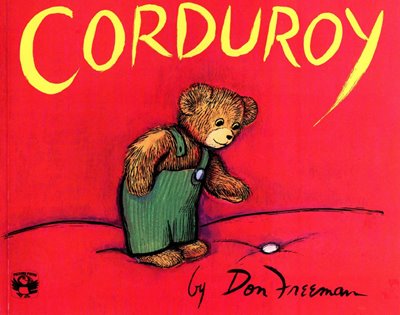
'Corduroy' by Don Freeman
'Do You Know What Grandad Did?' By Brian Smith
'Dog In, Cat Out' by Gillian Rubenstein
'Don’t Forget the Bacon' by Pat Hutchins
'Duckat' by Gaelyn Gordon
'Each Peach Pear Plum' by Janet and Allen Ahlberg
'Edward the Emu' by Sheena Knowles
'Edwina the Emu' by Sheena Knowles
'Goodnight Moon' by Margaret Wise Brown
'Grandpa and Thomas' by Pamela Allen
'Guess How Much I Love You' by Sam McBratney
'Hattie and the Fox' by Mem Fox
'Looking for Crabs' by Bruce Whately
'Mister Magnolia' by Quentin Blake
'Mother, Mother, I Want Another' by Maria Polushkin Robbins
'My Dad' by Anthony Browne
'One Hungry Spider' by Jeannie Baker
'One Dragon’s Dream' by Peter Pavey
'Peepo' by Janet and Allen Ahlberg
'The Green Umbrella' by Pamella Allen
'The Lion & Mouse' by Jerry Pinkey
'The Mitten' by Alvin Tresselt
'The Rainbow Fish' by Marcus Pfister
'The Runaway Bunny' by Margaret Wise
'The Singing Hat' by Tohby Riddle
'The Snowy Day' by Ezra Jack Keats
'The Story of Chicken Licken' by Jan Ormerod
'The Trouble with Dad' by Babette Cole
'The Trouble with Mum' by Babette Cole
'The Waterhole' by Graeme Base
'The Very Hungry Caterpillar' by Eric Carle
'Time for Bed' by Mem Fox
‘When I'm Feeling' range of books by Trace Moroney

2. Books for Children Ages 4-7 (suitable to be read to younger readers or read by beginning readers)

‘A.B. Paterson’s Mulga Bill’s Bicycle’ by Kilmeny & Deborah Niland
'Alexander and the Terrible, Horrible, No Good, Very Bad Day' by Judith Viorst
'Amazing Grace' by Mary Hoffman
'Amelia Bedelia' by Peggy Parish
'Animalia' by Graeme Base
'Aranea: A Story About a Spider' by Jenny Wagner
'Are You My Mother?' by Philip D. Eastman
‘Arthur’ series by Marc Tolon Brown
'Basil of Baker Street' by Eve Titus
'Caps for Sale' by Esphyr Slobodkina
'Chicka Chicka Boom Boom' by John Archambault
'Clifford, the Big Red Dog' by Norman Bridwell
'Complete Adventures of Blinky Bill' by Dorothy Wall
'Counting on Frank' by Rod Clement
'Cowardly Clyde' by Bill Peet
'Curious George' by Hans Augusto Rey
'Fancy Nancy' by Jane O'Conner
'Fantastic Mr Fox' by Roald Dahl
'Fox in Socks' by Dr Seuss
'Granpa' by John Burningham
'Green Eggs and Ham' by Dr. Seuss
'Horton Hatches the Egg' by Dr. Seuss
'How the Grinch Stole Christmas' by Dr Seuss
'Hubert’s Hair-raising Adventure' by Bill Peet
'If You Give a Mouse a Cookie' by Laura Joffe Numeroff
'In My Back Yard' by Nette Hilton & Anne Spudvilas
'Irving the Magician' by Tohby
'John Brown, Rose and the Midnight Cat' by Jenny Wagner
'Jumanji' by Chris Van Allsburg
'Lester and Clyde' by James Reece
'Lilly's Purple Plastic Purse' by Kevin Henkes
'Love You Forever' by Robert N. Munsch
'Make Way for Ducklings' by Robert McCloskey
'My Hiroshima' by Junko Morimoto
'No Kiss for Mother' by Tomi Ungerer
‘Oh, The Places You'll Go’ by Dr. Seuss
'Petunia' by Roger Duvoisin
'Red Sings from Treetops: A Year of Colors' by Joyce Sidman
'Snugglepot and Cuddlepie' by May Gibbs
'Stellaluna' by Janell Cannon
'Strega Nona' by Tomie De Paola
'Sunshine' by Jan Ormerod
'Sylvester and the Magic Pebble' by William Steig
'Tale of Despereaux' by Kate DiCamillo                 
'The Art Lesson' by Tomie De Paola
'The Banana Bird and the Snake Men' by Percy Trezise and Dick Roughsey
'The Bears’ ABC Book' by Robin & Jocelyn Wild
'The Cat in the Hat' by Dr. Seuss
'The Complete Adventures of Peter Rabbit' by Beatrix Potter
‘The Complete Tales of Winnie the Pooh’ by A. A. Milne
'The Digging-est Dog' by Al Perkins
'The Eleventh Hour' by Graeme Base
'The Enchanted Wood' by Enid Blyton
'The Fisherman and the Theefyspray' by Jane Tanner
'The Giving Tree' by Shel Silverstein
'The Jolly Postman or Other People’s Letters' by Janet & Allen Ahlberg
'The Lighthouse Keeper’s Lunch' by Ronda & David Armitage
'The Little Engine That Could' by Watty Piper
'The Little House' by Virginia Lee Burton
'The Lorax' by Dr. Seuss
'The Magic Pudding' by Norman Lindsay
'The Napping House' by Audrey Wood
'The Paper Bag Princess' by Robert N. Munsch
'The Polar Express' by Chris Van Allsburg
'The Rainbow Serpent' by Dick Roughsey
'The Story of Ferdinand' by Munro Leaf
'The Tale of Peter Rabbit' by Beatrix Potter
‘The True Story of the Three Little Pigs’ by Jon Scieszka
‘The Story of Shy the Platypus’ by Leslie Rees
'The Velveteen Rabbit' by Margery Williams
'Tough Boris' by Mem Fox
'What Made Tiddalik Laugh' by Joanna Troughton
'Wheel on the Chimney' by Margaret Wise Brown
'Where’s Julius' by John Burningham

'Where the Forest Meets the Sea' by Jeannie Baker
‘Where the Sidewalk Ends: the Poems and Drawing of Shel Silverstein’ by Shel Silverstein
'Where the Wild Things Are' by Maurice Sendak
'Whistle Up the Chimney' by Nan Hunt
'Wilfrid Gordon McDonald Partridge' by Mem Fox


3. Books for Children Ages 8-10 (many of these books can be read to children aged 6-8 or can be read by most children aged 9-10 years)

'A Dream of Stars' by Brian Caswell
'A Light in the Attic' by Shel Silverstein
'A Little Fear' by Patricia Wrightson
'Anne of Green Gables 'by Lucy Maud Montgomery
'A Wrinkle in Time' by Madeleine L'Engle
'Callie’s Castle' by Ruth Park
'Charlie and the Chocolate Factory' by Roald Dahl
'Charlotte's Web' by E. B. White
'Chronicles of Ancient Darkness' by Michelle Paver
'Dirty Beasts' by Roald Dahl
'Grandma Cadbury’s Trucking Tales' by Dianne Bates
'Harriet the Spy' by Louise Fitzhugh
'Harry Potter' series by J.K Rowling
'Hatchet' by Gary Paulsen
'Island of the Blue Dolphins' by Scott O'Dell
'James and the Giant Peach' by Roald Dahl
'Jodie’s Journey' by Colin Thiele
'Little House in the Big Woods' by Laura Ingalls Wilder
'Little House on the Prairie' by Laura Ingalls Wilder
'Little Women' by Louisa May Alcott
'Maniac Magee' by Jerry Spinelli
'Matilda' by Roald Dahl
'Mike' by Brian Caswell
'Mr. Popper's Penguins' by Richard Atwater

'Mrs. Frisby and the Rats of Nimh' by Robert C. O'Brien
'My Father's Dragon' by Ruth Stiles Gannett
'Paw Thing' by Paul Jennings
'Pippi Longstocking' by Astrid Lindgren
'Rabbit Hill' by Robert Lawson
'Ramona Quimby, Age 8' by Beverly Cleary
'Revolting Rhymes' by Roald Dahl
‘Rowan of Rin' series by Emily Rodda
'Sarah, Plain and Tall' by Patricia MacLachlan
'Shiloh' by Phyllis Reynolds Naylor
'Sideways Stories from Wayside School' by Louis Sachar
'Stone Fox' by John Reynolds Gardiner
'Stuart Little' by E. B. White
'Tales of a Fourth Grade Nothing' by Judy Blume
'The 27th Annual African Hippopotamus Race' by Morris Lurie
'The Arrival' by Shaun Tan
'The Best Christmas Pageant Ever' by Barbara Robinson
'The BFG' by Roald Dahl
'The Borrowers' by Mary Norton
'The Boxcar Children' by Gertrude Chandler Warner
'The Chronicles of Narnia' by C. S. Lewis
'The Eighteenth Emergency' by Betsy Byars
'The Evolution of Calpurnia Tate' by Jacqueline Kelly
'The Giver' by Lois Lowry
'The Giving Tree' by Shel Silverstein
'The Great Gilly Hopkins' by Katherine Paterson
'The Indian in the Cupboard' by Lynne Reid Banks
'The Iron Man' by Ted Hughes
'The Jungle Books' by Rudyard Kipling
'The Lion, the Witch, and the Wardrobe' by C. S. Lewis
'The Phantom Tollbooth' by Norton Juster
'The Pinballs' by Betsy Byars
'The Secret Garden' by Frances Hodgson Burnett
'The Shrinking of Treehorn' by Florence Parry Heide
'The Super-Roo of Mungalongaloo' by Osmar White
'The Trumpet of the Swan' by E. B. White
'The Village Dinosaur' by Phyllis Arkle
'Tuck Everlasting' by Natalie Babbitt
'The Watsons Go to Birmingham-1963' by Christopher Paul Curtis
'The Wind in the Willows' by Kenneth Grahame
'The Witch of Blackbird Pond' by Elizabeth George Speare
'Walk Two Moons' by Sharon Creech
'Where the Mountain Meets the Moon' written by Grace Lin
'Where the Sidewalk Ends: the Poems and Drawing of Shel Silverstein' by Shel Silverstein

4. Books for children aged 10-13+

'Boy' by Roald Dahl
'Bridge to Terabithia' by Katherine Paterson
'Curious Incident of the Dog in the Night' by Mark Haddon
'Deltora Quest' series by Emily Rodda
'Dragonkeeper' trilogy by Carole Wilkinson
'Goodnight Mister Tom' by Michelle Magorian
'Lord of the Rings' by JR Tolkien
'Merryll of the Stones' by Brian Caswell
'Nargun and the Stars' by Patricia Wrightson
'Number the Stars' by Lois Lowry
'Old Kingdom' series by Garth Nix
'Playing Beattie Bow' by Ruth Park
'Roll of Thunder, Hear My Cry' by Mildred D. Taylor
'Slave Girl: The Diary of Clotee, Virginia, USA 1859' by Patricia McKissack
‘Strange Objects’ by Gary Crew
'Summer of My German Soldier' by Bette Greene
'The Hobbit' by JR Tolkein
'The Fire in the Stone' by Colin Thiele
'The Ice is Coming' by Patricia Wrightson
'The Graveyard Book' by Neil Gaiman
'The Machine Gunners' by Robert Westall
'The Princess Bride' by William Goldman
'The Stone Quartet' by Alan Garner
'The Wheel on the Schoo'l by Meindert DeJong
'Thunderwith' by Libby Hathorn
'When Hitler Stole Pink Rabbit' by Judith Kerr
'When You Reach Me' by Rebecca Stead
'Wizard of Earthsea' trilogy by Ursula Le Guin

Other resources

You can find many other lists on this blog that are gouped in various ways. For example:

My 'Author Focus' series allows you to consider the books of well-known authors HERE
My 'Key Themes' in children's literature can help you to find books on 'death', the 'environment', 'conquering fears' and so on. The link is HERE
You can look at Children's Literature award list HERE
You can look at books for Boys (HERE) and Girls (HERE)

Friday, August 6, 2010

Digital Storytelling

What is Digital Storytelling?

Digital Storytelling is a relatively new term that has varied meanings. It began as a way for people to tell their personal stories and family histories. They combine relatively simple texts with images and sometimes videos that the author has often created along with the texts. Their purpose was initially to inform, as therapy, as creative expression, as part of local histories, and so on.

They are usually short, taking just 2-5 minutes to view, read and listen to. They are real stories told in your words and usually using your own voice.

But as the idea has been embraced it has been adapted to suits varied purposes and creators. In spite of this, the common elements are:
  • It is a form of storytelling
  • They are authentic creations
  • They use images in association with print and sound
  • They are published digitally
Just like the illustrations in a good picture book or graphic novel, the digital resources used in association with words are very important in a digital story and include:
  • Still photos
  • Scanned images and documents
  • Short videos
  • Music
  • Sound effects
How are they made?

Essentially, digital stories are short movies produced on inexpensive and readily available equipment:
  • Home computer
  • Computer video programs like iMovie (Macintosh) or MovieMaker (Windows)
  • Digital recorder
  • Hand held video camera or phone with built-in video
  • Digital camera
  • Digital scanner

Of course, you don't need all of the above, you could get started with a digital camera or video and a computer.

Once completed the digital stories can be uploaded to websites, blogs, burned onto DVDs and shared with others, projected onto a television screen, or viewed on your computer, viewed in a school hall by large audiences, or given to parents and other interested audiences.


What are the advantages of Digital Storytelling?

There are many good things about digital storytelling that relate to the creators and the community of interest in which they are shared. Creators are able to:
Use word, image and sound to communicate powerful and effective stories.
Publish their digital stories to wider audiences that can have access anywhere around the world.
Extend their network of relationships as they share their work with others and cooperate with others on joint projects.
Learn to comprehend and use images as well as words to communicate.
Learns new things whether the creators, collaborators or the audiences for the digital stories.
Ideas for Digital Storytelling

You might try one of the following ideas for digital storytelling:

Have students choose a person and simply tell their story in 10 pictures and with 10 associate text segments. This can be a famous person, or someone known to them.

Interview someone about something and take photos to support the story.

Have the students choose three people to talk about the same incident or experience, for example, a recent climatic event like a storm or fire, a sporting event, or the childhood memories of play for a sibling or fellow student, their mother or father and a grandparent.

Create a series of drawings, pictures or collages and use these as the visuals for a story that they tell in spoken and/or written word.

Do a web search and capture images that relate to a significant event (e.g. an environmental disaster or an historical event) then retell the event in words and images.

Have children collect a sample of photographs that sample their life span and tell their own story.

Retell a well-known picture book with a twist in the plot, a change in characters, a shift in time or setting and their own illustrations to support their text. 

Use modelling clay, play dough or even Lego or other construction toys to create a series of characters to support a story - use and manipulate the 3D models and photograph them or video them to help tell the story.

Above: These storyboards were created by individual students then put together by the teacher into a digital story

Create a group or class digital story that is based on a common narrative storyline that is then told using story boards that different children make and are then photographed or used with video technology to present the story in image, word and sound.

As well the above story-based ideas some teachers have been using the same concept of the storyboard for science, social science, history, in fact any school subject, as a tool for learning and communication. 


Examples of Digital Storytelling

Because Digital Storytelling is a relatively new activity, there are few good examples available with younger children because the earliest work in this genre has been with adults and high school children.  However, the following examples should give some sense of the possibilities.


Above: The story of 'Intelligence and Luck' is an excellent example of how well written text supported by the most simple of sketches can be very meaningful


Above: 'Mongolia for Mongolians' is an excellent example from senior High School students of an account of their experience of Mongolia


Above: This is an excellent video that tells how one 3rd Grade teacher taught her children to make digital stories

Hopefully, some of these examples will get you started if you haven't already attempted digital storytelling. Have a look at the resources below. There are a couple of good kids examples on the site promoting Lisa Miller's new book (link below).


Useful Resources

The 'Center for Digital Storytelling' has been a key resource for ideas on digital storytelling (HERE)
Lisa Miller has written a very practical book that has just been released 'Make Me a Story' (HERE)
Edutopia has a helpful online piece- 'How to use Digital Storytelling in the Classroom' (HERE)
The 'Digitales' site offers a lot of good technical advice (HERE)

Thursday, July 29, 2010

Notable Children's Poetry Books in 2010

The Children's Literature Assembly (CLA) of the National Council of Teachers of English (NCTE) in the USA exists to promote the centrality of literature for teaching children. Each year it publishes a list of 'Notable Children's Books' in 5 categories - poetry, historical and realistic fiction, fantasy/folklore, information books (including biography and autobiography), and picture books. The 2010 list was released recently (here). Rather than reviewing all five categories I thought that I'd focus on the poetry books.

The award committee reviewed approximately 90 books before naming 8 books as notable.  They have also listed a further 12 books in a recent review in the NCTE journal Language Arts.  One definition of poetry is that "it is an imaginative awareness of experience expressed through meaning, sound, and rhythmic language choices so as to evoke an emotional response".  However, the committee defines poetry more broadly in this way:

"Poetry is words and phrases that stretch our imaginations and make us dream of impossible things or unlikely worlds."

No matter how we define it, poetry can be enjoyed by people of all ages; and poetry for children, if written well, can be enjoyed just as much by the 80 year old as the 8 year old. The list of notable poetry books is a wonderful collection of varied ways to draw together a collection of poems. Some are written by a single poet, others are written by many poets, one is an illustrated version of a well-known poem written almost 90 years ago and all use varied poetic forms.

The 2010 Notables

1. Dinothesaurus: Prehistoric Poems and Paintings (2009) by Douglas Florian. New York: Simon & Schuster.

This is a collection of 20 poems about dinosaurs, including 'Tyrannosaurus Rex', 'Spinosaurus', 'Seismosaurus' and even the 'Minmi'. Now I grew up near the town of Minmi in the state of New South Wales Australia, but this dinosaur was first found near Minmi Crossing in the state of Queensland. "What's the Minmi's BIGGEST claim to fame? It has the smallest dinosaur name".  Any boy (or girl for that matter) will love these poems and the beautiful illustrations that use collage, coloured pencils, dust, stamps and brown paper. 


2. Falling Down the Page: A Book of List Poems (2009) by Georgia Heard. New York: Roaring Brook Press.

This novel book consists of 32 list poems by 24 separate poets.  It covers topics as diverse as the seasons, shooting stars and frogs.  The book was inspired by Walt Whitman’s famous list poem, “Song of Myself”. The collection parallels the school year and the school day with poems that children will relate to whether reading them or listening to them.  Here's one in the collection by Georgia Heard, the compiler of the collection.


'Recipe for Writing An Autumn Poem'
by Georgia Heard

One teaspoon wild geese.
One tablespoon red kite.
One cup wind song.
One pint trembling leaves.
One quart darkening sky.
One gallon north wind.


3. The Tree that Time Built (2009) by Mary Ann Hoberman and Linda Winston. Illustrated by Barbara Fortin. Naperville, IL: Sourcebooks.

This unusual book manages to combine poetry and science. It offers a perspective from the planet's beginnings millions of years ago, through the age of dinosaurs right to the present. It uses an evolutionary cycle to tell the story of Darwin and his theories in poetic form. It was published in the bicentennial year of Darwin's birth. It contains over 100 poems and is accompanied by a CD with 44 poems read by 20 poets.

4.  My People (2009) by Langston Hughes. Illustrated by Charles R. Smith, Jr. New York: Simon & Schuster.

This book is based on the famous poem written by James Mercer Langston Hughes (1902-1967), the African American poet, novelist and playwright, short story writer and columnist. This 33 word poem was first published in 1923. Charles Smith (who is a photographer and poet) decided to produce a modern illustrated edition of the poem for children and was inspired both by the poem and Langston's reason for writing it. In the Afterword to the book, Smith shares that "Langston wrote the poem to celebrate the pride he had for his black brothers and sisters in the late 1920s, when blacks were not acknowledged much in society”. Here it is:

The night is beautiful,
So the faces of my people.
The stars are beautiful,
So the eyes of my people
Beautiful, also, is the sun.
Beautiful, also, are the souls of my people.

The design of the book is very effective. It consists of double-page spreads that have a black background and contain a brief segment of the poem in large letters (mostly a tan colour) and photographs. These are typically lively and sepia-toned close-up images of people. The focus is always on the faces of real people that project varied emotions (but often smiles and joy), and that complement the power of the words. Smith comments that he decided "...to show that like any other group of people, black people come in all shapes, sizes, shades, and ages, and that each of us is unique." He achieves this with great distinction!

5.  Looking Like Me (2009) by Walter Dean Myers.  Illustrated by Chris Myers. New York: Egmont.

This book is a celebration in poetry of people of all kinds - athletes, writers, dancers, readers, writers, talkers, dreamers, artists, brothers and sisters. Walter Myers' strong message is that we are all different and should be prepared to celebrate our diversity and uniqueness. The illustrations and words complement each other beautifully, a key quality of a great picture book.

Chris Myers illustrates his father’s poetry using mixed media with vibrant colours like red, yellow and purple. Each of the people in each poem is shown in silhouette allowing the reader to more easily project themselves into each poem.

6. Sweethearts of Rhythm: The Story of the Greatest All-Girl Swing Band in the World (2009) by Marilyn Nelson. Illustrated by Jerry Pinkney. New York: Penguin.

'Sweethearts of Rhythm' was the first integrated all women's band in the USA.  It played swing music and was formed in the late 1930s. The singers all attended the Piney Woods Country Life School in Mississippi, which was for poor and orphaned African Americans. It was formed to raise money for the school, but it was so good that it eventually toured the whole country and played to massive crowds.

The band is the focus of the book, and its story is told through a set of rhythmic poems that are written in the varied voices of the instruments. Jerry Pinkney's illustrations add further richness with brilliant collages made from textured paper, including music, maps and even flowers, which overlay sketches that use watercolour, coloured pencil and graphite. The book also includes author and illustrator notes, a bibliography, and a list of related films, recordings and websites.


7. A Whiff of Pine, a Hint of Skunk: A Forest of Poems (2009) by Deborah Ruddell. Illustrated by Joan Rankin. New York: Simon & Schuster.

This collection of 22 poems about forest animals written by Deborah Ruddell and illustrated by Joan Rankin will be a winner with younger readers. Ruddell's poetry focuses on the lives of rich animal characters that do many things. There is a poem that compares coyotes to carol singers, one in which a badger is writing a love poem, and there is a toad that tells of its ruined lunch.

"But I made a mistake
with the slug-on-a-stick–
a smidgen too salty–
and now I feel sick." 

The book is well designed, using a large bold font for the words and beautiful integration of text and image. Ruddell's poems are a riot of word play that are enriched by Rankin's magical watercolour illustrations. Children will love reading it or listening to others read them.


8. Red Sings from Treetops: A year of Colors (2009) by Joyce Sidman. Illustrated by Pamela Zagarenski. New York: Houghton Mifflin.

As well as appearing now on the CLA notable list, this book of poetry was named earlier in the year as one of the 2010 Caldecott Honour books. Zagarenski’s playful illustrations support and enrich Sidman’s wonderful poetry as she explores the seasons and their colours.

Colour is hardly a new topic for poetry, so both author and illustrator needed something special to gain the attention of judges. Zagarenski uses computer illustration and mixed media paintings on wood. These combine rich textures, varied graphic elements, stylised figures and rich colours. Sidman describes each season of the year with a series of poems that sometimes use the predictable colours of the season (e.g. green for spring), but sometimes she uses colours that surprise you. The scenes in word and illustration offer many a surprise (just like the seasons) as a red bird flies above singing the seasons. The book 'dazzles' with its economical use of words and wonderful illustrations. A bit like the colour white really:

"White dazzles day
and turns night
inside out."

This book is a wonderful blend of exquisite wordsmithing and stunning illustrations.

Summing Up

Many teachers and parents neglect poetry, here is an opportunity to seek out some of the best that have been published in recent times.

Other Relevant Posts

You can see a list of all my posts on children's literature HERE.

Thursday, July 22, 2010

Visual Literacy

I'm not too keen on the invention of new forms of 'literacy', because it always seems to devalue or break down the significance of the term 'literacy' as applied originally to reading, writing and understanding written text. We have a proliferation of terms that incorporate 'literacy' including 'financial literacy', 'musical literacy', 'multimedia literacy', 'driver literacy', 'environmental literacy' and 'computer literacy'. But of all the possible new forms of literacy we have seen, surely 'visual literacy' has some legitimacy.

What do I mean by the term Visual Literacy?

My definition is simple - The application of our visual senses to understand, create and use images for varied purposes.

By images I mean pictures, photographs, created objects (e.g. sculptures, architecture etc), advertisements, art, signs etc. These may incorporate words, but the dominant sign system that is used is the image (whether in space, on screen or on paper), not the word.

The photograph on the left of Indigenous Totems in British Columbia I would classify as an image whether represented in a photograph or when observed in situ (although interpretation is altered when viewed in their full context). Understanding what the totems might mean and their purpose, requires visual literacy skills as well as some background knowledge used in concert with visual skills. This will include historical knowledge of the varied forms of totems, their purposes, common images used and so on, and information on their location and the people group that created them.

Why is Visual Literacy important?

The most obvious reason is that our world is filled with more representational images than ever before. As well, these images require different skills to understand and use them. I don't accept the view of some that the book and the written word are less valuable than they once were.  Images aren't the key to the future, but they are very important, and frankly always have been. Indeed, our earliest forms of representational meaning used images not words. What has changed is that images are now more evident in our world, and the use of digital images and modern technology has increased, adding complexity and new possibilities. Understanding and using images is probably more important today because of their:
  • pervasiveness;
  • sophistication;
  • ease of production; and
  • power to inform and persuade.
Children and adults need to understand images and have well developed visual literacy skills to learn from them and to communicate with other people. In particular, children are increasingly subject to the use of images to persuade them to buy things, value things, imagine their futures, and understand the present and the past. This has positive and negative consequences.

In their excellent book, 'Interpreting the Visual', Helen de Silva Joyce and John Gaudin (available in teacher and student workbook editions) outline the varied approaches that we can use to understand images, including:

Critical social theory - this considers how art and media are used to empower and disempower people.
Cultural studies - this looks at how images are implicated in the social and political concerns of the day (e.g. racism, gender equity etc).
Media studies - this approach uses art history and literary criticism to consider how the image is used to communicate.
Quantitative approaches - these use a form of content analysis to analyse the topics or content privileged in newspapers, advertising etc to detect bias and intent.

'Visual literacy' is essentially an educational rather than a research tool. It seeks to offer children the tools that they need to understand the many visual images they meet each day. These are the skills that will allow them to understand why I took the photograph below of a roadside sign in Athens. What is the content? How have I used juxtaposition? Why have I done this? What am I seeking to communicate? More on this later. 


Today there is the added necessity of helping children to interpret images to determine not just their intent but whether they represent truth or a distortion of it. My post on 'Truth and the internet' explored the inability of children to interpret a story about the 'Pacific Northwest Tree Octopus'. Images are used to inform, warn, amuse and so on, but they can also be used to manipulate, distort, coerce and mislead. Visual literacy skills help children to understand the purpose and meaning of images. How can we help our children to be more visually literate?

A simple grammar of Visual Images

There have been a number of frameworks suggested for teaching visual literacy skills. One of the earliest was developed by Kress and van Leeuwen in 'Reading Images: Grammar of Visual Design' (1996).  They suggested that any form or communication simultaneously fulfils three functions. I have inserted some questions below based on generic questions derived from Kress and Leeuwen to help make plain what each of these are. I have based the questions on the above 'Be You, Be Cooper' image.

Representational - Any image conveys meaning and some view of the real world. 

What can you see in the image?
What type of image is it? How was it created?
Where might the image be situated (where is it from)?
When do you think it was taken?

Interpersonal - Images aim to engage the viewer in some way. 

Why might the person have taken the photo?
How do the parts of the image relate to one another?
What is the relationship between the people and the things in the image?
What makes you want to look at this image?
How does it make you feel, or what emotions does it lead to?
What is the image-maker trying to say?

Composition - Images are made up of elements that are arranged or reproduced in a particular way to achieve an intended effect.

How are the elements in the image arranged to make their point?
How are the elements arranged to make you look at certain things?
Why are some elements in the image given less prominence and others more?


A simple example

Parents might apply the above framework in very basic ways when their children confront images. Perhaps to simplify the framework you might simply use questions that seek to focus the child's attention on:
  • What can we see?
  • Why has it been created and how does it work on us?
  • How has the image been constructed to achieve the above?
Even an image as simple as my photograph above has much to discuss. I took it in Greece in 2002. The image was taken because I was struck by the juxtaposition of the sign promoting smoking, a practice that increases your chances of dying from cancer, a car, and the small white shrine below the billboard. The small shrine is typical of thousands erected all over Greece at the site of car accidents. In a nation where smoking is very prevalent and it has one of the worst road tolls in Europe, I was stopped in my tracks. The alignment of the white car, a potential cause of death, the cigarettes, another common cause of death (and a habit being glamorised), and the shrine that commemorates the sadness of death or thankfulness for a near miss, spoke very powerfully to me. I had to take the photo.

As with the interpretation of any image, if children were to consider this photograph they may need help. Simply applying the above three-step framework will demonstrate how.

What? If children were to consider this photograph they may need help to identify the shrine as an element but the others are self-evident. They might also need help to identify the foreign language on the sign (the clue to location).

Why? Once the children know the elements they are part way to understanding why I took the photo. They will need some knowledge. You could tell them about the purpose of the shrines, or you could offer a web link for them to explore.

How? Once the 'what' and 'why' are known even many younger primary school children will be able to look at my purpose as a photographer and how I achieved it is pretty straight forward with this image.
 
Other resources for teachers

If you're a teacher you might want to go further. I'd suggest that you look for a good resource book like 'Interpreting the Visual' that will help you to identify the many ways that images can be 'read' and used.

There are also good web resources around. For example the Curriculum Corporation in Australia has an excellent website devoted to Visual Literacy advice, complete with examples of images that teachers can use - 'Visual Literacy K-8'.  This site also lists other resource books and how to get them in the USA and Canada.

You will also find many helpful links on the EDNA website in Australia (HERE).